Home Owners Insurance in Texas: A Gulf Coast Coverage Checklist for Homebuyers

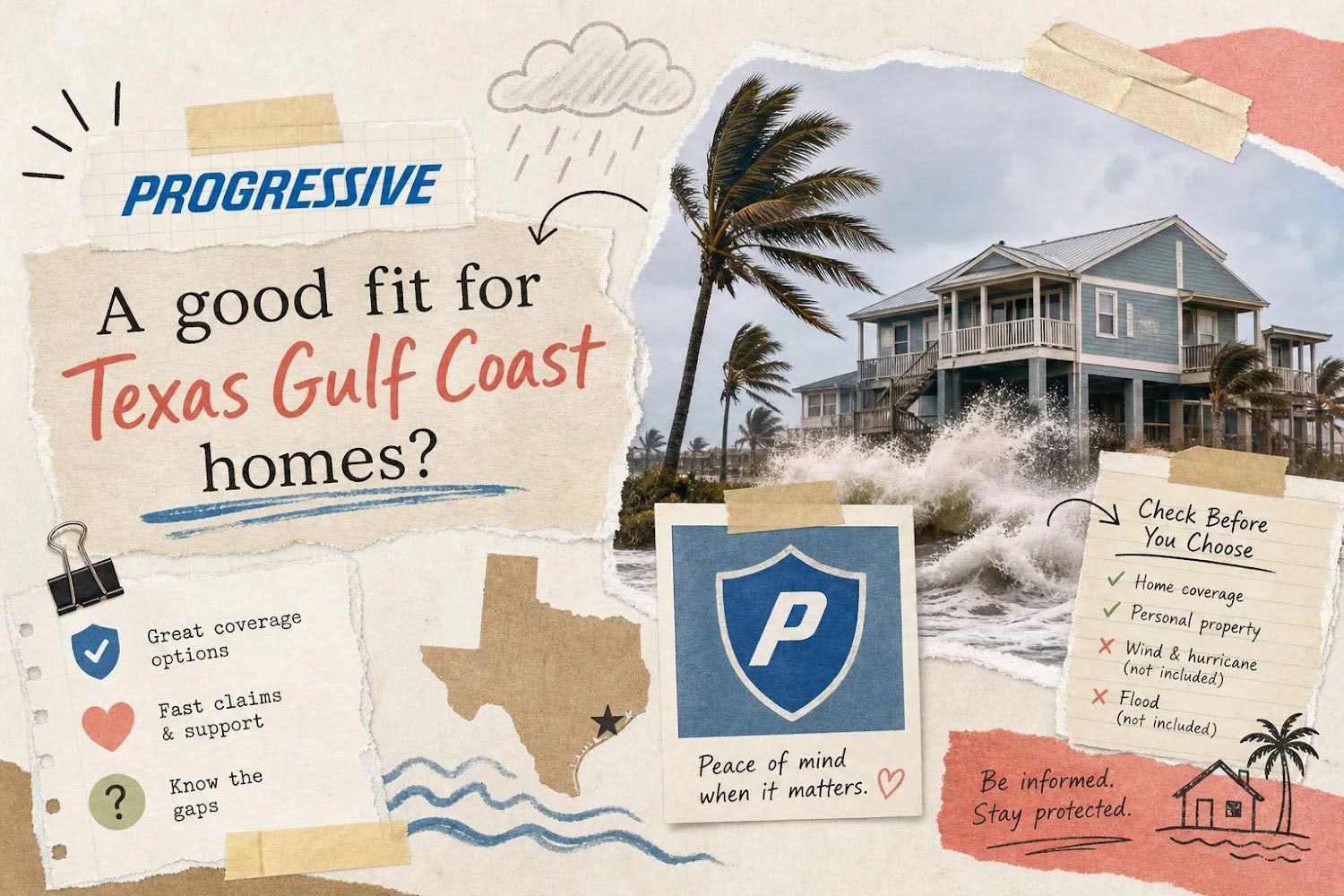
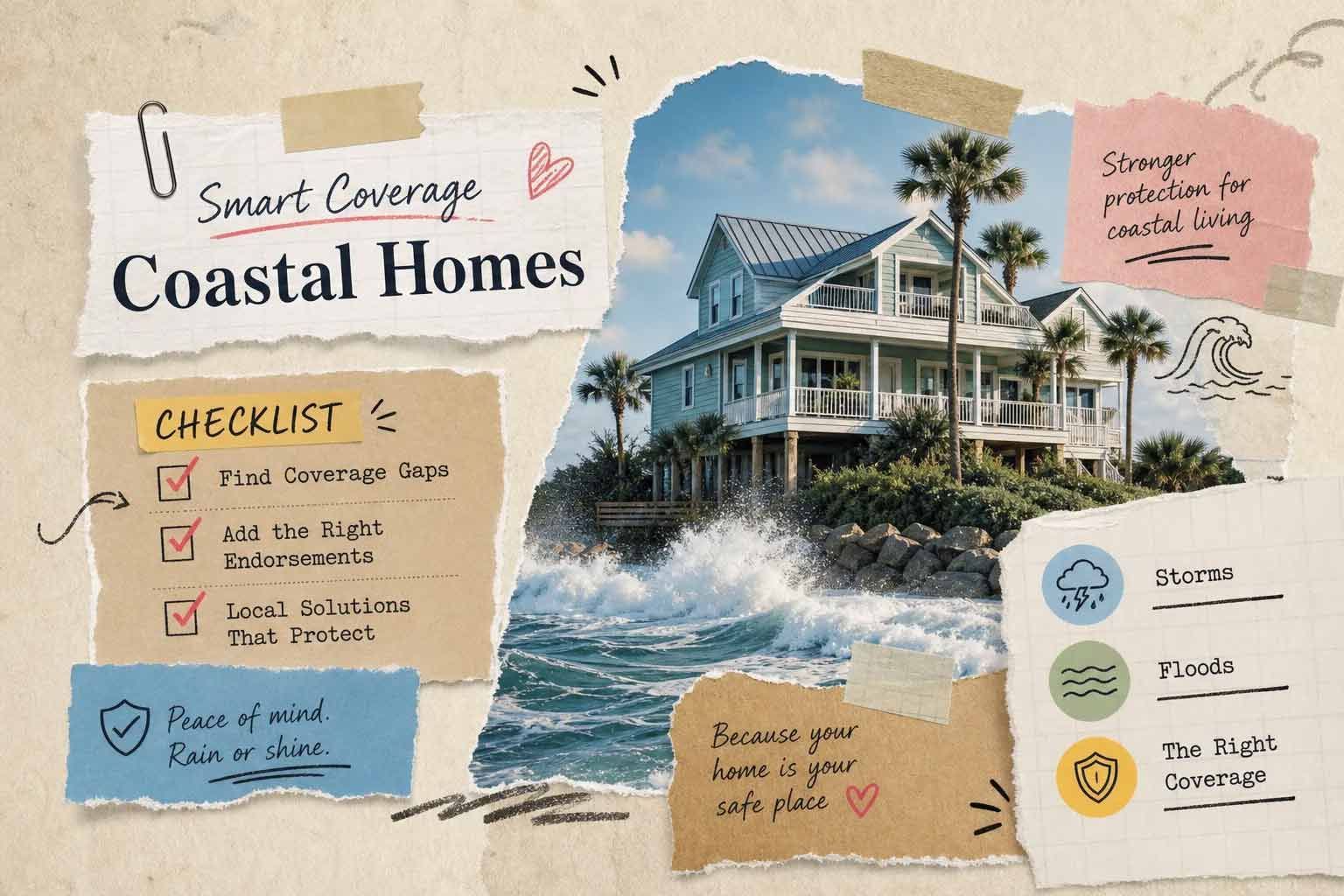
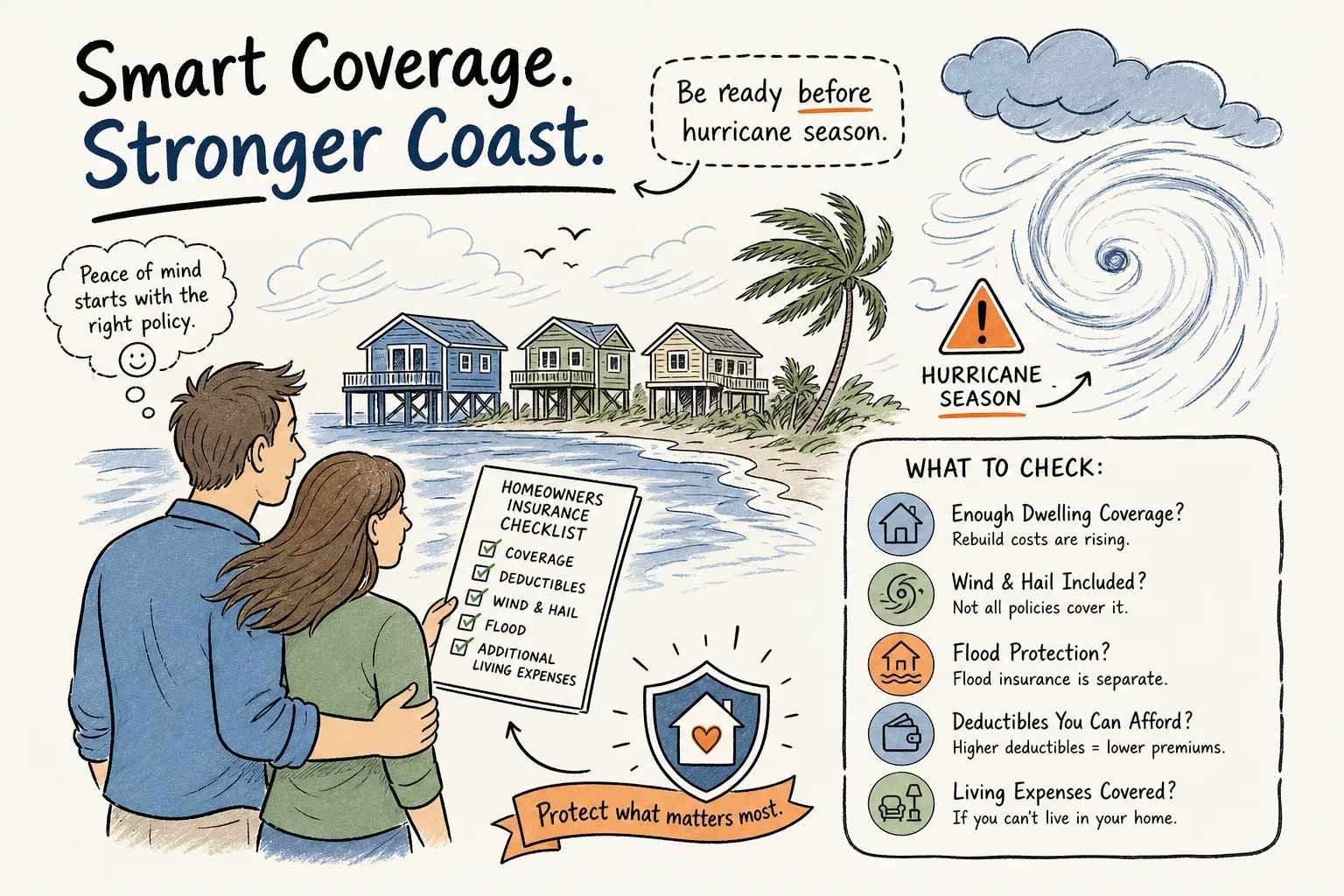
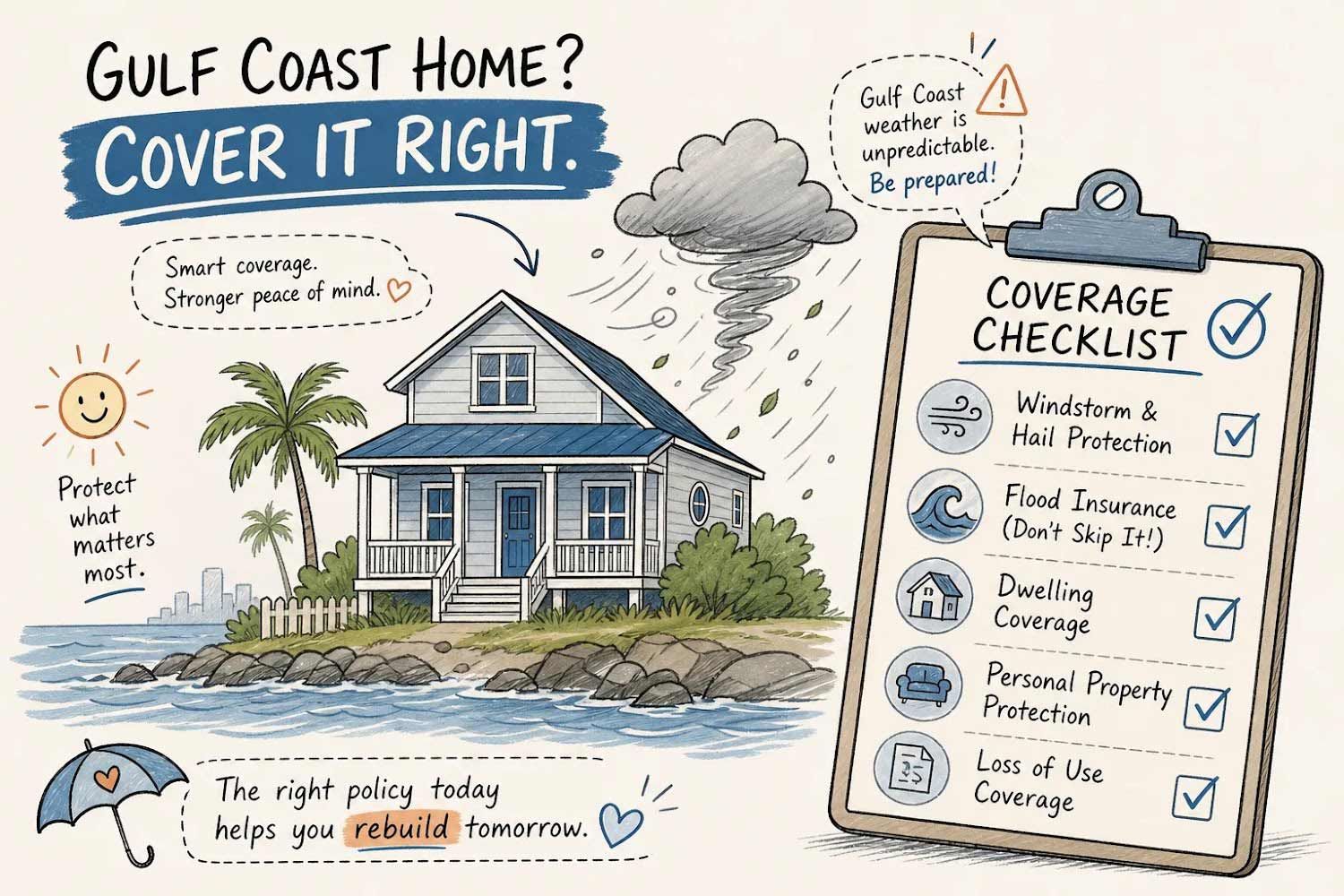
When buying on the Gulf Coast, understanding home owners insurance in Texas is essential, because a standard HO-3 policy covers fire, theft, and many everyday perils, but excludes windstorm, hail, and flood in most coastal counties. That means a single hurricane can trigger three separate claims under three separate policies, and if you only carry one policy, two of those losses come out of your own pocket.
This checklist walks through what each layer covers, what it costs in 2026, and which option closes all three gaps most efficiently. Whether you're closing on a home next week or reviewing a policy you've had for years, the sequence below gives you a clear path forward.
Key takeaways
- Three-layer system: Most Gulf Coast homeowners need separate coverage for fire and liability, wind and hail, and flood. A single HO-3 policy does not cover all three, and lender or contract requirements often make each layer mandatory for coastal properties.
- Windstorm exclusion is common: In all 14 first-tier coastal counties, most standard insurers exclude wind and hail from the HO-3. Availability varies by carrier and property type, but you should confirm in writing whether windstorm is covered before closing.
- Flood insurance has a waiting period: NFIP policies carry a standard 30-day wait. Buying after a storm watch is issued provides no protection.
- Bundled policies exist: A Windstorm Included Home Policy folds windstorm coverage directly into the base policy, eliminating one separate policy and one separate claims process.
- Discounts must be requested: Texas TDI specifically recommends asking for a written list of every discount applied to your policy.
Home Owners Insurance in Texas: What the HO-3 Actually Covers
The HO-3 structure: dwelling, belongings, and liability
A standard HO-3 policy is built around six coverage parts. Coverage A protects the dwelling itself on an open-perils basis, meaning the structure is covered for everything except what the policy specifically excludes. Coverage B extends similar protection to detached garages, fences, and other structures on the property. Coverage C covers personal belongings on a named-perils basis only. That means only the specific causes listed in the policy apply, fire, theft, lightning, windstorm, hail, smoke, and vandalism, for example.
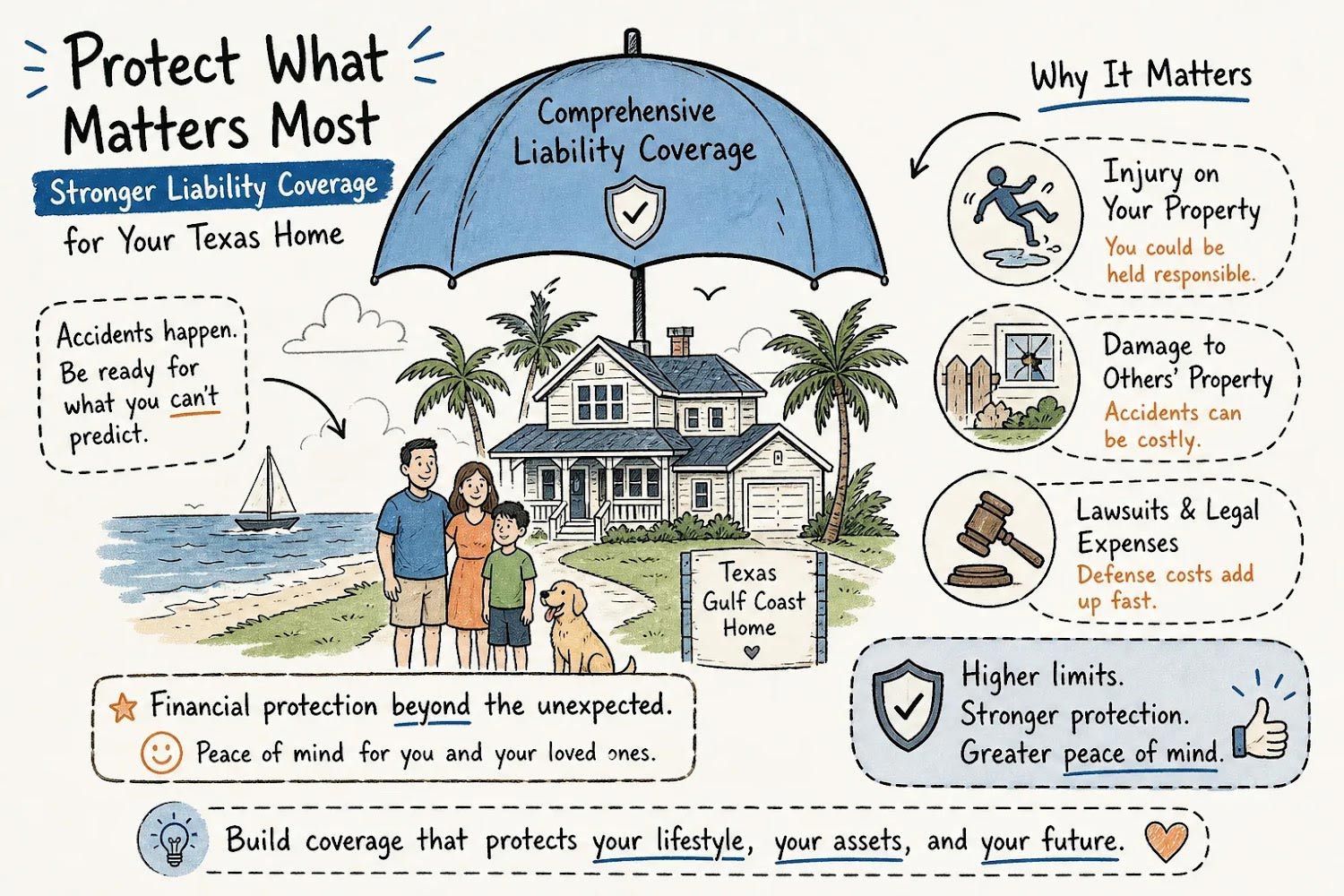
Coverages D through F handle the remaining basics. Coverage D pays additional living expenses when a covered loss makes the home uninhabitable. Coverage E provides personal liability protection for bodily injury or property damage claims against you. Coverage F covers limited medical payments for guests injured on the premises, generally regardless of fault. Together these six parts form a solid foundation for most inland homeowners. The problem starts with the exclusions list.
The exclusions list that catches Gulf Coast buyers off guard
Standard HO-3 policies exclude flood, earthquake and other earth movement, normal wear and tear, inadequate maintenance, insects and rodents, mold in many circumstances, and continuous water seepage. For Gulf Coast buyers, the most consequential exclusion is windstorm and hail when the property sits in a designated coastal county. This is not a buried clause. It is a structural feature of how the Texas coastal insurance market operates, and it leaves the most expensive storm damage entirely uninsured.
The wind-driven rain distinction matters here. Rain entering through a roof opening caused by wind is generally treated as a wind claim. Water rising from outside the home, including storm surge, is a flood claim and excluded under the HO-3. After a hurricane, the same event can produce both types of damage, and which insurer pays depends on the cause and pathway. Named-storm percentage deductibles add another layer of complexity: when they apply, they are calculated from the dwelling coverage limit, not a flat dollar amount, which means the out-of-pocket cost before any payment begins is often much larger than homeowners expect.
How Home Owners Insurance in Texas Affects Gulf Coast Buyers
The windstorm and hail gap in Texas coastal counties
In all 14 first-tier coastal counties, plus parts of Harris County east of Highway 146, most standard homeowners insurers exclude wind and hail from the HO-3. Availability varies by carrier and property type, and TDI and TWIA guidance confirms that many private insurers do exclude wind coverage in these areas. A Category 4 hurricane does not care that your policy covers fire and theft. If windstorm is excluded, the damage to your roof, siding, and walls is simply not covered, regardless of how severe the loss is.
The 14 first-tier counties are Aransas, Brazoria, Calhoun, Cameron, Chambers, Galveston, Jefferson, Kenedy, Kleberg, Matagorda, Nueces, Refugio, San Patricio, and Willacy. If your property sits in any of these counties, verify in writing whether windstorm and hail are included or excluded in your base policy.
Flood and storm surge: the exclusion no one argues about until it's too late
Standard HO-3 policies exclude flood universally, not just in coastal counties. Storm surge, overflowing bayous, and rainfall entering from the ground up are all uninsured losses unless a separate flood policy is active before the storm occurs. The National Flood Insurance Program provides up to $250,000 on the building and up to $100,000 on contents, and it carries a standard 30-day waiting period. Buying a policy after a storm watch is issued provides no protection whatsoever.
The practical point is this: even homeowners outside high-risk FEMA flood zones should consider coverage. Texas flooding does not follow the flood map, and a moderate-risk zone designation does not mean the property cannot flood. A lender will generally require flood insurance for properties in FEMA Special Flood Hazard Areas (Zones A, AE, V, or VE) when the mortgage is federally backed, but the purchase decision should not depend solely on whether a lender requires it.
What coastal home insurance actually costs in Texas in 2026
Gulf Coast premiums vs. the statewide average
According to insurancequotes.com (as of 2026), the Texas statewide average for homeowners insurance runs approximately $7,674 per year for the comparison policy analyzed. Coastal homeowners who need separate windstorm coverage through TWIA and a flood policy through NFIP should budget for all three layers.
The average residential TWIA premium was approximately $2,541 as of June 30, 2026, according to TWIA's own rate data.
The rating factors that move your premium up or down
Roof age and material carry heavy weight with every insurer. A roof older than 15 years often triggers surcharges or restricted coverage, while a Class 4 impact-resistant roof can earn a discount if you document it properly. Claims history, credit-based insurance score, rebuild cost (not market value), and proximity to the coast all factor into the final rate. These are not negotiable inputs; they are the rating framework Texas TDI identifies as the primary drivers.
Common discount opportunities include bundling home and auto with the same agency, paying the annual premium in full, installing monitored alarms and water-leak sensors, and completing approved wind-mitigation upgrades. Discounts are insurer-specific and do not apply automatically. The Texas Department of Insurance specifically recommends asking each insurer for a written list of every discount applied to your policy. That request alone is worth making every renewal cycle.
TWIA, private wind, or a bundled policy: which option fits your property?
How TWIA works and when it's the right call
TWIA is Texas's insurer of last resort for wind and hail in designated coastal areas. To qualify, the property must be in the catastrophe area, the owner must have been denied coverage by at least one private insurer, the structure must carry a Texas Department of Insurance windstorm construction certificate (WPI-8, WPI-8-E, or WPI-8-C), and certain properties in V flood zones must carry flood insurance. TWIA covers direct wind and hail damage but does not cover flooding, storm surge, fire, theft, or liability.
After a hurricane, coordinating a TWIA wind claim and a separate flood claim while also managing your HO-3 claim creates real friction at the worst possible time.
Private wind and flood stand-alone policies: more flexibility, different trade-offs
Private windstorm insurers, including admitted carriers and surplus-lines companies, write policies in Texas first-tier coastal counties in 2026, though availability varies significantly by county and property type. Private options can offer faster claim service and sometimes broader terms than TWIA, but they come with named-storm deductibles, roof-age restrictions, and underwriting criteria that vary widely. Private flood policies can exceed NFIP's $250,000 building cap and carry shorter waiting periods, which matters for higher-value homes. The trade-off is complexity: three separate policies, three deductibles, and three claims processes after a single storm.
The Windstorm Included Home Policy: one policy that closes all three gaps
For Gulf Coast homeowners who want to simplify the coverage stack, a Windstorm Included Home Policy bundles windstorm coverage directly into the base home policy. This eliminates the need to manage a separate wind policy through TWIA, reducing the post-storm claims process significantly. Brad Spurgeon Insurance Agency Inc., a third-generation independent agency based in Texas City that has served the Gulf Coast since 1986, offers this type of bundled policy specifically designed for coastal property owners navigating exactly this coverage puzzle.
The administrative simplicity has real financial value when you're filing a claim in the aftermath of a hurricane. One policy means one adjuster and one deductible for wind damage, rather than coordinating multiple claims across separate carriers while dealing with storm aftermath.
| Option | Coverage Scope | Policies to Manage | Flood Included | Application Complexity | Cost Structure |
|---|---|---|---|---|---|
| Private wind + HO-3 + private flood | Wind/hail, fire/liability, flood (separate) | 3 | Separate private flood policy required | Medium: underwriting varies by county and carrier | Variable; higher limits available for flood |
| Windstorm Included Home Policy | Wind/hail bundled with fire and liability | 1 (plus separate flood) | Flood still separate | Lower: single application and single renewal | Single premium; one deductible for wind claims |
To see how the bundled option compares to your current setup, use our online tools or reach out for a personalized quote. Our team can review your property's flood zone, windstorm certificate status, and current coverage gaps to give you a clear picture of what you're actually protected against.
Your Gulf Coast coverage checklist: before you close, and after the storm
Questions to ask every insurer before you sign anything
Before you close on a coastal property, get written answers to each of the following questions from every insurer you're considering. These are not optional questions for curious buyers; they are the questions that determine whether your coverage actually functions when you need it.
- Does this policy exclude windstorm and hail?
- What is the named-storm deductible percentage, and how is it calculated (as a percentage of what limit)?
- Is flood excluded, and do I need a separate policy?
- Does the property require a windstorm construction certificate (WPI-8, WPI-8-E, or WPI-8-C) for TWIA eligibility?
- Does the policy cover wind-driven rain entering through a wind-damaged opening?
- What is the replacement cost for my dwelling, and is it inflation-adjusted at renewal?
- What discounts am I receiving, listed in writing?
Proven ways to lower your 2026 premium without cutting real coverage
Upgrading to a Class 4 or impact-resistant roof and documenting it with the insurer is one of the highest-return improvements a Texas homeowner can make. Bundling home and auto with the same agency is another consistent savings opportunity across most carriers. Installing monitored water-leak sensors and a security system, paying the annual premium in full, and maintaining a claim-free record all produce discounts at many insurers, though the amounts and eligibility requirements vary by company.
One place many homeowners leave money on the table is the dwelling coverage limit review. If your policy's Coverage A limit is based on a rebuild-cost estimate that's several years old, it may understate the actual current replacement cost, which means you're paying for a coverage amount that won't cover a full rebuild. Review the limit against current local construction costs at every renewal. Raising the base deductible on non-catastrophe perils while keeping wind and hail deductibles manageable is another way to reduce the annual premium without removing meaningful protection.
After a hurricane: steps that protect your claim payout
Document damage immediately with photos and video before making any repairs. Capture every room, the roof, exterior walls, the attic, HVAC units, and all damaged belongings. Texas guidance from TDI specifically recommends documenting damage before repairs begin. Make only temporary emergency repairs, tarps and board-ups, to prevent further loss, and keep every receipt for those temporary measures.
File claims promptly under each active policy. A wind claim goes to your wind insurer (TWIA or private), and a flood claim goes to your flood insurer (NFIP or private). If you carry both TWIA and a separate HO-3, you'll coordinate two independent adjusters after a major storm. Keep a written log of every call, email, inspection, and document submission. Do not sign any contractor's assignment-of-benefits form without reading it carefully, and do not accept a settlement labeled "full and final" until you fully understand the scope and valuation of the claim. If the claim is disputed, consult a Texas-licensed insurance attorney or public adjuster before signing anything.
Getting home owners insurance in Texas right before you close
Homeowners insurance in Texas is not a single product for Gulf Coast properties. It's a three-part system covering fire and liability, wind and hail, and flood. Skipping any layer leaves a real financial gap that a single storm can expose. Options like the Windstorm Included Home Policy simplify that system meaningfully by folding windstorm coverage directly into the base policy, reducing the administrative burden when it matters most.
Brad Spurgeon Insurance Agency Inc. has been helping Gulf Coast homeowners sort out this coverage stack since 1986. As a family-owned independent agency in Texas City, we work with clients across the Texas Gulf Coast to identify coverage gaps, compare policy options, and match the right combination of home, wind, and flood coverage to each property's specific situation. Use our online tools to compare options, report claims, make payments, or schedule a consultation. Or reach out directly for a personalized quote that accounts for your property's flood zone, windstorm certificate status, and current gaps. Getting this right before you close is far cheaper than learning the hard way after the storm.
Frequently Asked Questions
How are named-storm deductibles calculated on Gulf Coast policies and what does that mean for my out-of-pocket cost?
Named-storm deductibles are calculated as a percentage of your dwelling coverage limit, not as a flat dollar amount, so your out-of-pocket cost can be much larger than you expect. We recommend checking the exact percentage and the dwelling limit so you know the deductible dollar amount before a storm.
If I choose a Windstorm Included Home Policy, do I still need separate flood insurance?
Yes, flood coverage is still separate and not included in a Windstorm Included Home Policy. We advise maintaining a separate flood policy because standard HO-3 and the bundled wind policy both exclude flood, storm surge, and rising water.
How soon before a storm do I have to buy NFIP flood insurance to be covered?
NFIP flood insurance carries a standard 30-day waiting period, so you must buy it at least 30 days before a storm to be covered. We note that purchasing after a storm watch is issued provides no protection whatsoever.
What documentation should I gather immediately after a hurricane to protect my claim payout?
Document all damage immediately with photos and video before making repairs, keep receipts for temporary emergency repairs, and maintain a written log of every call, email, inspection, and document submission. We also advise making only temporary repairs to prevent further loss, filing claims promptly under each active policy, and avoiding signing assignment-of-benefits or 'full and final' settlement documents without fully understanding them.