
Is Progressive Home Insurance a Good Fit for Texas Gulf Coast Homes? Pros, Cons, and Coverage Gaps

Brad Spurgeon • October 29, 2026
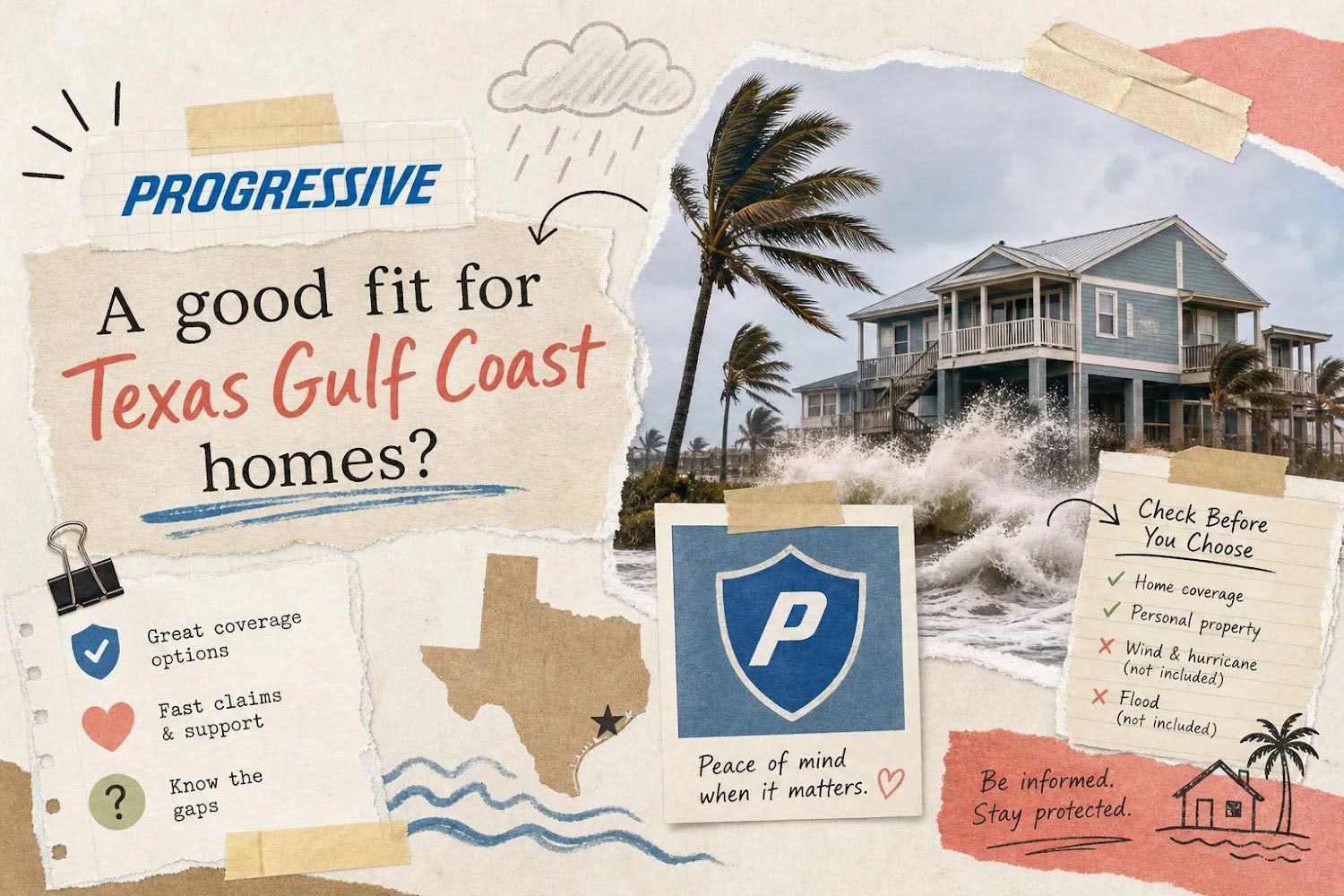
Progressive ad asking, “A good fit for Texas Gulf Coast homes?” with stormy beach house and insurance icons

Progressive home insurance offers standard HO-3 coverage that works well for most American homeowners, but for Texas Gulf Coast properties, that base policy typically excludes the two biggest threats in the region: windstorm damage and flooding. Those aren't minor omissions for a home in Galveston County or along the Brazoria coastline. They're exactly what a hurricane or tropical storm delivers.


Texas already carries some of the highest home insurance premiums in the country, and coastal ZIP codes push that figure even further above the national average. Spending that much on a policy that leaves windstorm and flood damage uncovered is a critical mistake. This article breaks down what progressive home insurance actually includes, where it falls short for coastal properties, and what a complete coverage picture looks like.

Key takeaways

  • Progressive is a marketplace: Most homeowners policies through Progressive are written by partner carriers, and that partner controls all coverage terms, not the Progressive brand.
  • Texas premiums are high: The average annual Progressive homeowners premium in Texas runs approximately $10,571 (based on $250,000 in dwelling coverage), according to MoneyGeek.
  • Windstorm is often excluded: Standard HO-3 policies frequently exclude wind and hail in TDI-designated coastal counties.
  • Flood is always excluded: No standard homeowners policy covers flood damage; a separate policy is required regardless of the carrier.
  • Claims experience is mixed: Progressive scored 634 out of 1,000 in J.D. Power's Home Insurance Study, slightly below the 640 industry average, according to Business Insider.
  • Coordination matters: An independent agency with Gulf Coast experience can structure homeowners, windstorm, and flood coverage together to reduce gaps between policies and simplify claims coordination.

What "Progressive home insurance" actually means

Most people searching for a Progressive home policy assume they're buying directly from one company. The actual structure is different, and understanding it explains a lot about why coverage terms vary so widely from one quote to the next. Progressive places most homeowners policies through a network of partner carriers, including ASI Progressive (its affiliated property insurer), Homesite, Nationwide, Openly, National General, Foremost, and others depending on the state and property profile.


The company shown on the declarations page, not the Progressive brand, writes the contract and handles claims. Two homeowners in the same Texas city can receive quotes through Progressive and end up with completely different carriers and materially different policy terms. Before signing anything, locate the "underwritten by" line in the quote documents. That entity's policy form governs what's actually covered, not the Progressive name on the front page of the quote.


The partner carrier controls everything that matters: coverage limits, available endorsements, deductibles, underwriting eligibility, pricing, and claims handling. Progressive manages the front-end quote experience and the referral. That's a meaningful distinction for high-risk coastal properties, where underwriting appetite varies significantly between carriers. In catastrophe-designated coastal zones, the partner network may be limited in which carriers will write the property at all, and some partners may exclude windstorm entirely in high-exposure areas.

Progressive home insurance: What a standard policy covers

Most policies issued through Progressive's network follow the HO-3 form, the industry standard for owner-occupied homes. An HO-3 covers the dwelling (Coverage A) on an open-perils basis, meaning damage is covered unless specifically excluded. Personal property (Coverage C) is typically covered only for named perils listed in the policy, which is a narrower form of protection than dwelling coverage receives.


The policy also includes other structures (Coverage B), loss of use for temporary housing when the home is uninhabitable (Coverage D), personal liability (Coverage E), and medical payments to guests (Coverage F). News.


Several endorsements are available through partner carriers, though availability varies by carrier and state. Water backup and sump overflow covers drain and sewer backups that standard policies exclude. Replacement cost coverage for personal property pays to replace items at current prices rather than depreciated value. Extended dwelling replacement cost provides a buffer when rebuilding costs exceed the policy limit after a major loss. Some network carriers also offer equipment breakdown and service-line coverage.


Two exclusions are significant for anyone considering a progressive home insurance policy on the Gulf Coast: flood damage and, in many coastal areas, windstorm damage. Flood exclusion is a standard feature of HO-3 forms across the industry. Wind exclusions are common in coastal and high-exposure areas but vary by carrier, they are not universally written into every HO-3 form. For Gulf Coast homeowners, those two exclusions represent the most likely causes of a major claim.

How much does a Progressive homeowners policy cost in Texas?

Based on a $250,000 dwelling coverage benchmark, the average annual Progressive homeowners insurance premium in Texas runs approximately $10,571, according to MoneyGeek. News. Texas ranks alongside Florida and Louisiana as one of the most expensive states in Progressive's own data, reflecting the region's hurricane exposure.


Progressive advertises average savings of more than 25% for customers who bundle home and auto insurance. Other available discounts include quoting at least 10 days before the policy start date, installing protective devices such as burglar alarms or sprinkler systems, paying the full annual

premium upfront, and receiving policy documents electronically. None of these discounts are guaranteed at a specific percentage; actual savings require a quote to determine.


ZIP codes in TDI-designated first-tier and second-tier coastal counties face different underwriting treatment than inland Texas properties. Carriers may apply separate windstorm deductibles calculated as a percentage of the dwelling value rather than a flat dollar amount, restrict available coverage, or decline the property entirely in certain zones. A homeowner in Texas City will see a very different progressive home insurance quote than someone in Austin with similar home characteristics, even through the same platform.

Progressive home insurance gaps for Gulf Coast homes

Standard HO-3 policies frequently exclude windstorm damage in TDI-designated catastrophe areas, which cover 14 Gulf-border counties including Galveston, Brazoria, Chambers, Jefferson, and others. When windstorm is excluded from the base policy, homeowners typically turn to the Texas Windstorm Insurance Association (TWIA) for a separate windstorm-only policy. TWIA provides coverage, but it comes with its own coverage caps, separate deductibles, and a claims process independent from the homeowners policy. TWIA reported an average residential premium of roughly $2,877 in its 2026 media materials, which represents an additional cost layered on top of the base homeowners premium.


Managing two separate policies for a single storm event creates complexity that most homeowners don't anticipate until after a loss. A hurricane produces both wind damage and flooding, which means two separate carriers, two separate deductibles, and potential disputes over which policy applies to which portion of the damage. In practice, a disputed wind-versus-flood claim can delay settlement for months while each carrier investigates its portion of the loss. That coordination problem is built into the structure of any standard national policy used on a Gulf Coast home.


Standard homeowners policies do not cover flood damage, and no progressive home insurance policy, or any standard HO-3, includes it. Storm surge, which regularly accompanies Gulf Coast hurricanes, qualifies as flood damage by definition. So does rainwater that enters the home through the ground rather than through a broken roof. Mortgage lenders commonly require flood insurance in high-risk areas, so most coastal homeowners need a separate flood policy through the National Flood Insurance Program or a private flood carrier. That policy must be in place before a storm threatens. TWIA coverage cannot be obtained once a hurricane is in the Gulf of Mexico, according to the Texas Department of Insurance. For flood insurance, the NFIP imposes a standard 30-day waiting period on new policies; private flood carriers typically impose shorter waiting periods of around 10 to 15 days, but most will not bind new coverage when a named storm is threatening the area.


Progressive homeowners claims experience scored 634 out of 1,000 in the J.D. Power U.S. Home Insurance Study, slightly below the industry average of 640, according to Business Insider. The NAIC complaint ratio for Progressive's homeowners lines runs above 2.0, according to the same report, indicating more complaints than expected for the company's market share. Because claims are handled by the underwriting partner carrier rather than Progressive directly, the actual experience can vary significantly depending on which carrier wrote the policy.

What a complete Gulf Coast coverage structure looks like

Coverage Area Standard National HO-3 Policy Coordinated Coastal Coverage Structure
Dwelling and personal property Covered (open perils for dwelling, named perils for contents) Covered, with replacement cost options
Windstorm and hurricane wind Frequently excluded in TDI coastal counties Bundled into policy through a Windstorm Included Home Policy
Flood and storm surge Always excluded; requires a separate policy Standalone flood policy coordinated through the same agency
Deductible structure Separate deductibles for each policy; percentage-based wind deductibles common Coverage coordinated to reduce gaps between policies at claim time
Claims coordination Multiple carriers, multiple claims processes after a storm Single agency point of contact to navigate all policies
Local underwriting knowledge National platform; carrier appetite for coastal ZIP codes varies Carriers selected with Gulf Coast exposure and pricing in mind

Brad Spurgeon Insurance Agency Inc. offers a Windstorm Included Home Policy, an all-in-one coverage structure designed to reduce the typical gap between homeowners and windstorm coverage for eligible Gulf Coast properties by bundling windstorm protection directly into the standard home policy. Rather than managing a separate TWIA policy alongside a base homeowners policy, the coverage works together under one structure built for the specific risks Gulf Coast homes face every season.


Private flood policies can provide advantages the NFIP doesn't: coverage limits above the NFIP's residential maximums of $250,000 for the building and $100,000 for contents, and some include additional living expense coverage that standard NFIP residential policies generally don't provide, according to insurance.com. When homeowners, windstorm, and flood coverage are coordinated through one agency, that coordination reduces ambiguity and gives you a single point of contact to manage claims across multiple carriers, though coverage disputes between carriers over causation can still arise in complex storm events.


As an independent agency, we work with multiple carriers rather than being limited to one company's products or a partner network assembled for general national use. That access means placing coastal properties with carriers that understand and price Gulf Coast risk, rather than carriers that treat Texas windstorm exposure as a line item to exclude. Decades of local experience also means knowing exactly which coverages a home at a specific address requires.

Getting the right coverage before storm season

Progressive home insurance is a legitimate option for homeowners across much of the country. For Texas Gulf Coast properties, the standard policy structure creates real exposure by excluding the two risks that define this region: wind damage and flooding. Paying Texas-level premiums for coverage that won't respond to a hurricane is a problem worth solving now, not after a storm makes landfall.


A Gulf Coast homeowner should ask three questions when reviewing any homeowners policy. Does this policy cover windstorm at the specific property, and if not, what separate coverage is required? Is flood included, or is a standalone flood policy needed? Who is the actual underwriting carrier, and what is their claims track record in coastal Texas? A local agent should answer all three without hesitation and provide the answers in writing along with the full declarations page.


Gather basic property information before reaching out: the home's estimated replacement cost (not the purchase price), year built, roof age and material, and any prior claims in the last five years. Use Brad Spurgeon Insurance Agency Inc.'s online tools to start the quote process, or schedule a consultation to walk through coverage options specific to your address. The agency's online platform also allows clients to make payments, access policy documents, and report claims directly, so you're not figuring out the process for the first time during a storm recovery. Reach out to our team and get coverage that's actually built for where you live.

Frequently Asked Questions

  • How long before a storm do I need to buy flood insurance for it to take effect?

    You must wait 30 days for a new NFIP flood policy to take effect, and private flood policies typically have shorter waiting periods around 10 to 15 days. We note that most private carriers also will not bind new coverage when a named storm is threatening the area, so you should secure flood coverage well before any storm approaches.

  • Can I get windstorm coverage through Progressive if my home is in a TDI-designated coastal county?

    Sometimes you can, but standard HO-3 policies frequently exclude windstorm damage in TDI-designated coastal counties, so wind coverage depends on the underwriting partner. We explain that when wind is excluded homeowners commonly use TWIA or a windstorm-included policy from an agency like Brad Spurgeon Insurance Agency Inc., and carrier appetite varies by ZIP code and property risk.

  • What happens if a hurricane causes both wind and flood damage, how are claims handled?

    Both wind and flood damage can lead to separate claims with separate carriers, deductibles, and processes, which can delay settlement while carriers determine causation. We explain that coordinating homeowners, windstorm, and flood coverage through one agency reduces ambiguity and provides a single point of contact, though disputes between carriers over causation can still arise.

  • How do I know which company actually writes my homeowners policy when I get a quote through Progressive?

    The declarations page will show the entity that underwrites the policy, and that underwritten-by carrier controls the coverage terms and handles claims. We advise locating the "underwritten by" line in the quote documents because two homeowners using the same Progressive platform can receive policies from different partner carriers with materially different terms.

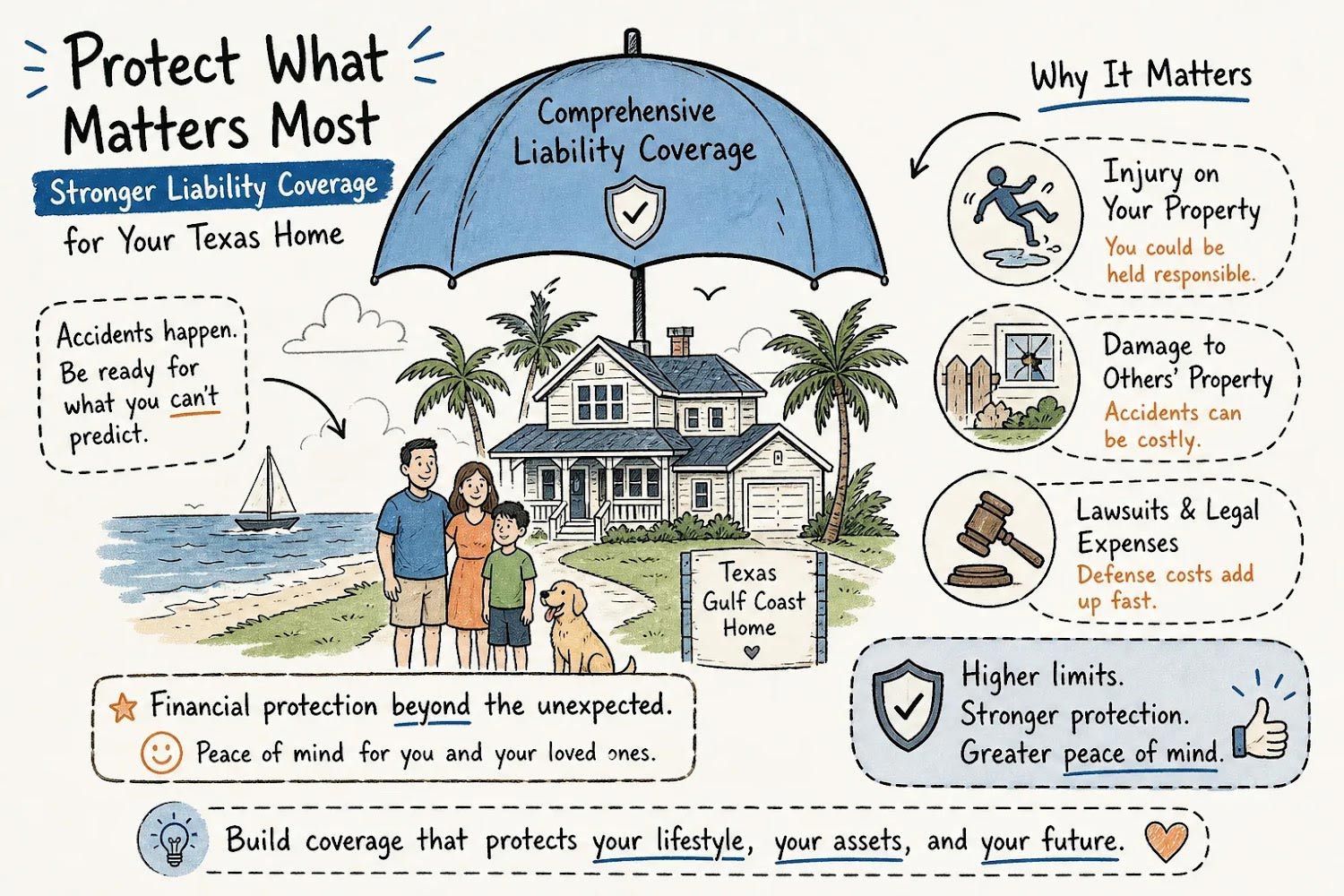
Infographic on flood insurance, showing a house, umbrella, and hurricane tips for protecting belongings and finances.
By Brad Spurgeon • October 29, 2026
Comprehensive personal liability coverage, known as Coverage E in your homeowners or renters policy, pays when someone else is injured on your property or you accidentally damage their property and you're legally responsible. It also covers your legal defense costs, attorney fees, and court judgments up to your policy limit. This guide breaks down exactly what you're covered for, what slips through the gaps, and how to build a comprehensive liability protection stack that actually holds up when a claim lands. Whether you're a first-time buyer in Texas City or a long-time Gulf Coast homeowner juggling a boat, a dog, and a rental unit, getting these limits right matters more here than almost anywhere else in the country.
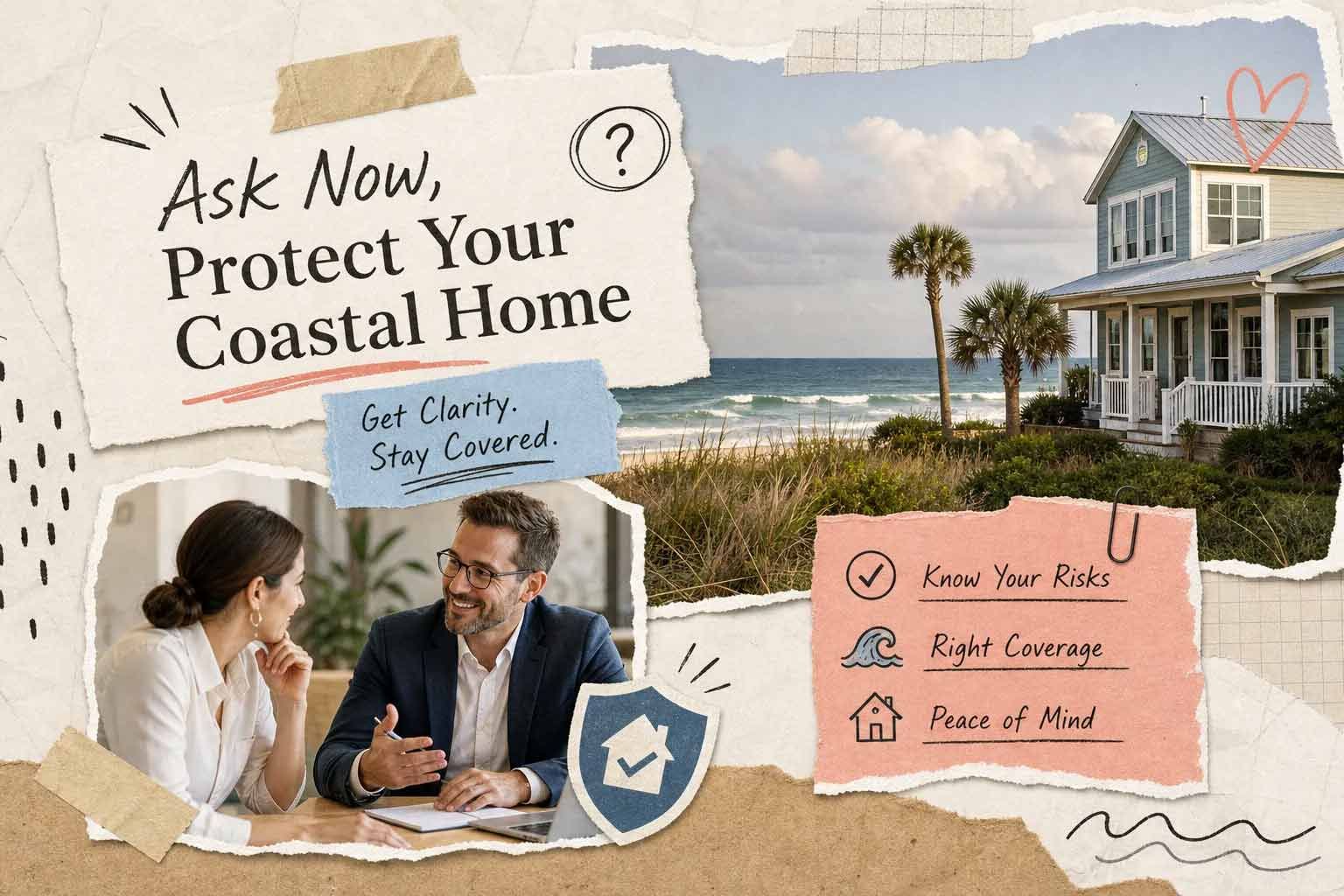
Coastal home insurance ad with beach house, couple talking, and text “Ask Now, Protect Your Coastal Home”
By Brad Spurgeon • October 22, 2026
What are the most important questions to ask an insurance agent before buying coastal home insurance? Most buyers never think to ask them until after a storm. Many coastal homebuyers report spending more time negotiating kitchen countertops than understanding their insurance policy. That's a reasonable way to live, until a named storm makes landfall and the claim comes back short of what you needed. The policy was there. The coverage wasn't. Wind excluded. Flood not purchased. Deductible never translated into a real dollar amount. The policy looked fine on paper. In practice, it had gaps a storm could drive a boat through. This article gives you the questions that change that. Six categories. Each one designed to reveal whether the agent in front of you truly understands Gulf Coast exposure, or is simply filling in a form.
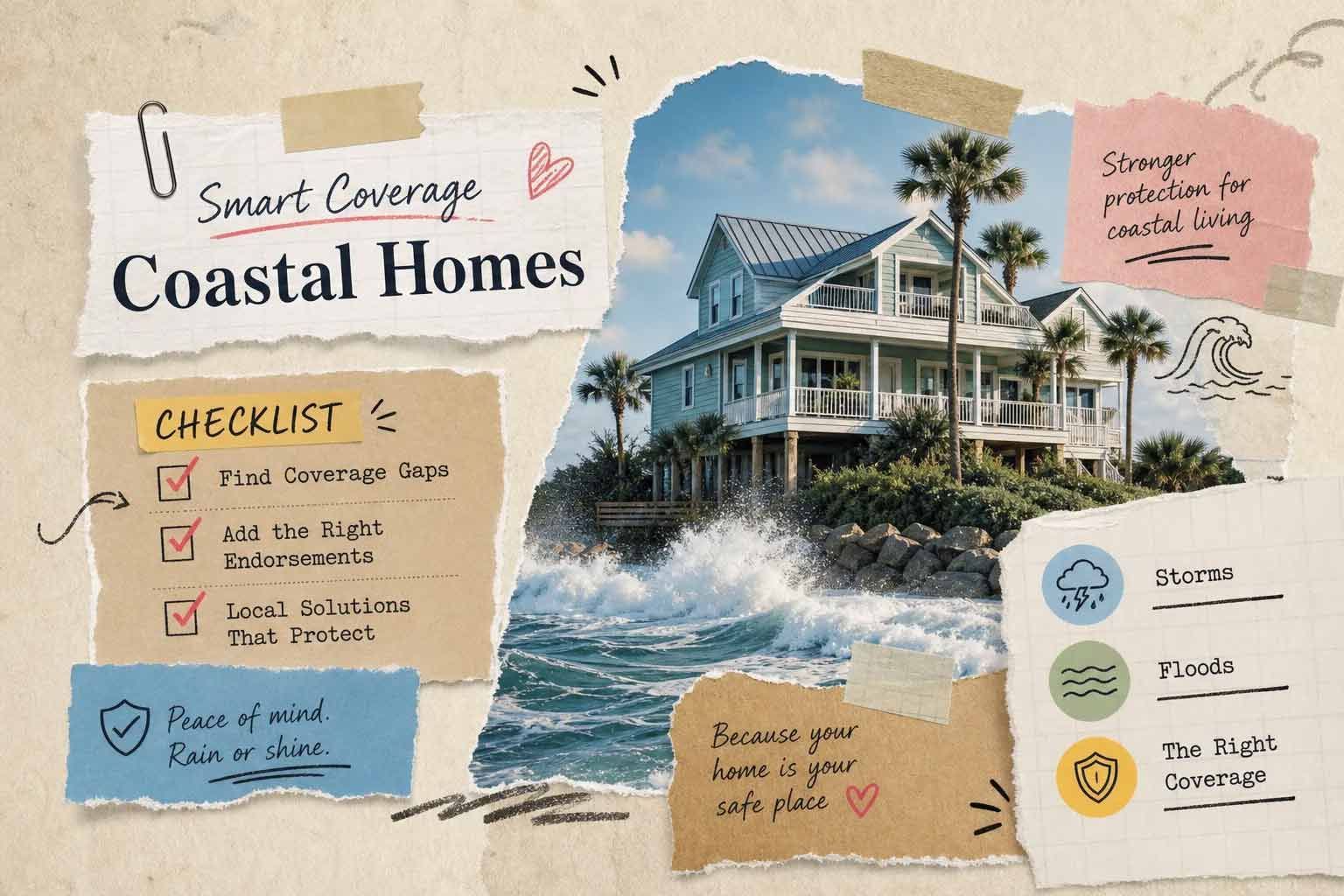
Handmade collage for
By Brad Spurgeon • October 22, 2026
Progressive home insurance is one of the most recognized products in the country, and that familiarity makes it easy for coastal homeowners to assume the policy covers everything it should. Many homeowners assume the standard policy handles all their risks, wind, water, and everything a Gulf Coast storm can throw at a house. It often leaves critical gaps. Gulf Coast homes face windstorm, flood, and hurricane risks that standard policies routinely exclude, and discovering those exclusions after a storm can lead to large out-of-pocket costs. This checklist walks through what a Progressive homeowners policy actually includes, where it leaves coastal buyers exposed, what it costs in Texas, and how to close the gaps before storm season arrives. We've been working with Gulf Coast homeowners from our base in Texas City since 1986.
October 19, 2026
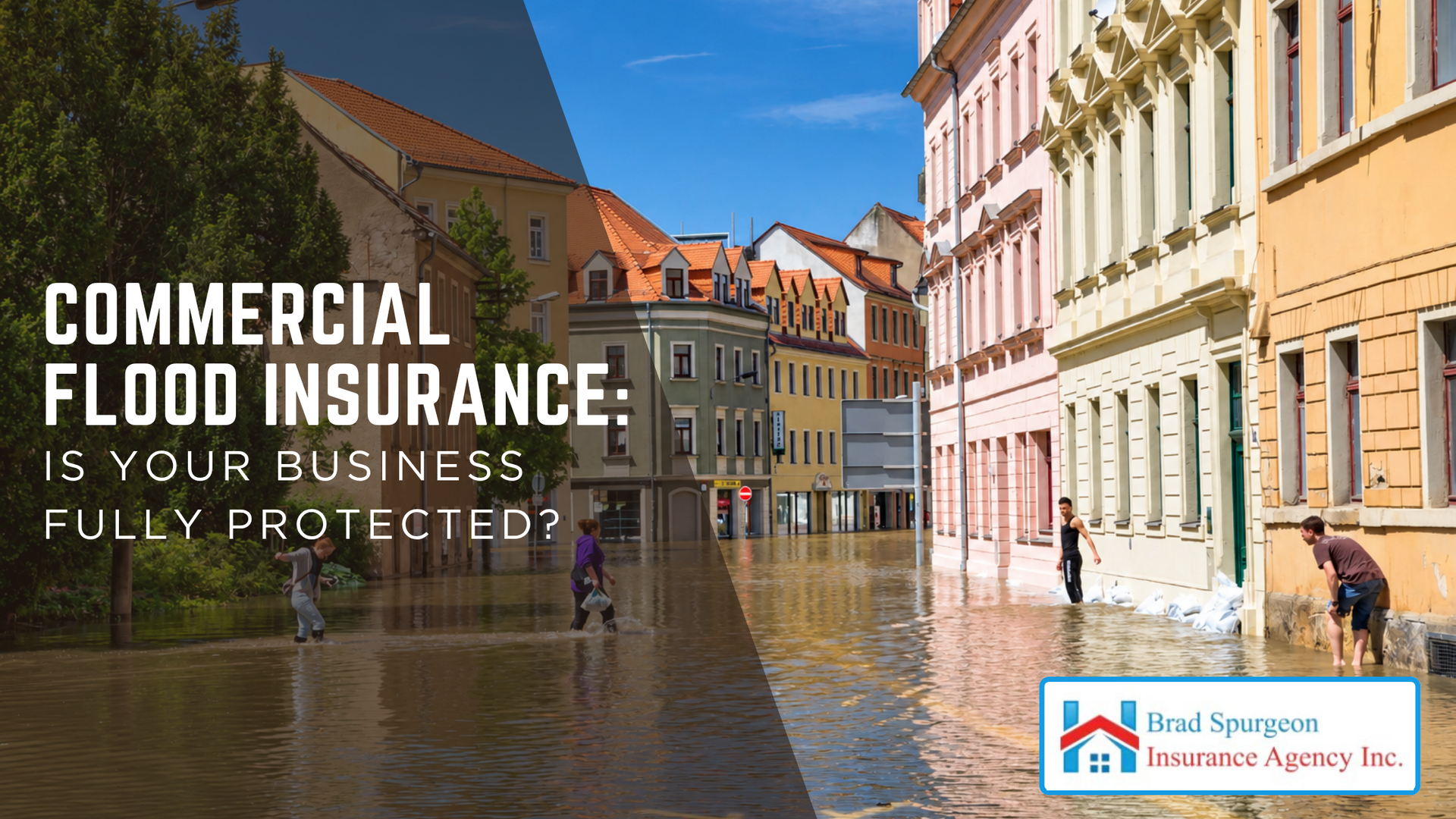
Flooding can disrupt business operations, damage expensive equipment, and create financial losses that extend well beyond the initial cleanup. For commercial property owners, retailers, and service providers along the Texas Gulf Coast, understanding flood exposure is an important part of risk management. Knowing which
October 19, 2026
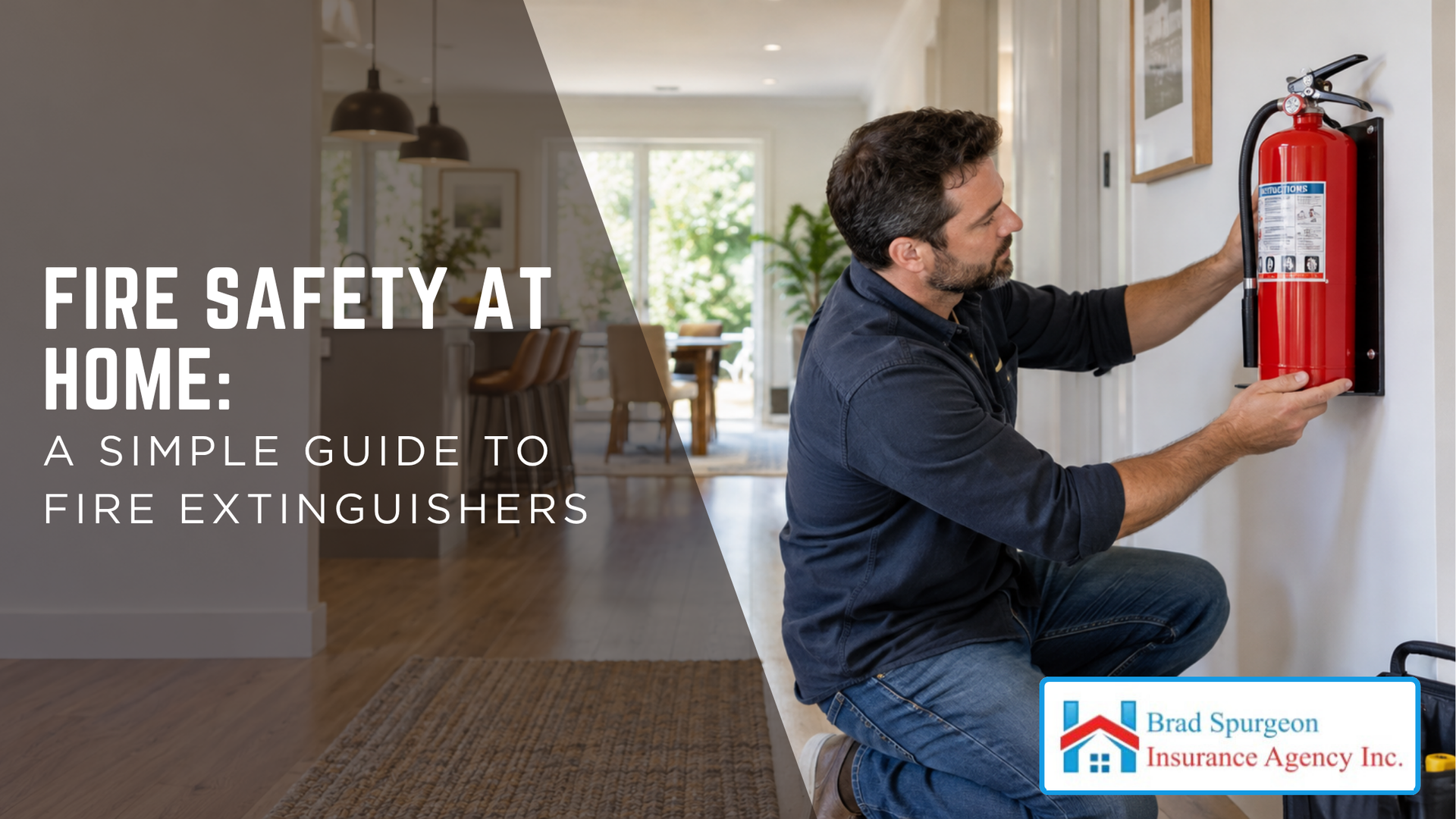
A small fire can become a serious emergency in moments. Whether it starts in the kitchen, garage, or another part of the house, knowing how to respond can help protect your family and property.
October 15, 2026
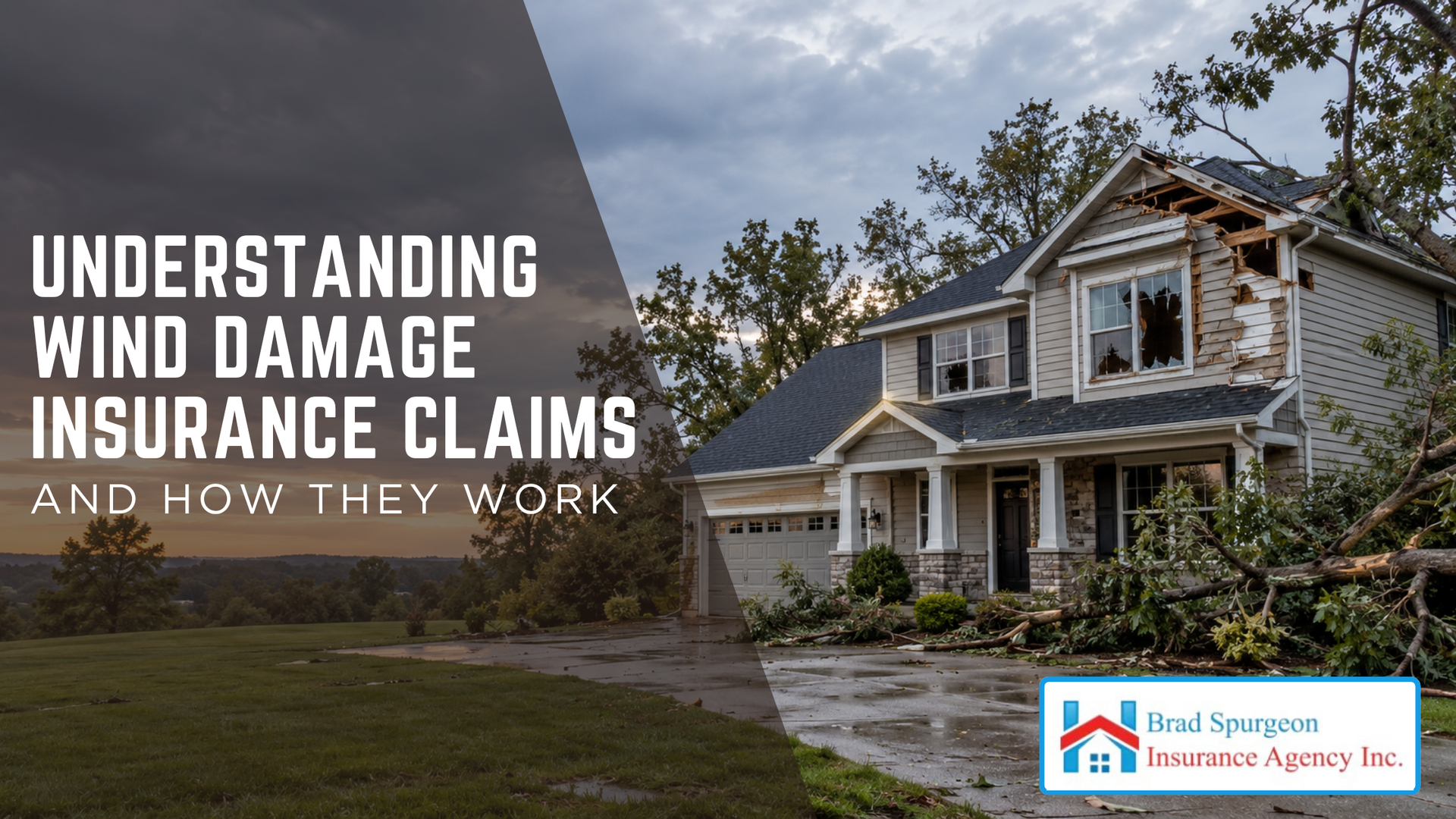
Strong winds from thunderstorms, hurricanes, and tropical storms can cause significant property damage. Missing roof shingles, broken windows, damaged siding, and fallen trees are just a few problems homeowners may discover after severe weather.
October 15, 2026
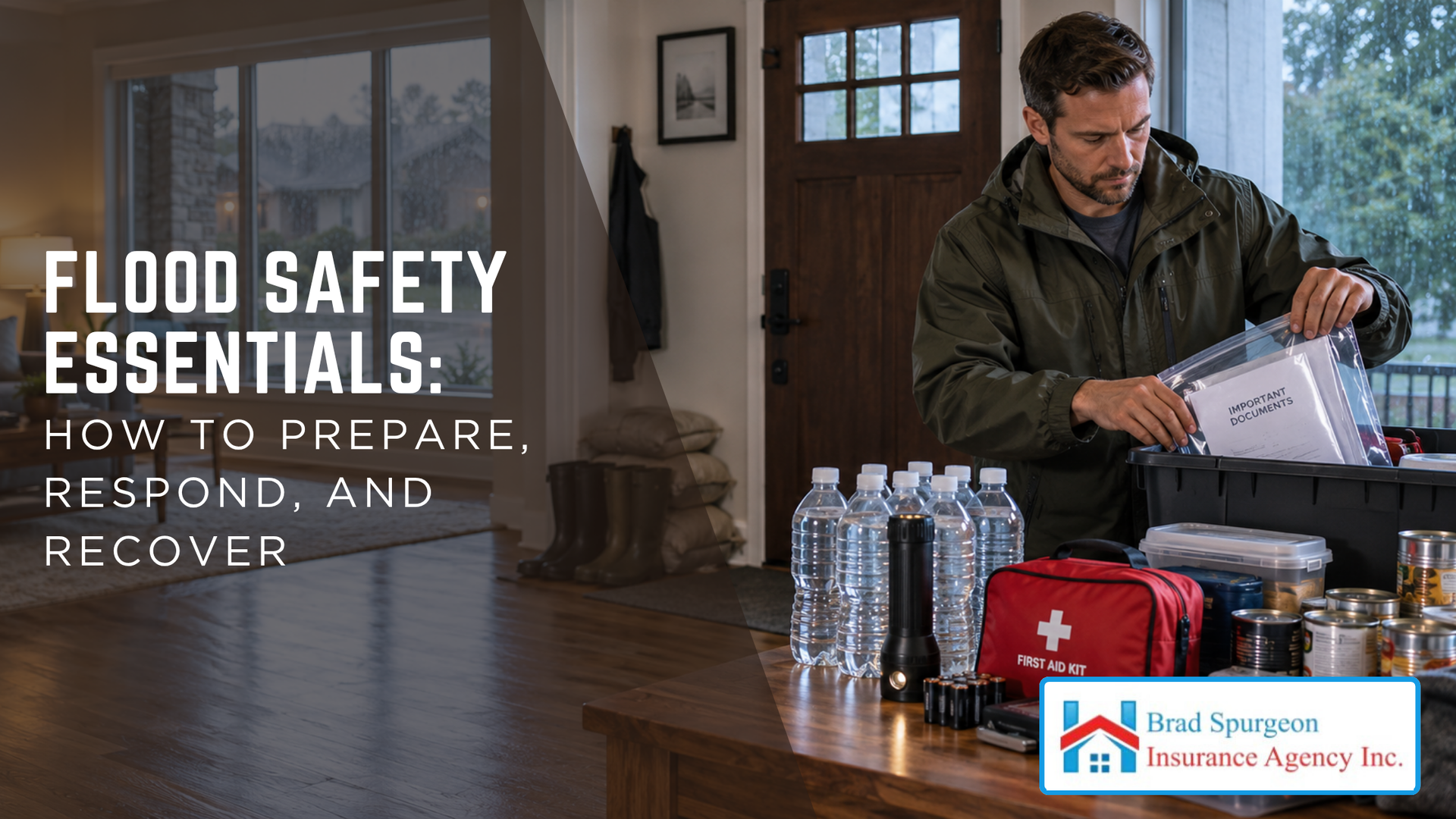
Flooding can happen quickly, leaving families with little time to protect their homes and reach safety. Heavy rainfall, overflowing waterways, tropical storms, and storm surge can create dangerous conditions, particularly in coastal communities.
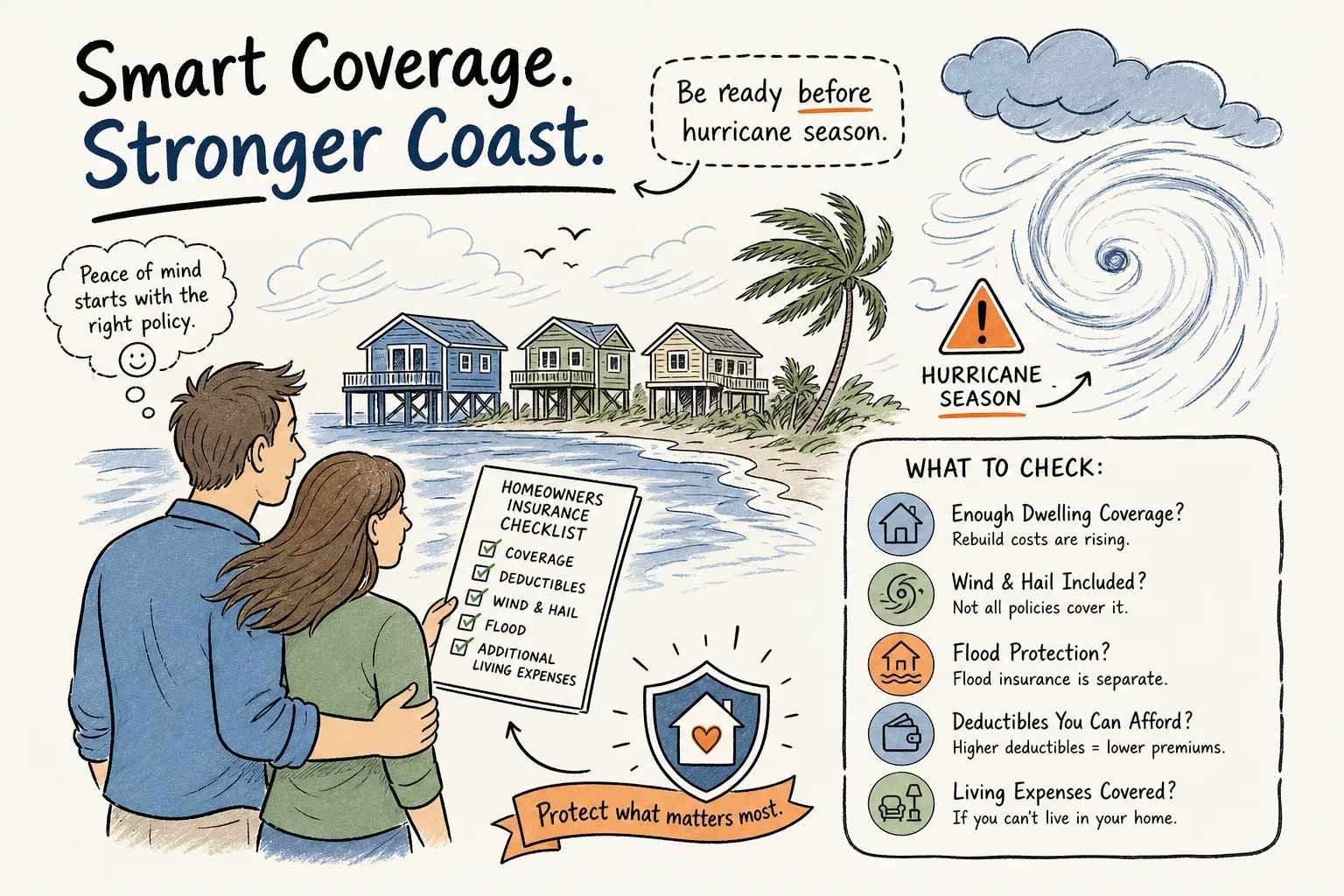
Coastal flood-preparedness infographic with couple, storm clouds, rising water, and checklist for home protection
By Brad Spurgeon • October 12, 2026
A homeowner in Texas City had been paying her homeowners insurance premiums faithfully for years. When a named storm rolled through Galveston County and tore shingles off her roof, she filed her claim confident her policy had her back. What she didn't know, and what nobody had told her, was that windstorm damage had been quietly excluded from her standard policy. The payout she expected? It wasn't coming. That conversation, the one that happens after a hurricane instead of before it, is exactly what we work to prevent at Brad Spurgeon Insurance Agency Inc. We're a family agency that has been serving Texas City and the Gulf Coast for decades, and we've seen this scenario more times than we'd like. The good news: once you understand how homeowners insurance actually works on the coast, protecting yourself completely is straightforward. This article walks you through what's covered, what's not, and the specific steps to get fully protected before hurricane season starts.
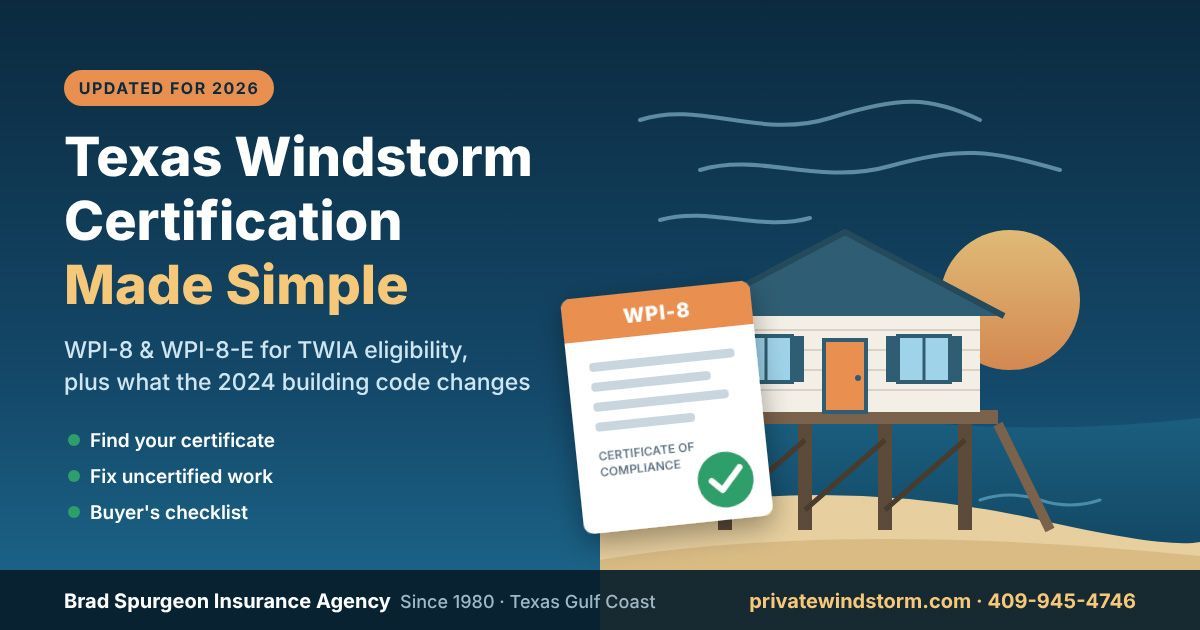
Texas Windstorm Certification banner with house, checklist form, and orange moon on blue background
By Brad Spurgeon • October 9, 2026
How to get, find or fix a Texas windstorm certificate (WPI-8 / WPI-8-E) for TWIA coverage. Updated for the 2024 building code. Local agent guide.
September 15, 2026
If you own a home in Texas City, you already know windstorm insurance isn't optional, and you've probably felt the sting of the premium on your renewal notice. Years of active hurricane seasons along the Gulf have pushed rates higher across the board, but that doesn't mean you're stuck accepting whatever number your ca
Show More