
How to Build Truly Comprehensive Personal Liability Coverage for Your Texas Gulf Coast Home

Brad Spurgeon • October 29, 2026
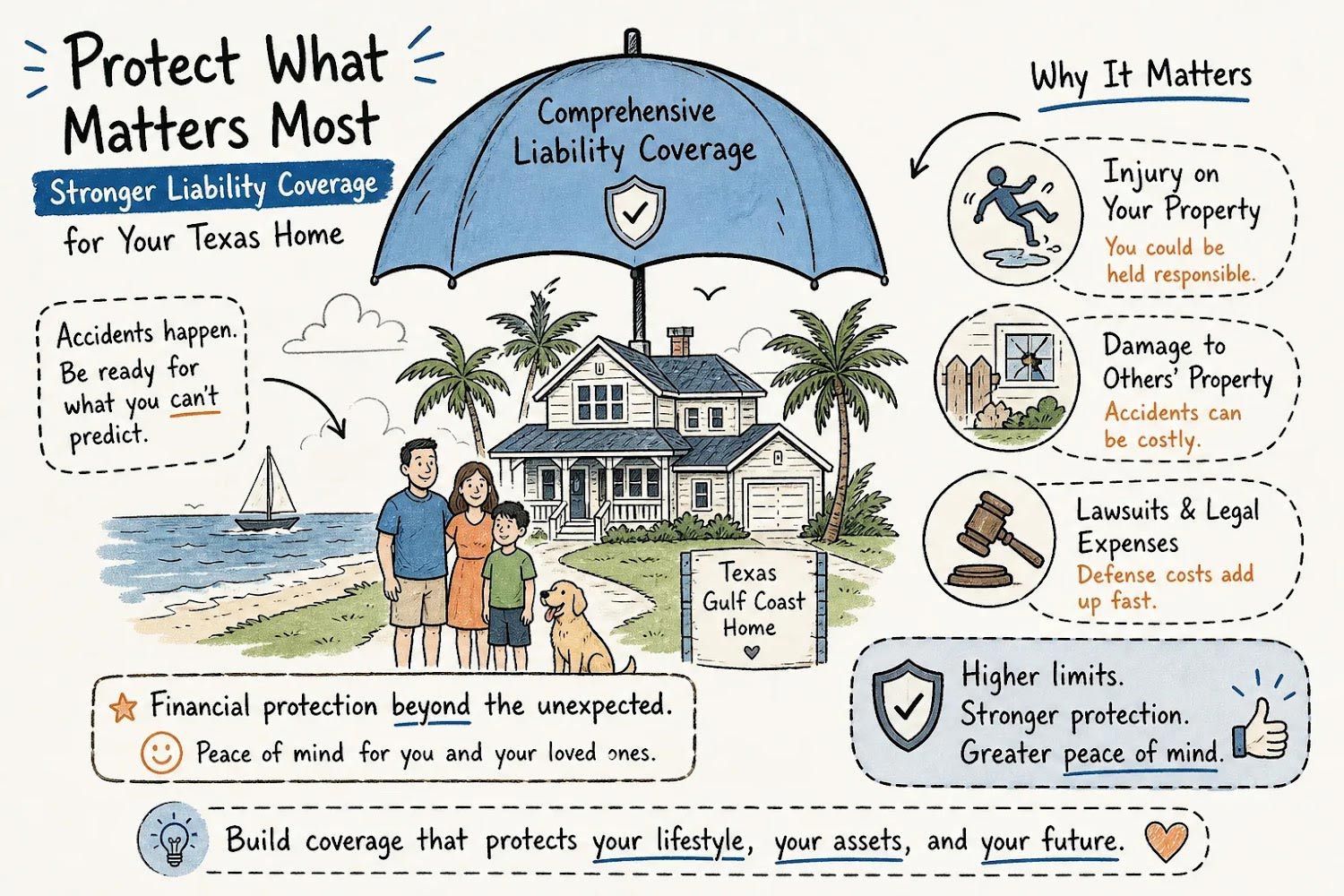
Flood insurance flyer with house, umbrella, family, and coastal storm warnings

Comprehensive personal liability coverage, known as Coverage E in your homeowners or renters policy, pays when someone else is injured on your property or you accidentally damage their property and you're legally responsible. It also covers your legal defense costs, attorney fees, and court judgments up to your policy limit.


This guide breaks down exactly what you're covered for, what slips through the gaps, and how to build a comprehensive liability protection stack that actually holds up when a claim lands. Whether you're a first-time buyer in Texas City or a long-time Gulf Coast homeowner juggling a boat, a dog, and a rental unit, getting these limits right matters more here than almost anywhere else in the country.

Key takeaways

  • Coverage E is broad but exclusion-heavy: Personal liability coveragefollows you beyond your home and covers legal defense costs, but it excludes intentional acts, business activities, auto accidents, and your own injuries.
  • Windstorm and flood policies carry no liability: TWIA and NFIP policies cover property damage only. Your liability protection lives in your base homeowners policy, and it must be adequate on its own.
  • Landlords need a different policy: A standard homeowners policy is not designed to cover liability from rented premises. A landlord or dwelling policy with confirmed liability coverage is required.

What does comprehensive personal liability coverage actually cover?

Coverage E protects you and household members when a third party suffers bodily injury or property damage and holds you legally responsible. That includes a guest who slips on your walkway, a neighbor whose fence your tree falls on, and someone injured by your dog. Critically, coverage follows you, not just your address: if you accidentally damage a neighbor's property while helping them move, Coverage E can still apply.

Legal defense costs and limits

Legal defense costs are included and count against your limit. Attorney fees, court costs, settlements, and covered judgments all come from that same pool of money.

Coverage for third-party injuries

Most homeowners policies also include Coverage F, a smaller medical-payments companion that pays reasonable medical expenses for someone injured on your premises without requiring proof of legal fault. Sub-limits are typically a small amount, often in the low thousands of dollars, so if a neighbor's child cuts their hand on your property and needs stitches, Coverage F can handle that cleanly. For serious injuries with major medical costs, Coverage F is a starting point, not a solution.


The exclusions matter as much as the coverage. Intentional acts, criminal conduct, injuries to household members, business and professional activities conducted from the home, most boating accidents, contractual liability, and employment-related claims for household staff are all typically outside the policy's reach. Auto accidents are the domain of your auto policy. Each exclusion represents a gap that Gulf Coast homeowners, with their layered mix of exposures, need to account for deliberately.

Which Gulf Coast scenarios actually trigger a liability claim?

Post-storm guest injuries are among the most common liability scenarios for Texas Gulf Coast homeowners. A guest who slips on a wet deck or trips on storm debris during a hurricane-recovery cookout can bring a premises liability claim even when weather contributed to the hazard. Under Texas law, your duty of care to visitors doesn't pause because a tropical storm just passed through. Storm-season gatherings, neighborhood check-ins, and cleanup crews all put more people on your property at exactly the moment when physical hazards are at their worst.


Dog bites are another frequent trigger. Texas applies a negligence standard rather than strict liability, meaning a claimant typically must show the owner knew or should have known the dog had dangerous tendencies, or that the owner failed to use reasonable care to control it. Homeowners

personal liability coverage is usually the primary policy that responds to dog bite claims, covering defense costs, settlements, and judgments up to your limit. Be aware that many homeowners policies carry breed exclusions; if your policy excludes your dog's breed, your Coverage E doesn't apply to a bite claim.


Boat accidents expose a gap that surprises many Gulf Coast residents. Standard homeowners policies generally do not provide liability coverage for motorized watercraft accidents, according to the Texas Department of Insurance. If you cause a collision on Galveston Bay and injure another boater or damage their vessel, you're likely looking at personal exposure rather than an insurance payout. A dedicated boat policy should be reviewed for bodily-injury and property-damage liability, wreck removal, fuel-spill coverage, and Gulf Coast hurricane terms.


Rental property liability is a category of its own. A standard homeowners policy is built around owner-occupied premises, and if a tenant's guest is injured because of a maintenance defect or unsafe condition, that claim may fall entirely outside your coverage. In Texas, the standard TDP-3 dwelling form does not itself contain a liability section, which means landlords need to confirm explicitly that their policy includes premises liability and defense coverage for tenant-related incidents. Homeowners juggling a boat, a dog, and a rental unit simultaneously face multiple potential exclusions at once, which is exactly why a comprehensive personal liability review matters.

How does liability fit into a layered Gulf Coast coverage stack?

Many Gulf Coast homeowners overlook this: TWIA windstorm policies and NFIP flood policies cover property damage only. Neither carries any personal liability component. If your wind coverage is split off to a separate windstorm carrier, your personal liability protection lives entirely in your base homeowners policy. That base policy needs to be adequate on its own, because no other policy in your Gulf Coast stack is picking up the slack.


Piecing together coverage from multiple carriers creates real risk. A homeowner with a TWIA windstorm policy, an NFIP flood policy, and a base homeowners policy from a third carrier may not have anyone reviewing whether those three policies work together without gaps. Picture a post- hurricane scenario where a repair crew member is injured on your property: if your liability limits weren't sized correctly when you bought the policy, that coverage gap becomes a financial problem fast. Liability limits, policy terms, and exclusions need to be evaluated as a complete picture, not in isolation.


At Brad Spurgeon Insurance Agency Inc., we've been helping Texas City and Gulf Coast homeowners navigate this kind of layered coverage picture since 1986.

What liability limits are actually right for a Gulf Coast homeowner?

A single slip-and-fall lawsuit that includes medical bills, lost wages, and pain-and-suffering damages can push well past that limit before a court ever enters a judgment.


Gulf Coast homeowners with boats, pools, rental units, or dogs face a higher-than-average claim probability. The cost difference is modest: according to CoverageCat, moving from $100,000 to $300,000 in liability coverage typically adds roughly $10 to $50 per year to a homeowners premium, and stepping up to $500,000 may add approximately $17 or more annually above the $300,000 tier, depending on the insurer and policy. That's one of the most cost-effective coverage upgrades available to a homeowner relative to the exposure it addresses.


Factors that affect your specific pricing include claims history, pets, watercraft, pools, and rental activity. A Gulf Coast homeowner with all of those will pay more than someone with none of them, but the incremental cost of adequate comprehensive liability protection remains low in either case.

When does adding an umbrella policy actually make sense?

An umbrella policy starts paying after your underlying homeowners or auto policy limit is exhausted.


The Gulf Coast risk profile makes umbrella liability insurance a logical fit for a wide range of homeowners. It's worth considering seriously if you:

  • Own a boat, a pool, a trampoline, or a rental property
  • Have a dog or teenage drivers in the household
  • Host frequent guests
  • Have significant home equity, savings, or investment accounts that could be exposed in a judgment


All of those profiles are common among Gulf Coast homeowners, often in combination.


Umbrella policies also extend to some personal-injury claims that many homeowners policies exclude entirely: libel, slander, defamation, invasion of privacy, false arrest, and wrongful eviction are categories that a standard homeowners policy may not touch but that an umbrella often covers. According to Insuranceopedia, a $1 million umbrella typically costs $200 to $500 per year, with each additional million generally costing approximately $75 to $100 more. Pairing an umbrella with a review of your base homeowners limits isn't optional; it's a requirement for the umbrella to function properly.

How do you know if your current coverage is actually enough?

Two specific checklists address the two audiences most likely to be underprotected on the Gulf Coast. If you fall into either group, these are the right questions to bring to your next policy review.

First-time buyer liability checklist:

  • Ask whether your policy carries breed exclusions or watercraft limitations
  • If you plan to get a dog, boat, or pool, flag this before closing so coverage can be structured correctly from day one
  • Verify that your windstorm and flood policies do not create gaps in your liability protection
  • Request a full policy review that looks at all three coverage layers together

Landlord liability checklist:

  • Confirm you have a landlord or dwelling policy, not a standard homeowners policy, for rental properties
  • Verify that liability coverage explicitly extends to tenant-related incidents and tenant guests
  • Review whether your rental lease requires tenants to carry renters insurance with their own liability coverage
  • Evaluate whether an umbrella makes sense given the number of units and level of rental activity
  • Connect with a local agency familiar with Gulf Coast rental property risks to audit your current stack

Build the right comprehensive personal liability stack before you need it

Personal liability coverage is the financial layer that stands between a lawsuit and your savings account. For Gulf Coast homeowners managing storm season, boats, dogs, rental properties, and frequent guests, the risk combination is more demanding than what most standard policy defaults are built to handle. The good news is that fixing the gap is straightforward and inexpensive relative to the exposure.


Start by pulling out your current policy declarations page and confirming your Coverage E limit. Then look at whether your windstorm and flood policies leave any gaps in your liability protection, and consider whether your asset profile justifies adding an umbrella. Each of those is a conversation worth having before a claim forces it.


Brad Spurgeon Insurance Agency Inc. has served Texas City and the Texas Gulf Coast since 1986. We offer policy reviews, bundling options, and online tools for quotes and claims support. If you want your comprehensive personal liability coverage reviewed by someone who understands Gulf Coast risk from the ground up, reach out to our team and we'll walk through your full coverage picture together.

Frequently Asked Questions

  • How do policy exclusions affect whether a liability claim will be paid?

    Exclusions can prevent a claim from being covered even when an injury or damage occurs, so a covered event must not fall under any exclusion for payout to apply. We note that intentional acts, business activities, auto accidents, most boating incidents, contractual liability, employment-related claims for household staff, and injuries to household members are common exclusions that create coverage gaps on the Gulf Coast.

  • How does Coverage F differ from Coverage E in handling a guest's medical expenses?

    Coverage F pays small, immediate medical expenses for someone injured on your premises without needing proof of legal fault, while Coverage E handles legal liability and defense up to your policy limit. We explain that Coverage F typically has low sub-limits (often in the low thousands) and is a starting point for minor injuries, whereas Coverage E covers larger claims, settlements, and defense costs but those costs count against its single limit.

  • What should landlords require tenants to carry to reduce liability risk?

    Landlords should verify whether the lease requires tenants to carry renters insurance with their own liability coverage. We recommend confirming your landlord or dwelling policy explicitly extends liability to tenant-related incidents and tenant guests, and asking tenants to maintain renters insurance helps shift some third-party liability exposure onto the tenant's policy.

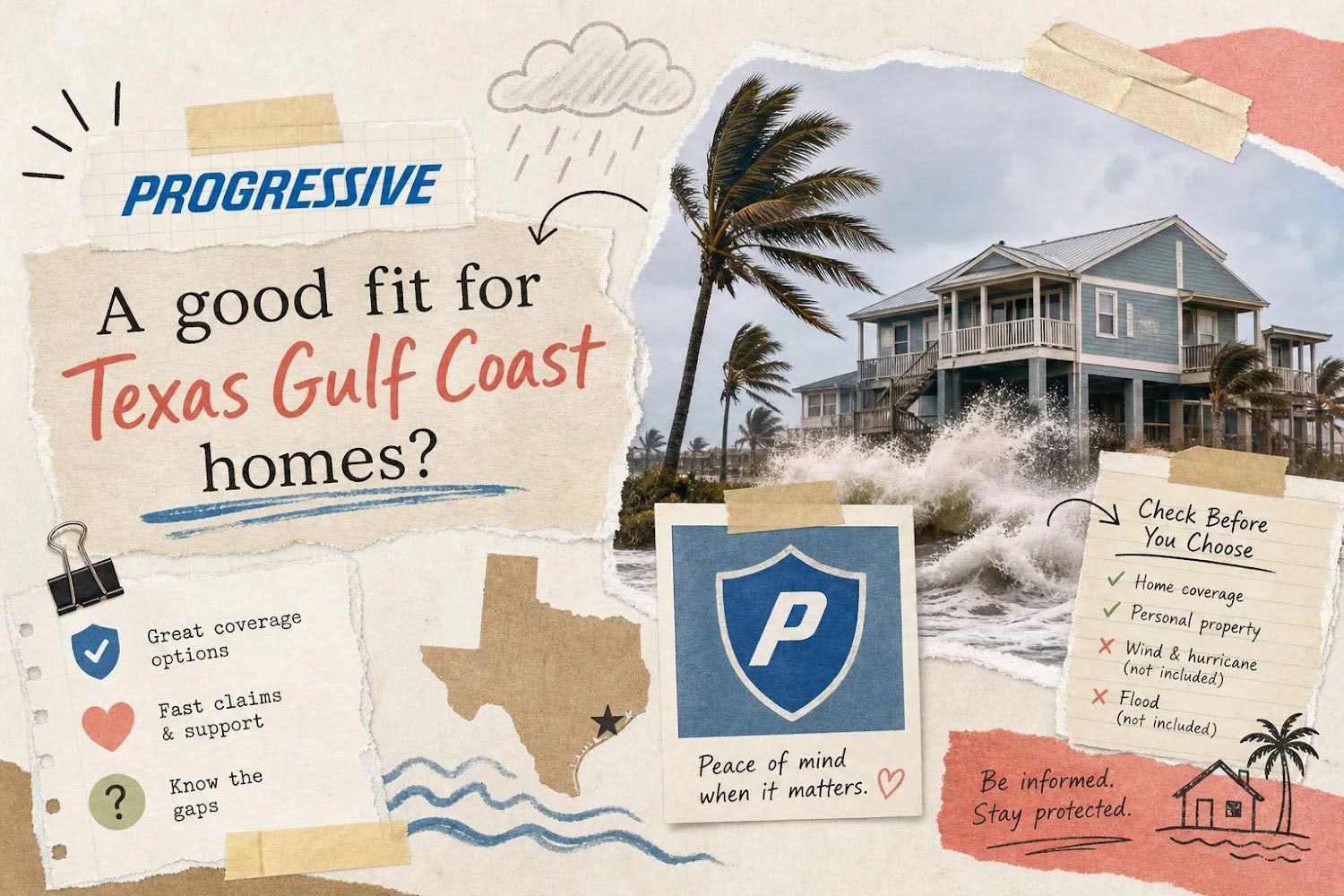
Progressive ad: “A good fit for Texas Gulf Coast homes?” with beach house, storm surf, and map graphic
By Brad Spurgeon • October 29, 2026
Progressive home insurance offers standard HO-3 coverage that works well for most American homeowners, but for Texas Gulf Coast properties, that base policy typically excludes the two biggest threats in the region: windstorm damage and flooding. Those aren't minor omissions for a home in Galveston County or along the Brazoria coastline. They're exactly what a hurricane or tropical storm delivers. Texas already carries some of the highest home insurance premiums in the country, and coastal ZIP codes push that figure even further above the national average. Spending that much on a policy that leaves windstorm and flood damage uncovered is a critical mistake. This article breaks down what progressive home insurance actually includes, where it falls short for coastal properties, and what a complete coverage picture looks like.
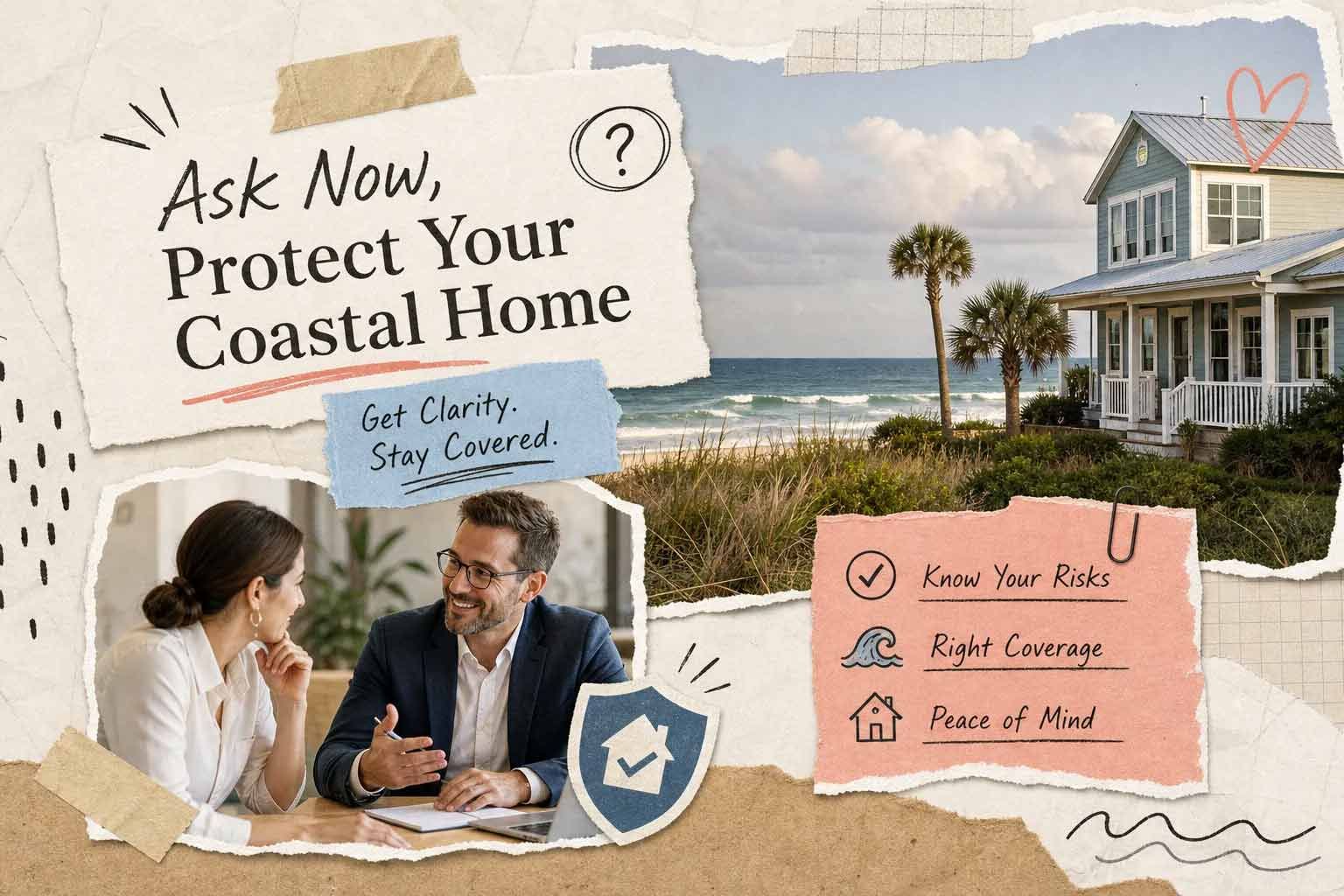
Coastal home insurance ad with beach house, couple talking, and text “Ask Now, Protect Your Coastal Home”
By Brad Spurgeon • October 22, 2026
What are the most important questions to ask an insurance agent before buying coastal home insurance? Most buyers never think to ask them until after a storm. Many coastal homebuyers report spending more time negotiating kitchen countertops than understanding their insurance policy. That's a reasonable way to live, until a named storm makes landfall and the claim comes back short of what you needed. The policy was there. The coverage wasn't. Wind excluded. Flood not purchased. Deductible never translated into a real dollar amount. The policy looked fine on paper. In practice, it had gaps a storm could drive a boat through. This article gives you the questions that change that. Six categories. Each one designed to reveal whether the agent in front of you truly understands Gulf Coast exposure, or is simply filling in a form.
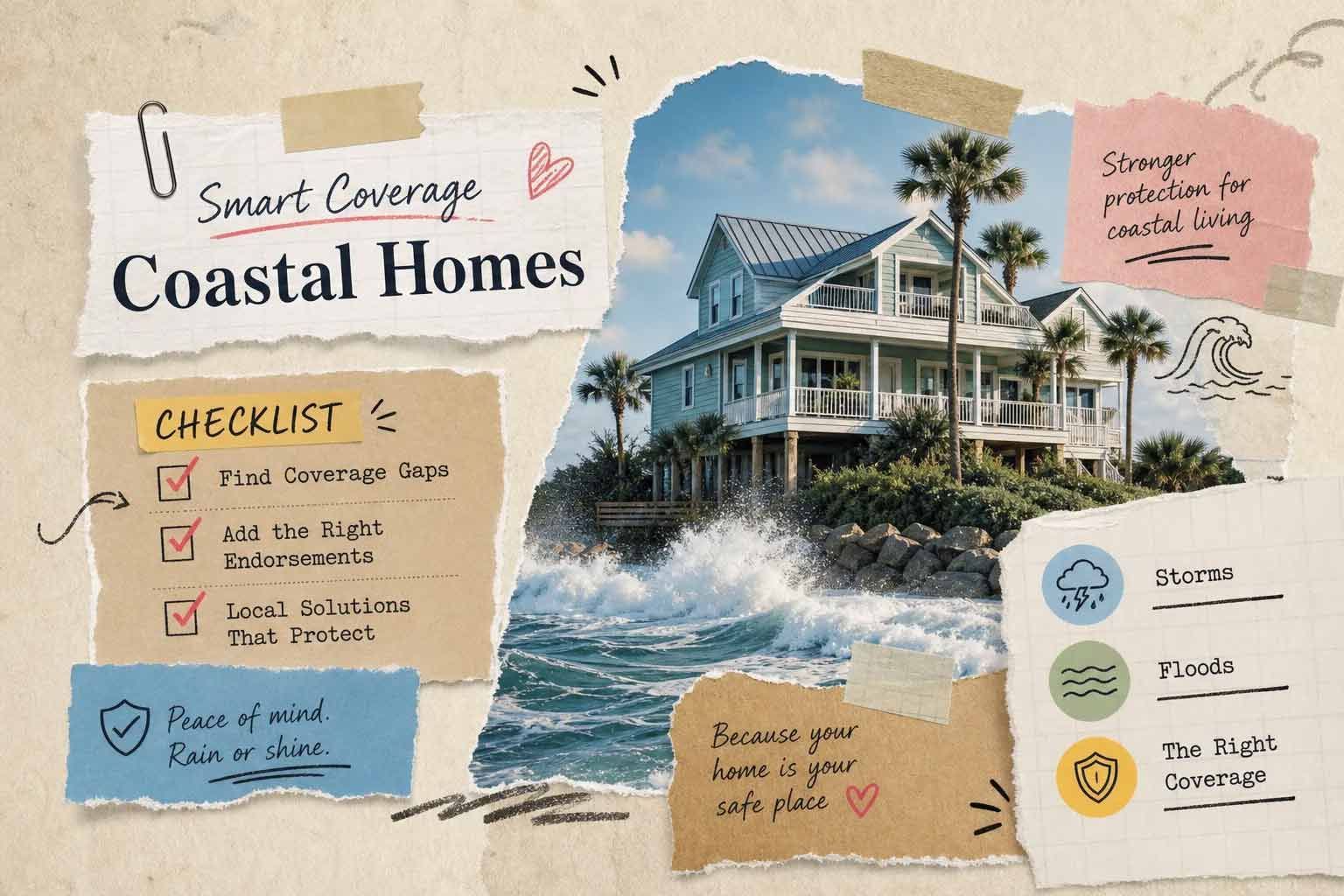
Handmade collage for
By Brad Spurgeon • October 22, 2026
Progressive home insurance is one of the most recognized products in the country, and that familiarity makes it easy for coastal homeowners to assume the policy covers everything it should. Many homeowners assume the standard policy handles all their risks, wind, water, and everything a Gulf Coast storm can throw at a house. It often leaves critical gaps. Gulf Coast homes face windstorm, flood, and hurricane risks that standard policies routinely exclude, and discovering those exclusions after a storm can lead to large out-of-pocket costs. This checklist walks through what a Progressive homeowners policy actually includes, where it leaves coastal buyers exposed, what it costs in Texas, and how to close the gaps before storm season arrives. We've been working with Gulf Coast homeowners from our base in Texas City since 1986.
October 19, 2026
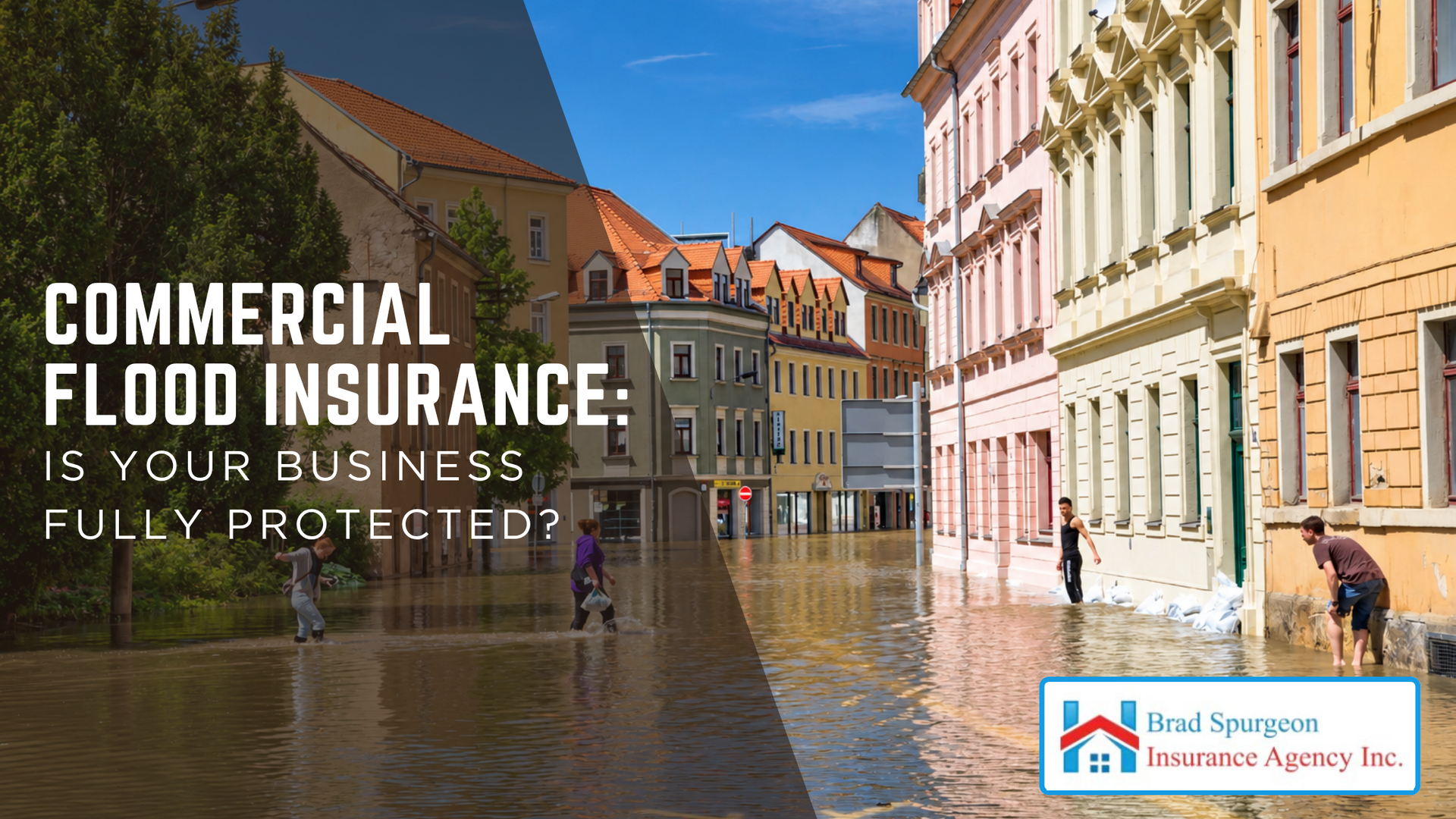
Flooding can disrupt business operations, damage expensive equipment, and create financial losses that extend well beyond the initial cleanup. For commercial property owners, retailers, and service providers along the Texas Gulf Coast, understanding flood exposure is an important part of risk management. Knowing which
October 19, 2026
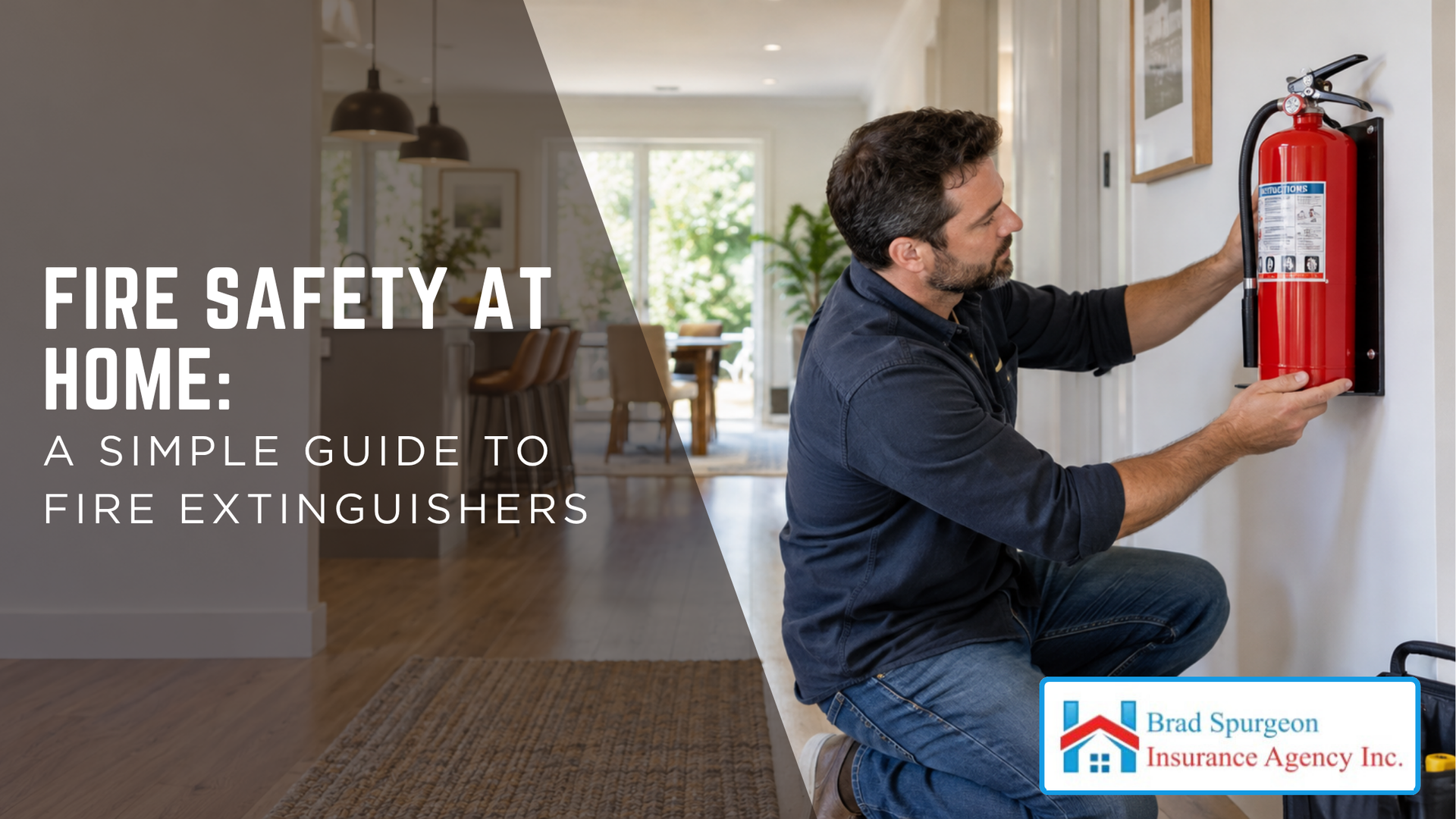
A small fire can become a serious emergency in moments. Whether it starts in the kitchen, garage, or another part of the house, knowing how to respond can help protect your family and property.
October 15, 2026
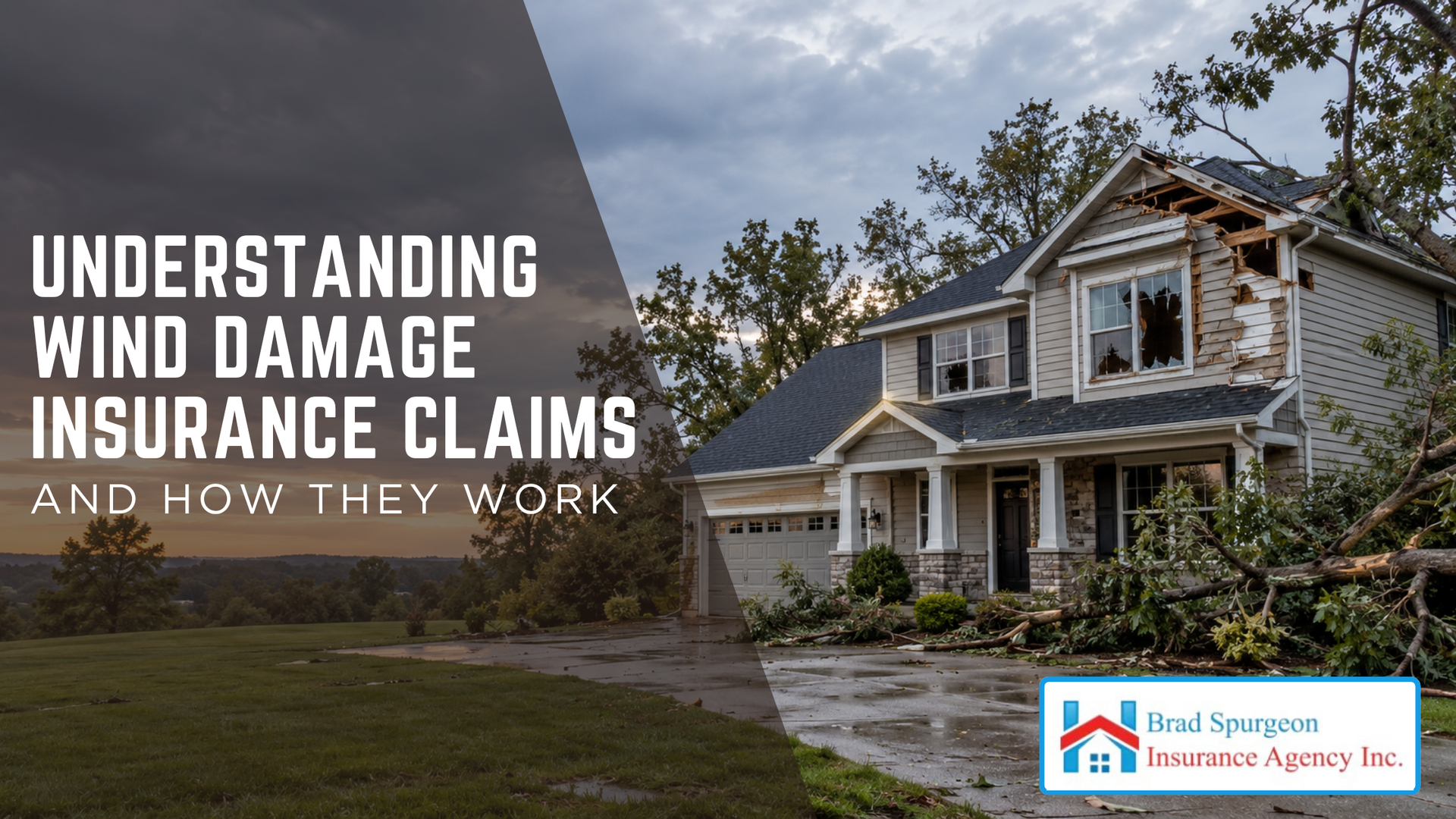
Strong winds from thunderstorms, hurricanes, and tropical storms can cause significant property damage. Missing roof shingles, broken windows, damaged siding, and fallen trees are just a few problems homeowners may discover after severe weather.
October 15, 2026
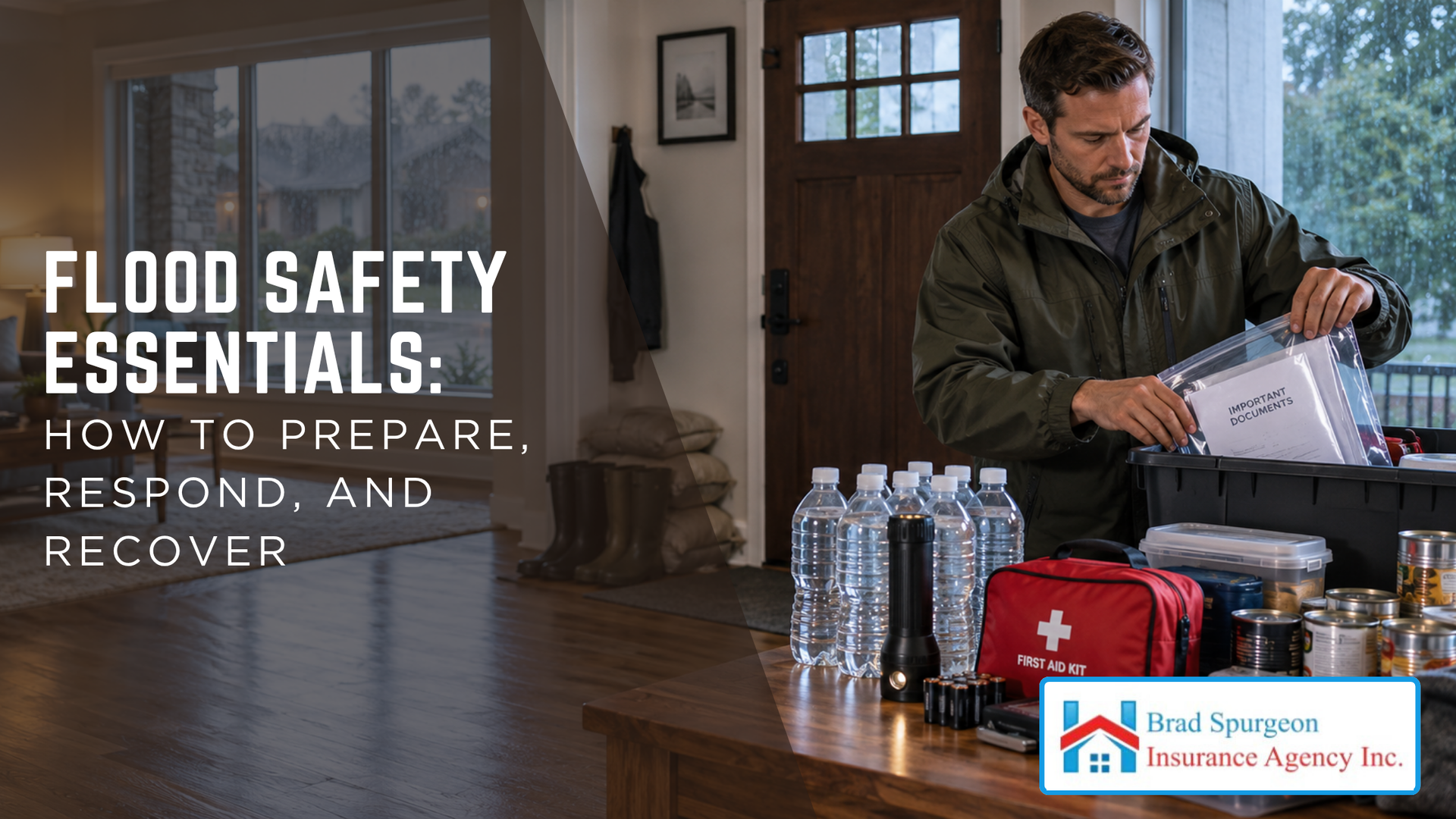
Flooding can happen quickly, leaving families with little time to protect their homes and reach safety. Heavy rainfall, overflowing waterways, tropical storms, and storm surge can create dangerous conditions, particularly in coastal communities.
Coastal flood-preparedness infographic with couple, storm clouds, rising water, and checklist for home protection
By Brad Spurgeon • October 12, 2026
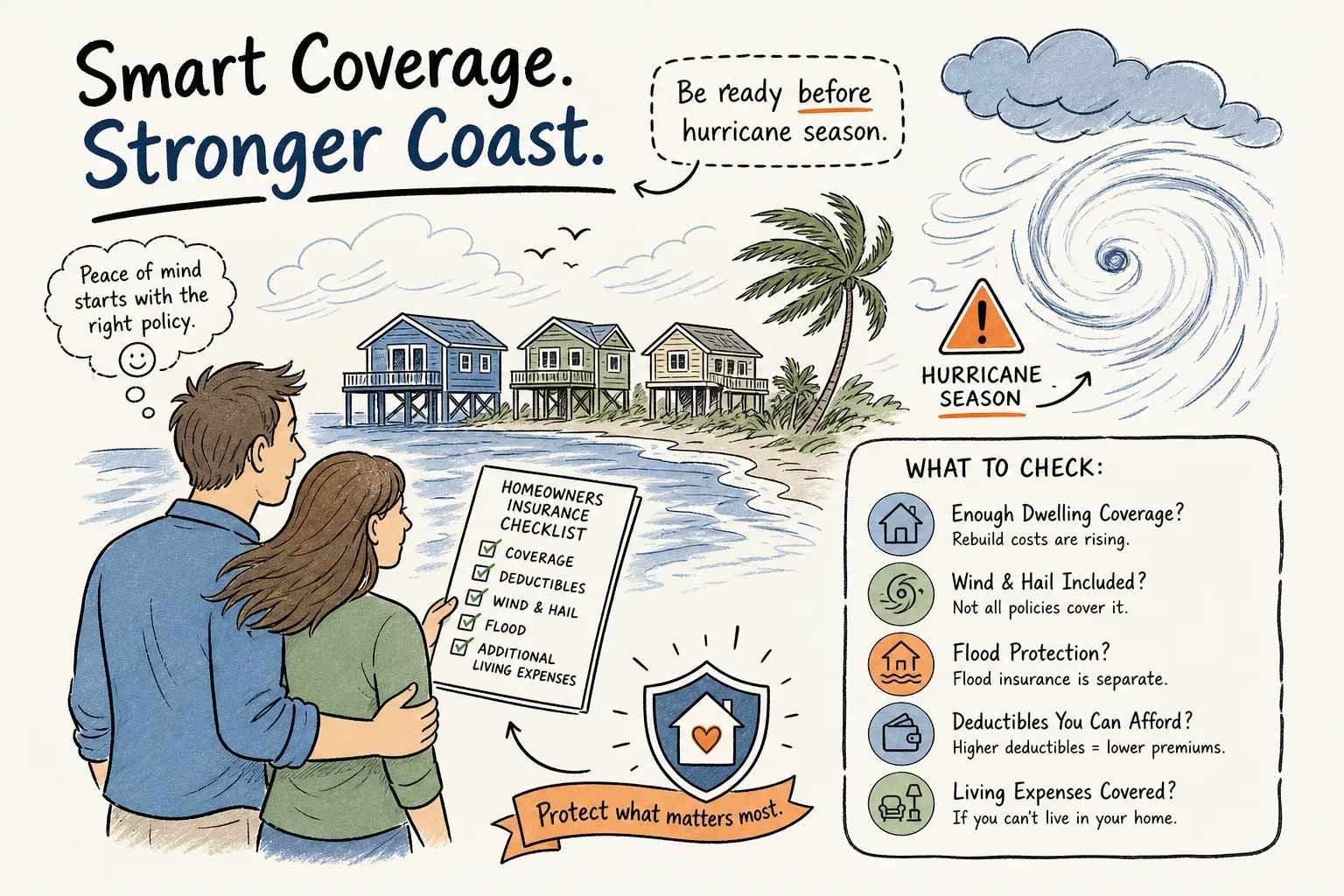
A homeowner in Texas City had been paying her homeowners insurance premiums faithfully for years. When a named storm rolled through Galveston County and tore shingles off her roof, she filed her claim confident her policy had her back. What she didn't know, and what nobody had told her, was that windstorm damage had been quietly excluded from her standard policy. The payout she expected? It wasn't coming. That conversation, the one that happens after a hurricane instead of before it, is exactly what we work to prevent at Brad Spurgeon Insurance Agency Inc. We're a family agency that has been serving Texas City and the Gulf Coast for decades, and we've seen this scenario more times than we'd like. The good news: once you understand how homeowners insurance actually works on the coast, protecting yourself completely is straightforward. This article walks you through what's covered, what's not, and the specific steps to get fully protected before hurricane season starts.
Texas Windstorm Certification banner with house, checklist form, and orange moon on blue background
By Brad Spurgeon • October 9, 2026
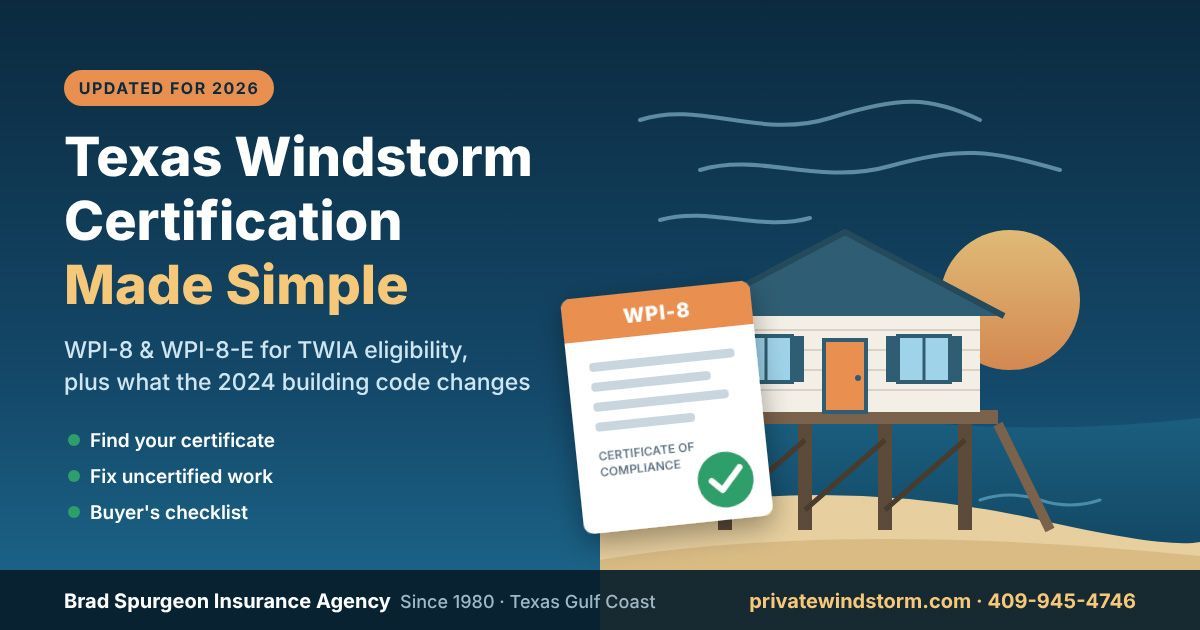
How to get, find or fix a Texas windstorm certificate (WPI-8 / WPI-8-E) for TWIA coverage. Updated for the 2024 building code. Local agent guide.
September 15, 2026
If you own a home in Texas City, you already know windstorm insurance isn't optional, and you've probably felt the sting of the premium on your renewal notice. Years of active hurricane seasons along the Gulf have pushed rates higher across the board, but that doesn't mean you're stuck accepting whatever number your ca
Show More