Texas Windstorm Certification (WPI-8): The 2026 Homeowner's Guide to TWIA Eligibility

By Brad Spurgeon, third-generation Texas insurance agent · Updated October 2026
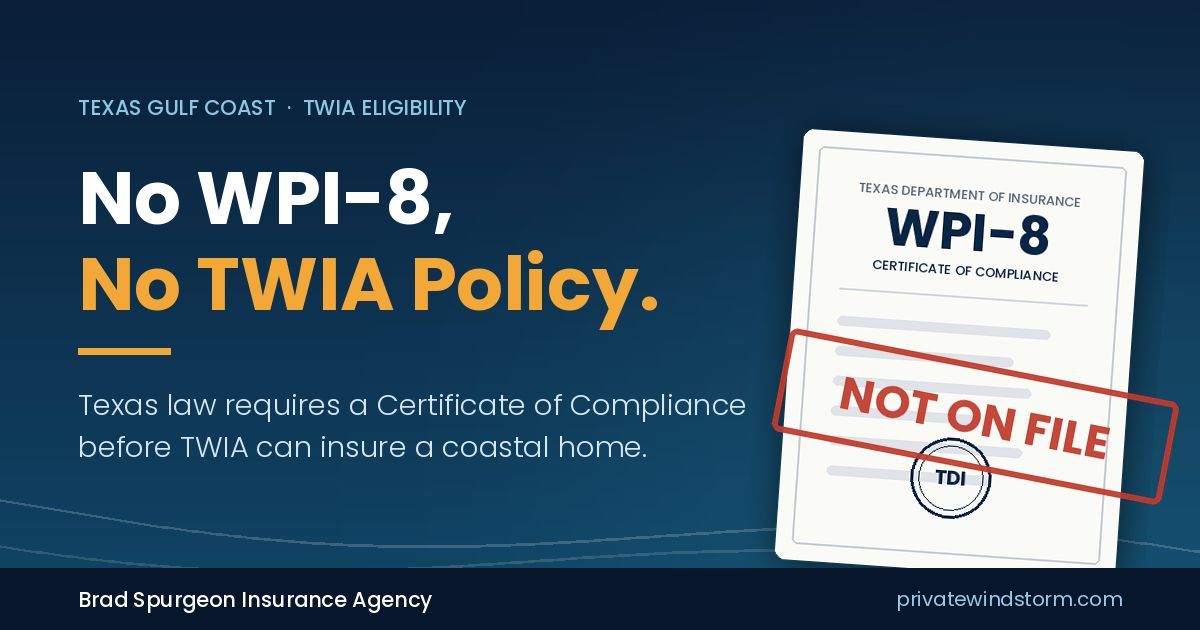
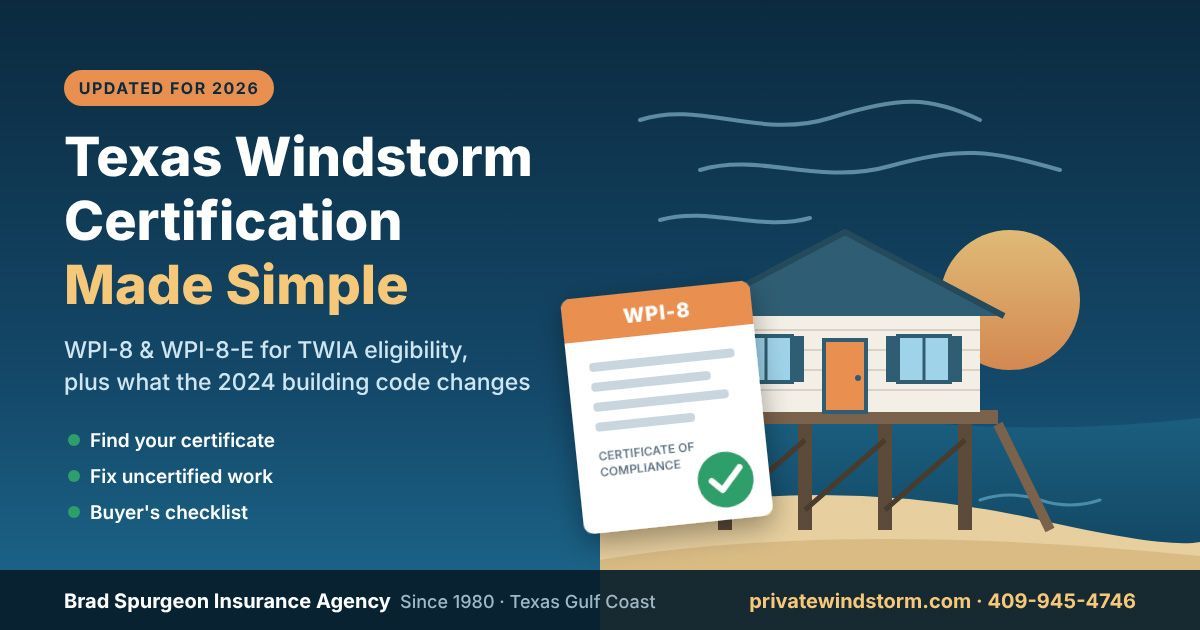
Short answer: To buy wind and hail coverage from the Texas Windstorm Insurance Association (TWIA), your coastal home generally needs a windstorm Certificate of Compliance from the Texas Department of Insurance (TDI). It is a WPI-8 if the work was inspected while it was being built, or a WPI-8-E if a licensed engineer certified it after completion. Since April 1, 2026, new work must meet the 2024 International Residential and Building Codes.
Our family agency has written coastal Texas insurance since 1980. The question we hear most from Gulf Coast buyers, builders and homeowners isn't about price. It's "Do I have a windstorm certificate, and what do I do if I don't?" This guide answers that in plain English, including the parts the official pages leave out.
What Is a Windstorm Certificate of Compliance?
A windstorm Certificate of Compliance is TDI's official record that a structure, or a specific improvement to it, was built to the windstorm building code in effect for its location. Texas Insurance Code Chapter 2210 requires that proof before a property is eligible for a TWIA policy.
Without it, TWIA has no evidence the home meets code. The property may be treated as uninsurable by TWIA, which on much of the coast means no wind and hail coverage at all unless a private carrier will write it.
One point trips people up: the certificate follows the
work, not just the house. A home built in 2010 with a valid WPI-8 can still have a gap if the roof was replaced in 2022 with no inspection.
Who Needs One: The Texas Designated Catastrophe Area
TWIA only writes property in the designated catastrophe area: the 14 first-tier coastal counties plus part of Harris County.
- Coastal counties: Aransas, Brazoria, Calhoun, Cameron, Chambers, Galveston, Jefferson, Kenedy, Kleberg, Matagorda, Nueces, Refugio, San Patricio and Willacy
- Harris County (partial): areas east of Highway 146, including La Porte, Morgan's Point, Pasadena, Seabrook and Shoreacres
Within that area, TDI divides properties into three windstorm zones: Seaward, Inland I and Inland II. Your zone sets the design wind speed, which drives what roof fastening, window ratings and opening protection the code requires. Seaward properties (for example, Galveston Island, Bolivar Peninsula, South Padre and Port Aransas) face the strictest standards.
Check your exact zone on
TDI's catastrophe area map before you build, buy or remodel.
WPI-8 vs. WPI-8-E vs. WPI-8-C: Which Certificate Do You Have?
All three prove code compliance and all three are accepted by TWIA. The difference is when the inspection happened and who issued the certificate.
| Certificate | Issued by | For | Who inspects | Where to find it |
|---|---|---|---|---|
| WPI-8 | TDI | New or ongoing construction, inspected during the work | TDI-appointed engineer or TDI windstorm inspector | TDI Windstorm system |
| WPI-8-E | TDI (since June 1, 2020) | Completed work that was never inspected | Any Texas-licensed professional engineer | TDI Windstorm system |
| WPI-8-C | TWIA (Jan 1, 2017 – May 31, 2020) | Completed work, older program | Texas-licensed engineer | TWIA certificate lookup tool only |
You may also see WPI-1 (the application filed before work starts), WPI-2 (the engineer's inspection verification during construction) and WPI-2E (the engineer's form for completed work). Those are steps in the process, not the certificate itself.
2026 Update: The 2024 Building Code Is Now in Effect
As of April 1, 2026, TDI adopted the 2024 International Residential Code and 2024 International Building Code as the windstorm standard for TWIA eligibility in all three zones. The 2018 codes applied from April 2020 through March 31, 2026.
What that means for you:
- Building or remodeling now? Your contractor, engineer, and product choices need to meet the 2024 codes. Ask your builder to confirm it in writing.
- Already have a certificate? You don't need to upgrade. A certificate shows the work met the code in effect when it was done.
- Shopping for windows, doors or roofing? Use products with current TDI product evaluations or manufacturer test reports. TDI has removed expired evaluation reports from its system.
TWIA's own certification page, last updated in 2024, does not yet reflect this change.
What Work Needs a Windstorm Certificate (and What Doesn't)
If the work touches how the building resists wind, plan on an inspection.
| Needs certification | Usually doesn't |
|---|---|
| New homes and new structures | Painting, carpet, refinishing |
| Additions and enlargements | Plumbing and electrical repairs |
| Windows, entry doors, garage doors | Fence repair |
| Patio covers and decks | Gutter repair or replacement |
| Roof replacement or significant roof repair | Temporary repairs after a storm |
| Re-siding a significant portion of a wall | Interior-only remodeling |
TDI keeps the full no-inspection-required list. When in doubt, call TDI at (800) 248-6032 before the work starts. Getting an inspection during construction is almost always cheaper and easier than certifying it afterward.
Agent tip: After a hurricane, roofers move fast and some skip the windstorm step. Before you sign, confirm your contractor will file the WPI-1 or that an appointed engineer will inspect the job.
How to Get a WPI-8 for New Construction or a Remodel
This is the standard path when the work has not started or is still underway.
- Confirm your zone and code. Look up the property on TDI's catastrophe area map. New work today follows the 2024 IRC/IBC.
- Line up your inspector. Use a TDI-appointed qualified inspector (a Texas-licensed engineer) or a TDI windstorm inspector. TDI's Windstorm system lists appointed engineers.
- File the WPI-1 before work begins. The application goes through TDI's Windstorm system, usually filed by your engineer or contractor. TDI says it usually processes forms within 48 hours.
- Get inspected during construction. The inspector checks the work at the required stages and submits a WPI-2 inspection verification. Don't close up walls or roof decking before a required inspection.
- Receive your WPI-8. Once the work passes, TDI issues the certificate. Anyone can view and print it from the Windstorm system.
- Send it to your agent. We attach it to your TWIA application or renewal file so your eligibility is never in question.
Work Already Finished Without a Certificate? The WPI-8-E Path
If the roof, windows or addition were completed without an inspection, you can still get certified. Since June 1, 2020, TDI issues a WPI-8-E for completed construction.
- Hire a Texas-licensed professional engineer. For completed work, the engineer doesn't need to be TDI-appointed. Any engineer licensed by the Texas Board of Professional Engineers and Land Surveyors can do it.
- Expect a closer look. The engineer must document that finished work meets code. That can mean product approvals, invoices, photos, or opening part of the roof, soffit or wall to see fasteners and connections.
- The engineer submits a signed WPI-2E with supporting evidence through TDI's Windstorm system.
- TDI reviews and issues the WPI-8-E, or denies it if the documentation falls short. TDI can also audit or inspect the property.
TDI notes that inspecting finished work is harder, so it may cost more than an inspection during construction. If the work can't be shown to meet code, corrections may be needed before an engineer will certify it.
How to Look Up an Existing Windstorm Certificate
Where you search depends on when the certificate was issued.
- WPI-8 or WPI-8-E (TDI): search by address in TDI's Windstorm system. This covers most certificates ever issued.
- WPI-8-C (TWIA, January 2017 to May 2020): use the TWIA certificate lookup tool. These are not in TDI's system.
Search tips: try the street address several ways ("Dr" vs. "Drive", with and without unit numbers), and search each improvement separately. A home can have one certificate for the original build and others for a roof, windows or an addition. Missing one for any of them can be a problem.
Can't find anything? Call us. We pull certificate records for clients and buyers every week.
Exceptions: When TWIA May Insure Without a Certificate
The Texas Insurance Code allows two exceptions for residential property:
- Homes built from 1988 through June 18, 2009 without a certificate may still qualify for TWIA, but with a 15% surcharge added to the premium.
- Homes insured on or after June 19, 2009 by a private insurer that cancels or non-renews them may qualify for TWIA even if a required WPI-8 is missing at the time of cancellation.
These rules have fine print. Construction dates, prior coverage and later improvements all matter. Talk with an agent before assuming either one applies to you.
Buying a Coastal Home? Your Windstorm Certificate Checklist
A missing certificate can stall a closing or leave a buyer with a far more expensive wind policy. Work through this during your option period, not the week before closing.
☐ Ask the seller for every WPI-8, WPI-8-E or WPI-8-C on the property
☐ Verify each one in TDI's system or TWIA's lookup tool
☐ Compare certificate dates to the roof, windows, doors and any additions
☐ Flag uncertified work and ask the seller to certify or credit the cost of a WPI-8-E
☐ Get a wind and hail quote from TWIA and private carriers before your option period ends
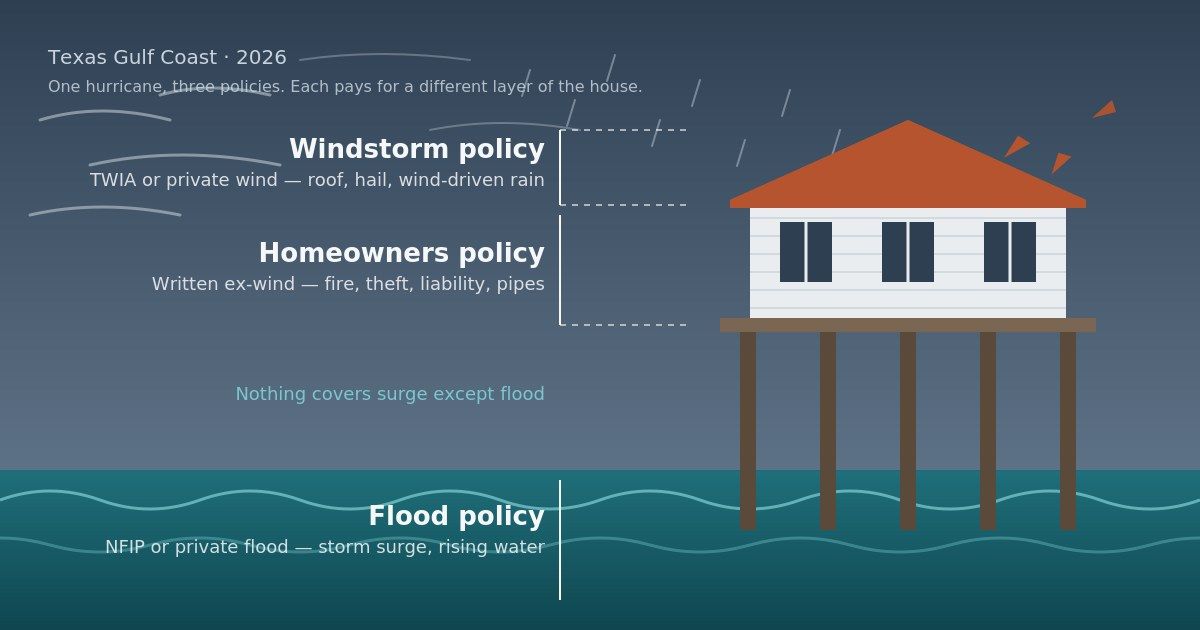
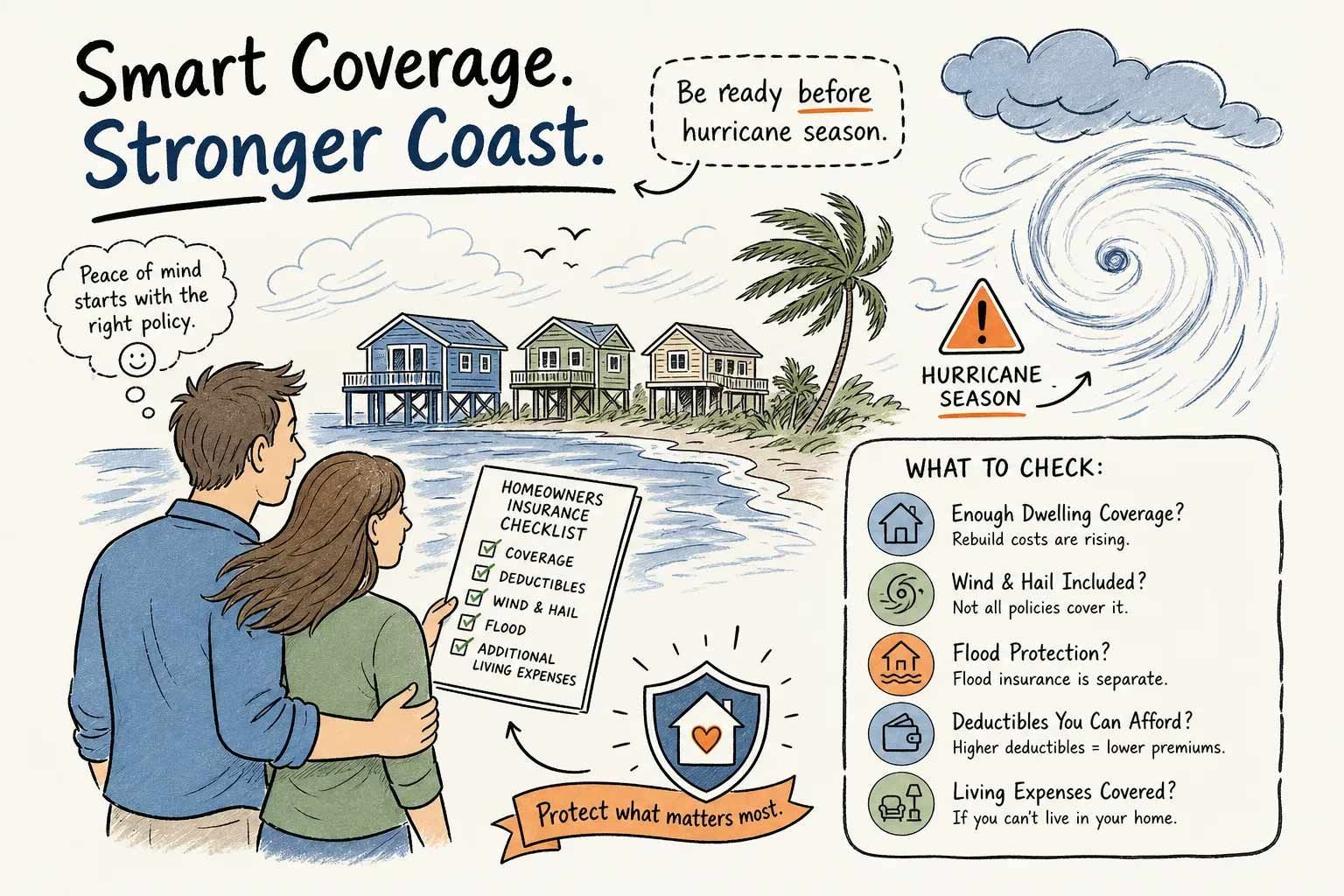
☐ Quote flood insurance too. TWIA does not cover flood, and many lenders require it in coastal zones
We run this check for buyers at no cost. It's the easiest way to avoid a surprise at the closing table.
No Certificate? Private Windstorm Coverage May Be an Option
TWIA is the insurer of last resort, not the only choice. Several private carriers write wind and hail on the Texas coast, and some evaluate properties on their own underwiting rather than requiring a WPI-8. Eligibility depends on the carrier, the home's age, roof condition and location.
Private wind can also bring higher limits, replacement cost options or broader coverage than TWIA, sometimes at a competitive price. It is worth comparing even when you do have a certificate.
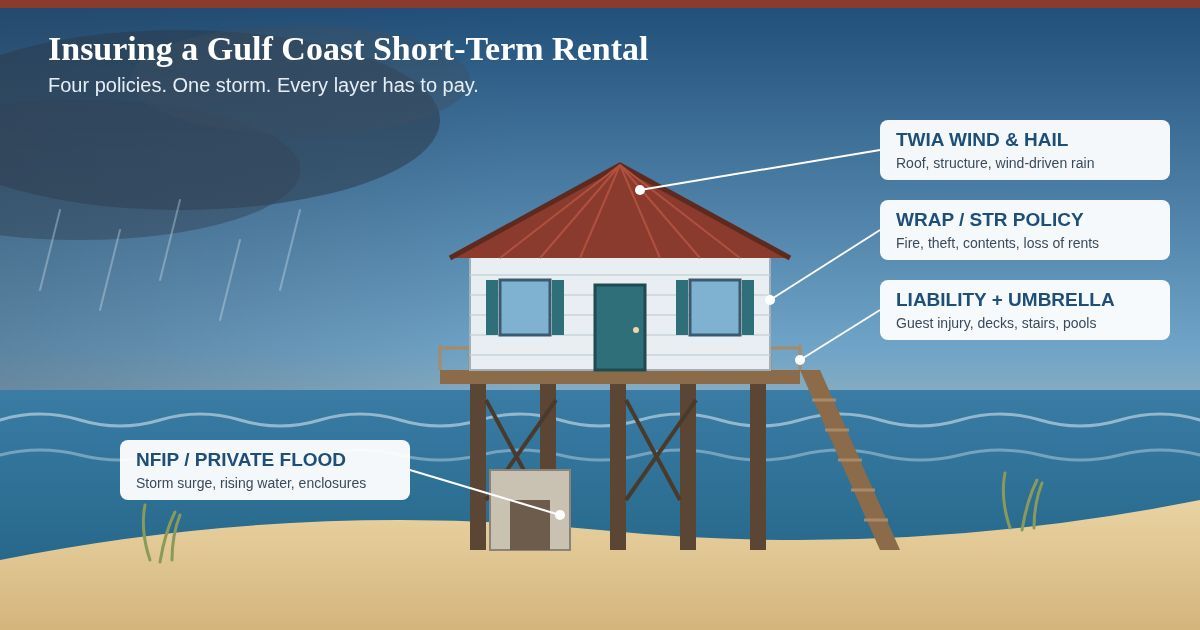
Brad Spurgeon Insurance Agency works with roughly 50 Texas carriers, so we can quote TWIA and private wind side by side, along with your homeowners and flood policies.
Frequently Asked Questions
What is a WPI-8?
A WPI-8 is TDI's Certificate of Compliance showing that new or ongoing construction was inspected and met the windstorm building code. It's the main document TWIA uses to confirm eligibility.
What's the difference between a WPI-8 and a WPI-8-E?
A WPI-8 covers work inspected during construction. A WPI-8-E covers work certified by a licensed engineer after it was finished.
Does TWIA issue windstorm certificates?
Not anymore. TWIA issued WPI-8-C certificates from January 2017 through May 2020. Since June 1, 2020, TDI issues all certificates.
Do I need a new certificate when I replace my roof?
Yes, in most cases. A roof replacement or significant roof repair needs its own certification, even if the house already has a WPI-8.
How long does it take?
TDI typically processes forms within 48 hours. The real timeline depends on scheduling inspections during construction or on how much an engineer must document for finished work.
Can I get TWIA coverage without a WPI-8?
Possibly. Homes built from 1988 to June 18, 2009 may qualify with a 15% surcharge, and some homes non-renewed by private carriers may qualify. Private wind carriers are another route.
Do I need a windstorm certificate for flood insurance?
No. Flood coverage through the NFIP or private flood carriers is separate and doesn't require a WPI-8.
Who do I call at TDI?
The TDI Windstorm Inspection Program: (800) 248-6032 or windstorm@tdi.texas.gov, with field offices in Beaumont, La Marque, Angleton and Corpus Christi.
Get Help From a Gulf Coast Windstorm Specialist
We're grateful to the coastal families who have trusted our agency since 1980. Whether you're tracking down a certificate, closing on a beach house, or weighing TWIA against private wind, we'll walk you through it and shop the market for you.
Call 409-945-4746 or request a quote at www.privatewindstorm.com.
This article is general information, not legal or engineering advice. Confirm requirements for your property with TDI or a licensed engineer.
Sources