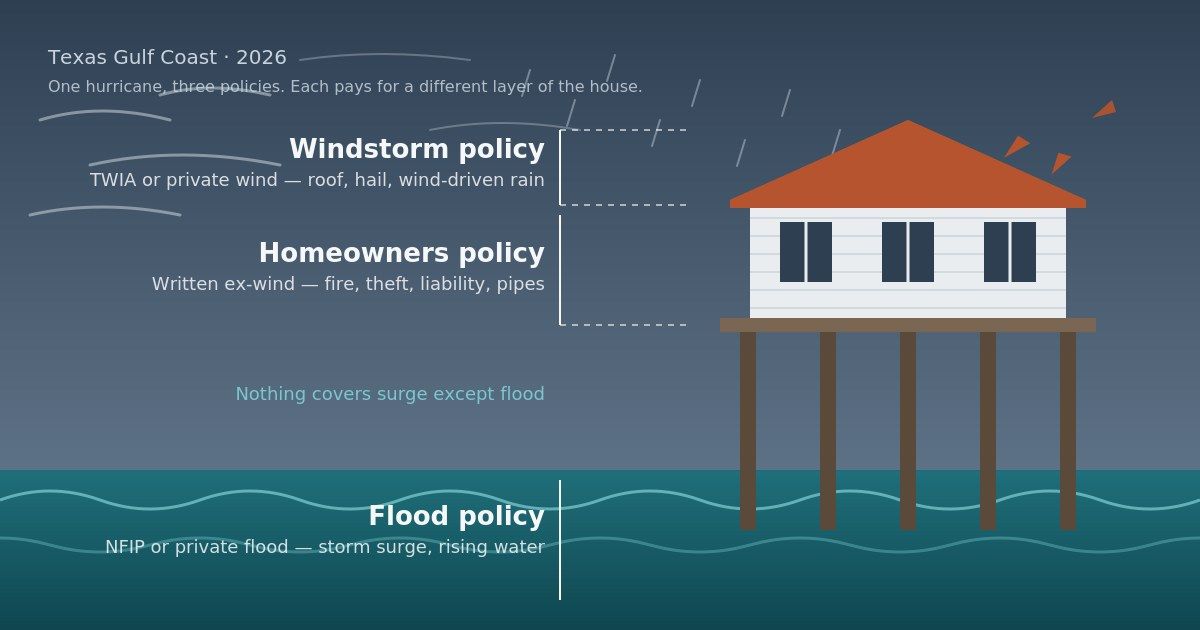
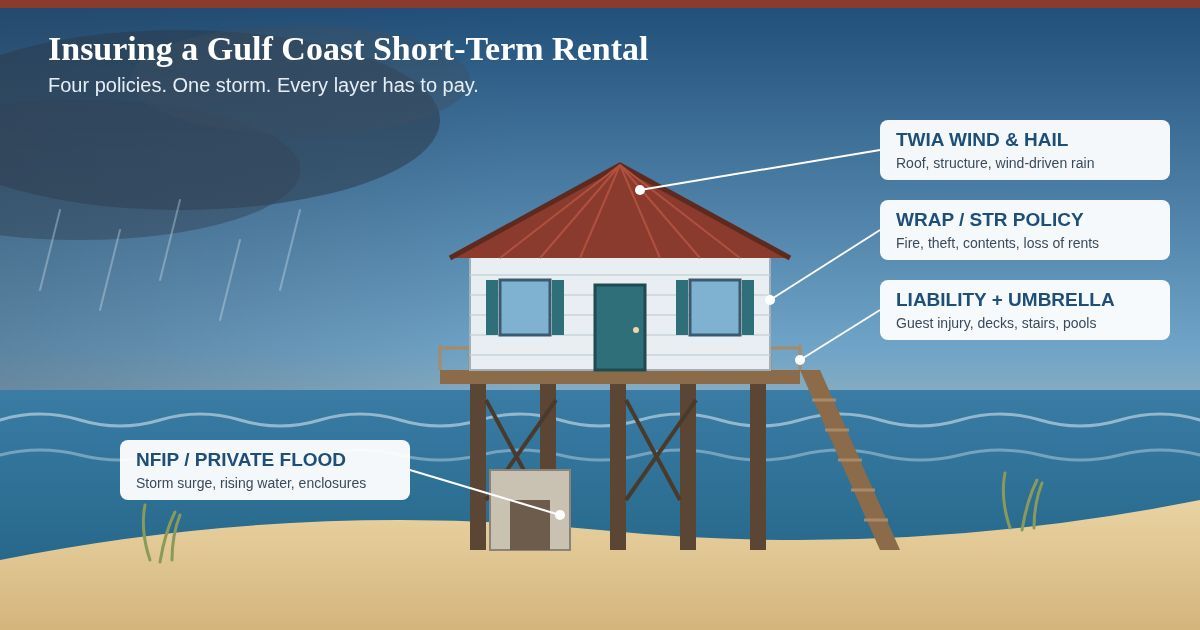
Most Texas City homeowners assume that if their house takes on water, their homeowners policy has them covered. It doesn't,
and finding that out mid-claim is one of the most expensive surprises a Gulf Coast homeowner can face. Flood damage is excluded from every standard homeowners and commercial property policy in the country, which means protecting your home against it requires a policy of its own.
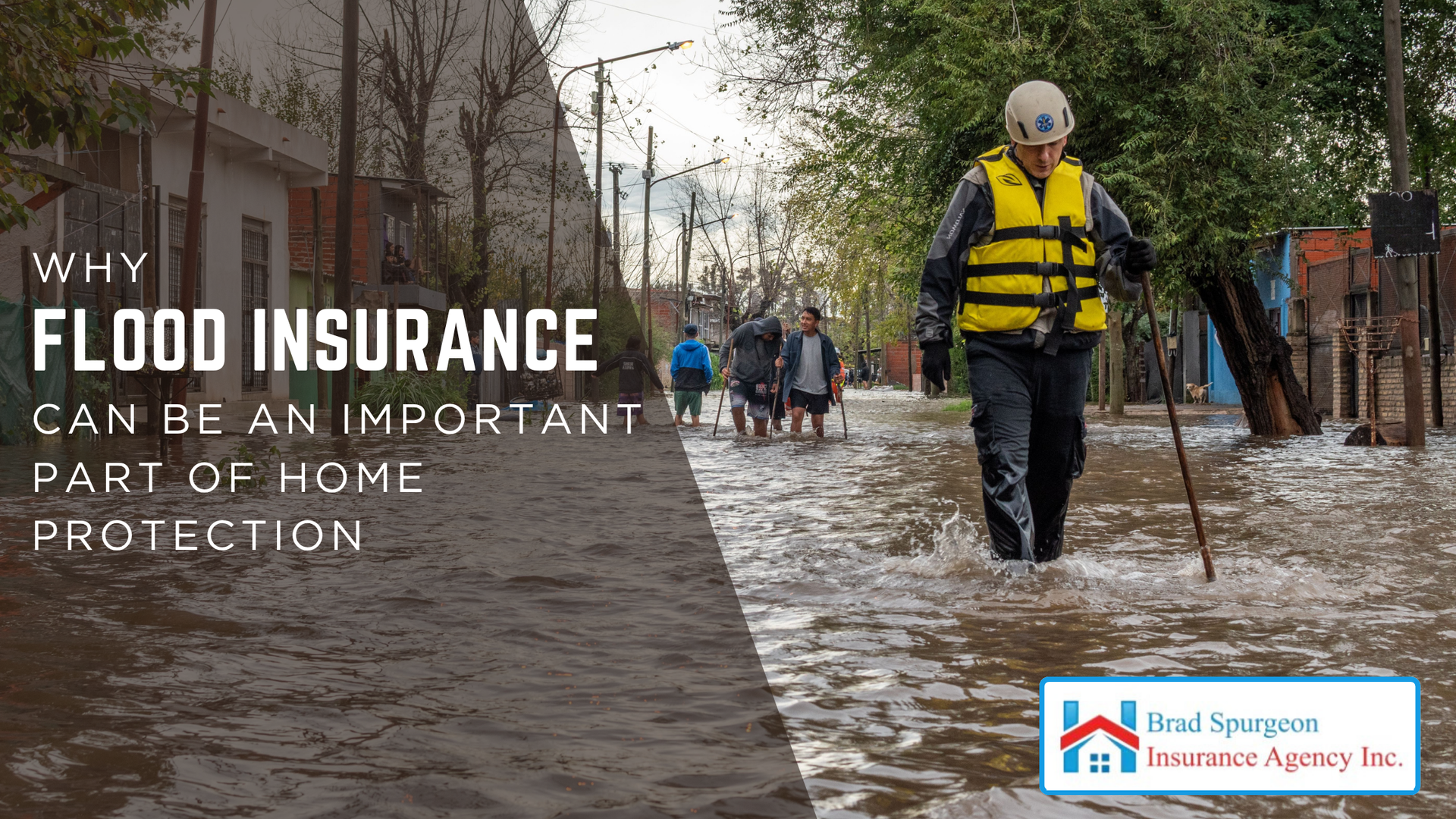
That gap catches people off guard nearly every hurricane season, and not just along the water's edge. A significant share of flood claims come from homes well outside the mapped high-risk zones, since storm surge pushing in from the bay is only half the story on the Texas Gulf Coast. Heavy rainfall that overwhelms drainage systems miles inland causes just as much damage, just as often. FEMA estimates that a single inch of water in a 2,500-square-foot home runs up around $26,000 in repairs, which puts the stakes in perspective for a policy many homeowners have never even looked into.
What a Flood Policy Actually Covers
Flood insurance through the National Flood Insurance Program is built from two separate pieces, and both have to be purchased, one doesn't come bundled with the other.
Building coverage protects the physical structure itself: the foundation, walls, electrical and plumbing systems, furnaces, water heaters, built-in appliances, and permanently installed cabinetry or flooring. Contents coverage protects what's inside the home, furniture, clothing, electronics, curtains, and portable appliances like washers and dryers.
This is where the most expensive mistake on the coast tends to happen. Homeowners who financed their house often have building coverage required by their lender, but no contents coverage at all. When surge fills the first floor, the structure eventually gets repaired, but everything that was inside it goes unreimbursed.
Residential NFIP policies cap building coverage at $250,000 and contents coverage at $100,000. Commercial properties can carry up to $500,000 on each. It's also worth understanding how a claim actually settles: NFIP contents coverage always pays actual cash value, meaning depreciation gets subtracted with no replacement-cost option available. Building coverage can settle at full replacement cost, but only if the home is a single-family, owner-occupied primary residence insured to at least 80% of its replacement value. Fall short of that threshold, and the building settles at actual cash value too.
Where Federal Flood Coverage Falls Short
The $250,000 cap on building coverage is a hard statutory ceiling, not a number you can raise by paying more. For a lot of Gulf Coast homes, that's a real problem. If your house would cost $450,000 to rebuild, a standard NFIP policy alone leaves $200,000 of that risk entirely on you, and coastal rebuild costs have climbed well past where those federal limits were originally set.
There are two ways to close that gap. Excess
flood coverage can be layered on top of an NFIP policy to extend your limits, or a private flood policy can be written for the full replacement cost of the home from the outset. Private carriers aren't bound by the federal caps, and they often include benefits the NFIP doesn't offer, higher limits, replacement-cost contents coverage, and additional living expenses if you're displaced during repairs. By federal law, lenders are required to accept a qualifying private flood policy in place of an NFIP policy.
What Flood Insurance Won't Pay For
A flood policy has its own list of exclusions worth knowing before you ever need to file a claim. The NFIP doesn't cover additional living expenses like a hotel stay while your home is repaired, though many private flood policies do. Finished walls, flooring, and contents in a basement or other below-grade space generally aren't covered either, nor are vehicles, which fall under your auto policy's comprehensive coverage instead. Pools, decks, patios, fences, septic systems, landscaping, currency, and precious metals are excluded as well.
On the upside,
flood insurance does reimburse reasonable costs for measures taken to protect a property from imminent flooding, such as sandbags or emergency fill, within the program's limits. Private market flood policies frequently offer broader endorsements that go beyond what's available through the federal program.
Timing Matters More Than Most People Realize
A new NFIP policy carries a 30-day waiting period in most cases, with narrow exceptions such as a policy tied to a loan closing. That means a policy purchased as a storm is already forming in the Gulf won't cover that storm. Private
flood insurance often moves faster, frequently with just a 14-day waiting period, though similar exceptions and limitations still apply.
If you're not currently carrying flood coverage, or you have building coverage without contents protection behind it, spring is the time to fix that, well before the first named storm of the season shows up on the radar.
Getting the Right Flood Coverage for Your Home
Flood risk on the Texas Gulf Coast doesn't respect flood zone maps or distance from the water, and the gap between what a standard NFIP policy covers and what your home is actually worth can be larger than most homeowners realize. At Brad Spurgeon Insurance Agency, we help Texas City homeowners find flood coverage, whether through the NFIP, excess flood, or a private carrier, that actually matches their home's value and their family's needs. Call us at (409) 945-4746 or request a free
flood insurance quote online to get started before the next storm season catches you off guard.
Disclaimer: The information presented in this blog is intended for informational purposes only and should not be considered as professional advice. It is crucial to consult with a qualified insurance agent or professional for personalized advice tailored to your specific circumstances. They can provide expert guidance and help you make informed decisions regarding your insurance needs.
Brad Spurgeon Insurance Agency
Texas City, TX
(409) 945-4746
brad@bradspurgeonins.com
https://www.privatewindstorm.com