
Protecting Your Texas City Home Before the Next Windstorm Hits

August 3, 2026
Strengthen the Roof System of your Home.

Ridge vents that are in bad condition will make your property more vulnerable to water damage due to high winds. Water will eventually seep through the ceiling, damaging the interiors. Consider replacing your current ridge vents with water-resistant ones.


Valuable outdoor items (e.g. vehicle and lawn furniture) should be stored indoors if there’s still space available. That’s because it’s dangerous to leave them outside during a storm especially when the winds are strong. You wouldn’t want your outdoor things to become debris after a storm.


These are just some tips that can minimize windstorm damage. Although you cannot prevent severe weather conditions, you can still stay ahead of the damage it may bring with enough preparation. Aside from that, have a peace of mind by protecting your home and pockets with the right insurance.


A scene of severe destruction after a windstorm, showing damaged houses and downed trees.

If you've lived on the Gulf Coast for any length of time, you already know that windstorms aren't a matter of if but when. Between tropical systems rolling in off the water and the strong seasonal gusts that sweep through Galveston County, Texas City homeowners face wind exposure most of the year. The good news is that a surprising amount of storm damage can be prevented with a little planning before the forecast turns ugly.


Insurance can help you recover financially after a storm, but no policy can undo the stress of watching your roof peel back or your fence end up in the neighbor's yard. That's why the smartest homeowners treat windstorm preparation as an ongoing habit rather than a scramble the night before a storm makes landfall.


Here's where to focus your efforts if you want to keep wind damage to a minimum this season.


Keep Trees and Shrubs Trimmed Back

Overgrown branches hanging near your roofline or windows are one of the most common causes of storm damage. When wind speeds pick up, even a moderately sized limb can crack a window or punch through shingles. Walk your property before hurricane season and trim back anything that hangs over your house, garage, or power lines. If you have large trees close to your foundation, it's worth having an arborist assess whether they're healthy enough to withstand sustained wind.


Reinforce Doors and Windows

Your windows and doors are the weak points wind looks for first. Once wind gets inside your home through a broken window or a door that blows open, pressure builds rapidly and can lift your roof from the inside. Impact-rated windows and storm shutters are worth the investment if you're in a high-exposure area like Texas City, and doors that swing outward are generally more resistant to wind-driven pressure than inward-opening ones.


Give Your Roof Some Attention

Roofs take the brunt of wind damage more than any other part of a home. A roof inspection once or twice a year lets you catch loose shingles, deteriorating flashing, or soft spots before they become a much bigger problem mid-storm. If your roof is due for replacement, ask about wind-rated materials such as Class 4 impact-resistant shingles or standing seam metal, both of which are built to shed wind rather than catch it.


Check Your Ridge Vents

Ridge vents are easy to overlook, but a damaged or poorly sealed one can let water into your attic during heavy wind and rain, even if the rest of your roof holds up fine. Have your roofer confirm your ridge vents are properly sealed and rated for coastal wind conditions.


Bring Loose Outdoor Items Inside

Patio furniture, grills, potted plants, and anything else that isn't bolted down can become a projectile in high wind, damaging your home or a neighbor's. Before a storm is forecast, get in the habit of bringing these items into the garage or securing them with straps.


None of these steps guarantee a storm-proof home, but together they meaningfully reduce your risk and can make the difference between a minor repair and a major claim. Pairing smart preparation with the right windstorm coverage gives you the strongest protection heading into storm season.


At Brad Spurgeon Insurance Agency, we help homeowners throughout Texas City and the surrounding Gulf Coast find windstorm coverage that actually fits how exposed their property is. Reach out today for a free windstorm insurance quote, and let's make sure you're protected before the next system starts spinning in the Gulf.

Disclaimer: The information presented in this blog is intended for informational purposes only and should not be considered as professional advice. It is crucial to consult with a qualified insurance agent or professional for personalized advice tailored to your specific circumstances. They can provide expert guidance and help you make informed decisions regarding your insurance needs.


Brad Spurgeon Insurance Agency

Texas City, TX

(409) 945-4746

brad@bradspurgeonins.com

https://www.privatewindstorm.com/

September 15, 2026
If you own a home in Texas City, you already know windstorm insurance isn't optional, and you've probably felt the sting of the premium on your renewal notice. Years of active hurricane seasons along the Gulf have pushed rates higher across the board, but that doesn't mean you're stuck accepting whatever number your ca
A damaged, peeling wall with dark mold growth
September 9, 2026
Mold has a way of showing up in Texas City homes when you least expect it, and Gulf Coast humidity doesn't make it any easier to avoid. Between hurricane-season moisture, everyday humidity, and the occasional leaky pipe or roof, it's one of the more common issues local homeowners run into, and also one of the more misu

September 9, 2026
Owning a home along the Texas Gulf Coast means living with a level of risk most inland homeowners never think twice about. Between hurricane season, hail storms rolling in off the Gulf, and the ever-present threat of flooding after a heavy rain, a homeowners policy here has to work harder than it does almost anywhere e
September 9, 2026
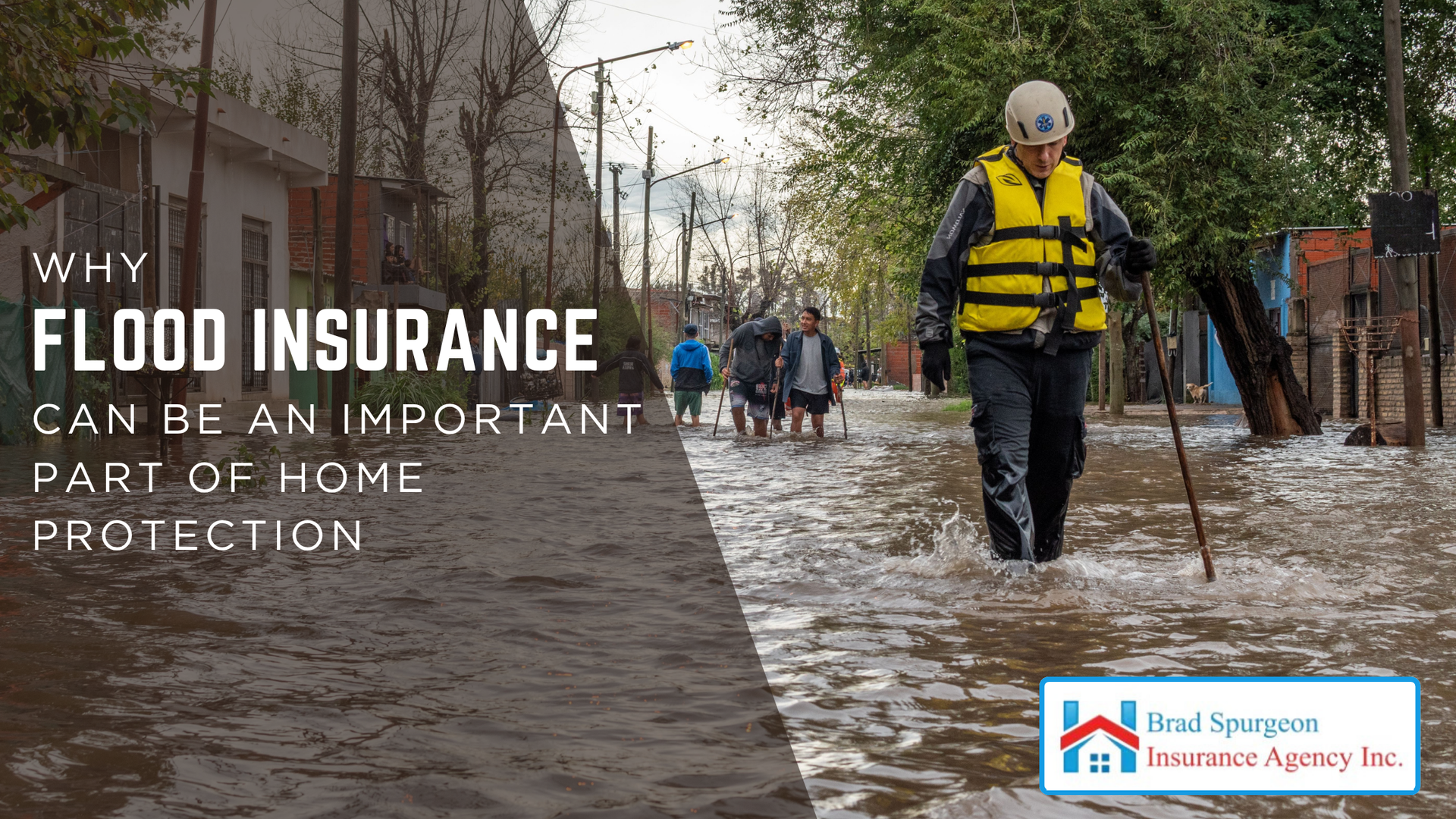
Most Texas City homeowners assume that if their house takes on water, their homeowners policy has them covered. It doesn't, and finding that out mid-claim is one of the most expensive surprises a Gulf Coast homeowner can face. Flood damage is excluded from every standard homeowners and commercial property policy in the
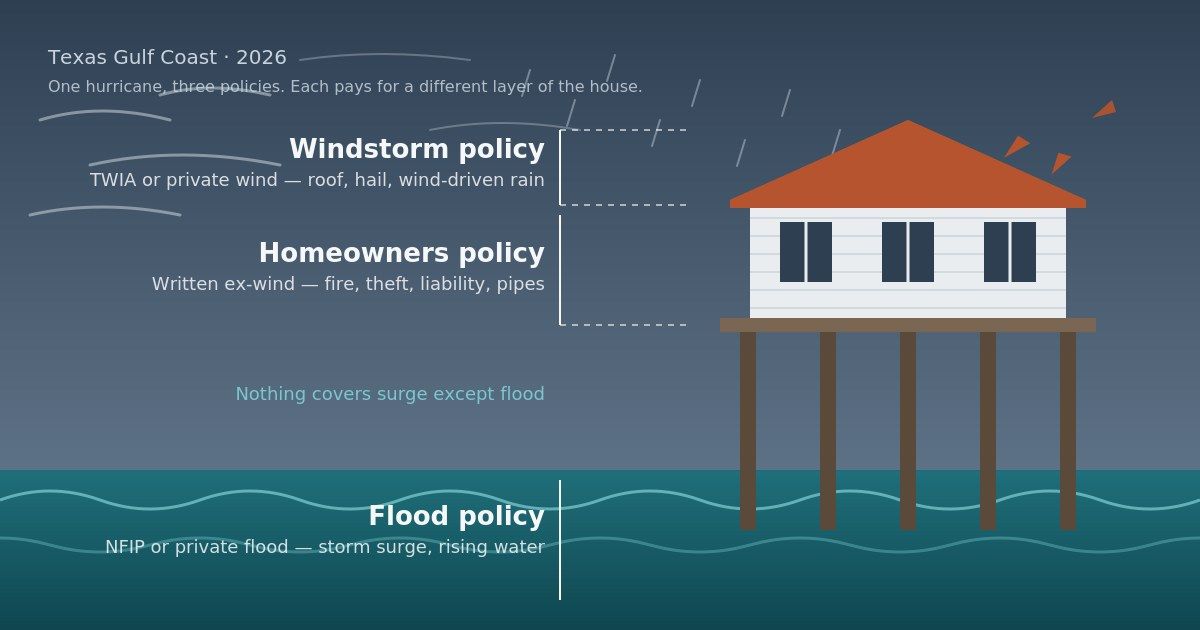
Home, homeowners, and flood policy comparison over a flooded house illustration
September 7, 2026
How Texas coastal homeowners actually get hurricane coverage: TWIA 2026 limits, the declination rule, WPI-8 certificates, named-storm deductibles, and the flood policy that pays for surge. Written by a Gulf Coast agent.
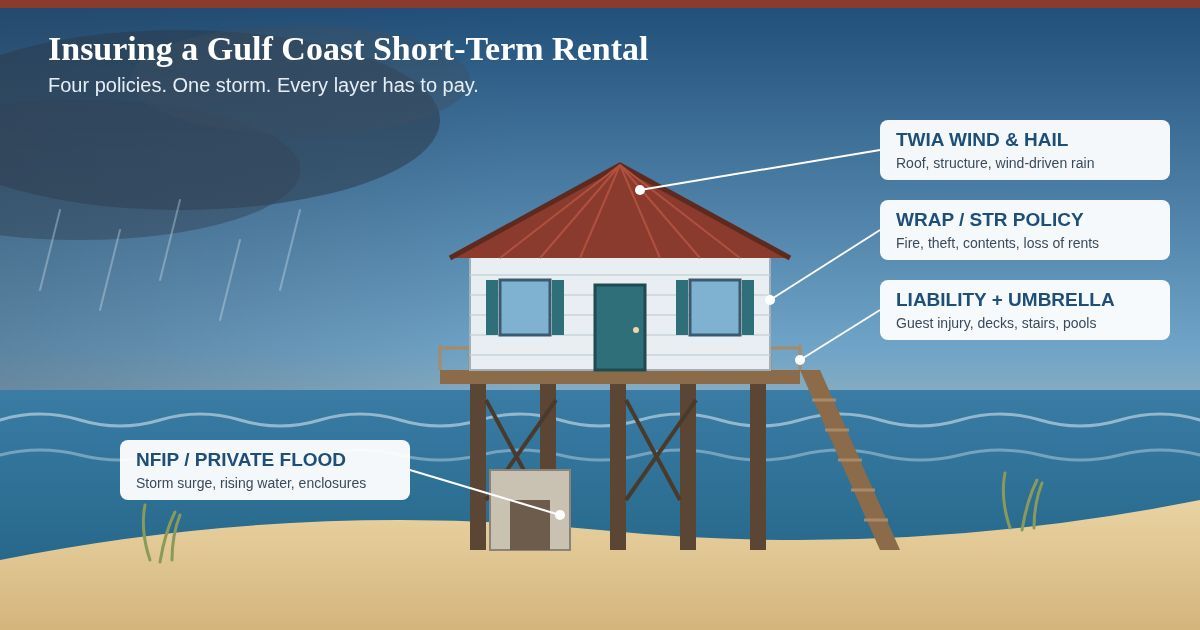
Flooded beach house on stilts with roof damage and insurance claim callouts about a Gulf Coast short-term rental
September 7, 2026
How to insure a Galveston, Crystal Beach, Surfside, or Port Aransas short-term rental: TWIA wind, NFIP flood, Fire & Liability policy, from an experienced local Gulf Coast Insurance agent.
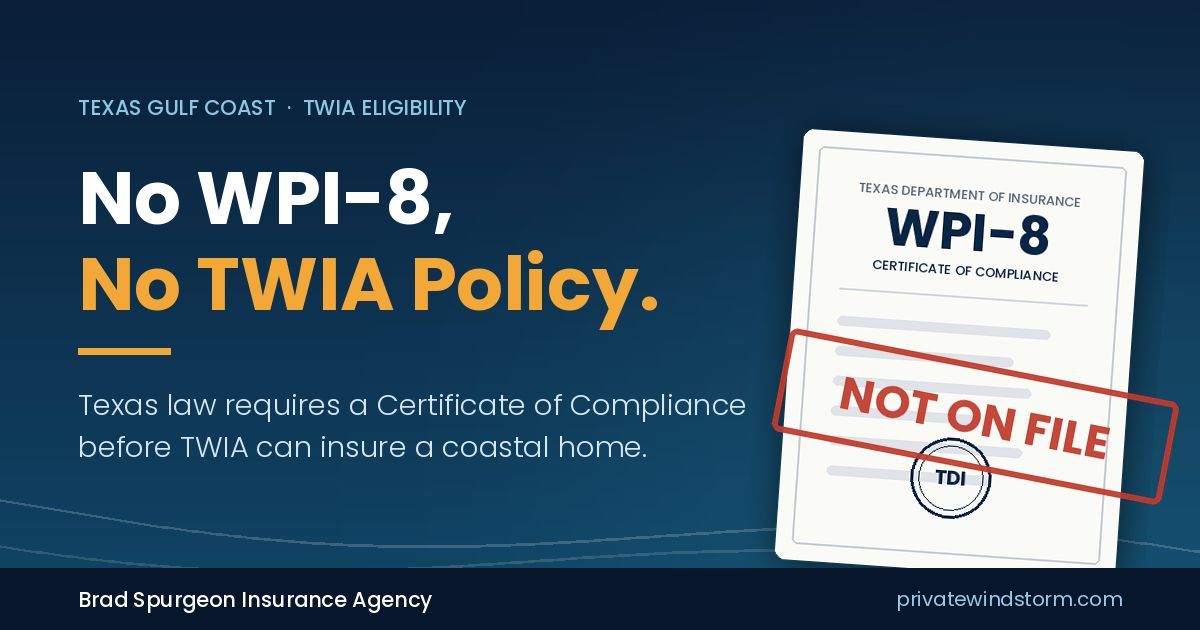
August 25, 2026
Learn why TWIA requires WPI-8 certification, which Texas coastal homes need it, key exceptions, and what to do if your certificate is missing.

A smiling parent sits on a couch and lifts a happy young child
August 19, 2026
Kids explore everything, and that curiosity is part of what makes childhood fun — but it also means everyday spaces in your home can hide risks you might not think twice about as an adult. A few thoughtful changes around the house can prevent the kinds of accidents that send families to the emergency room every year.
A view of two suburban houses
August 17, 2026
It's a question we hear often in Texas City, especially once a tropical system starts showing up in the forecast: can I still get flood insurance now, or is it too late? The honest answer is that it depends on your policy type and timing, and understanding how flood insurance waiting periods work can save you from a co
An American Red Cross emergency kit with supplies like water, a flashlight, goggles, and a poncho for flood survival.
August 10, 2026
Living near the Texas Gulf Coast means flooding isn't a rare or distant threat — it's a real possibility every hurricane season, and sometimes even after a heavy afternoon thunderstorm. Whether you're right along the water or a few miles inland, knowing how to prepare, evacuate, and recover safely can make all the diff
Show More