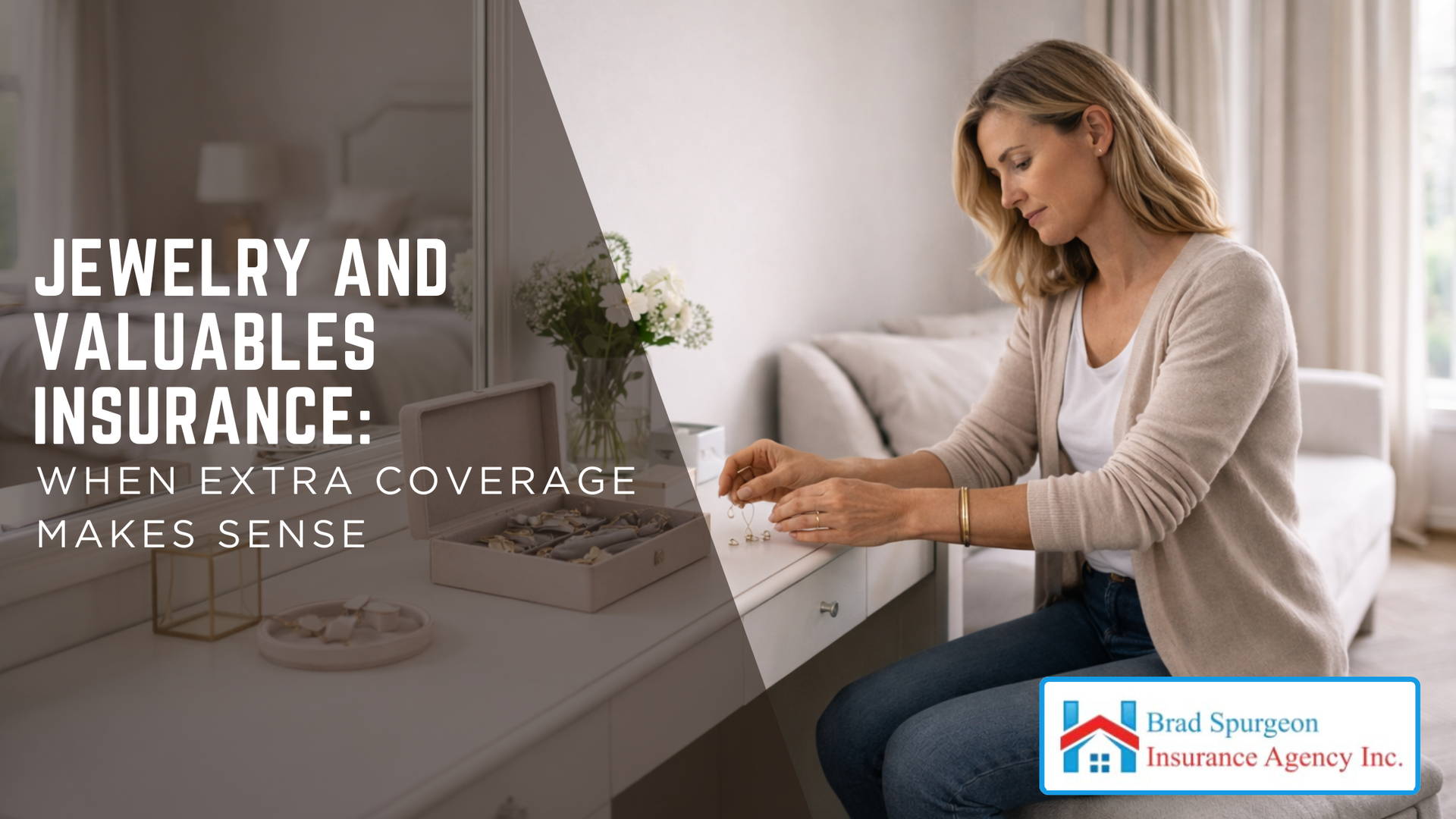
Jewelry And Valuables Insurance: When Extra Coverage Makes Sense

April 14, 2026

Standard home insurance usually includes some coverage for jewelry and valuables, but the limits are often lower than people expect and may not fully protect high-value items. Extra coverage can make sense when you own expensive jewelry, watches, collectibles, or other valuables that would be difficult to replace after theft, loss, or certain types of damage.


Why Standard Home Insurance May Not Be Enough

Many homeowners assume their home insurance policy fully protects everything inside the house. In practice, personal property coverage often has special limits for certain categories of valuables, especially jewelry. That means your policy may cover some loss, but not necessarily the full value of what you own.


A common issue we see is that someone has an engagement ring, inherited jewelry, a luxury watch, or a few collectible pieces and assumes the home insurance policy will pay the full replacement amount after a claim. Then, when a theft or other covered loss happens, they discover there are category limits, deductibles, and coverage restrictions that leave a significant gap.


This becomes even more important in Texas City, TX, where homeowners may have valuable items stored at home year-round and may not review those limits unless a claim forces the issue.


What Standard Coverage Usually Includes

Most home insurance policies include personal property coverage for belongings inside the home. Jewelry and valuables are often included, but that does not mean they are covered without limits.


In many policies, standard coverage may involve:

  • A cap on theft losses for jewelry or watches
  • A deductible that reduces the amount paid on a claim
  • Limited protection for accidental loss
  • Restrictions on certain categories such as fine art, collectibles, firearms, silverware, or rare items


That distinction matters. For example, a policy may provide broad personal property coverage overall, but only a much smaller sublimit for stolen jewelry. If the item is worth more than that sublimit, the homeowner may still face a major out-of-pocket loss even though the claim is technically covered.


When Extra Coverage Starts To Make Sense

Extra coverage usually makes sense when the value of an item exceeds what your standard policy is realistically designed to protect. It also makes sense when the type of risk you are concerned about goes beyond basic theft coverage.


In our work with clients, extra coverage is often worth discussing when someone owns:

  • Engagement or wedding rings
  • Luxury watches
  • Heirloom jewelry
  • Fine art
  • Coin or stamp collections
  • High-end musical instruments
  • Designer handbags with substantial value
  • Collectibles that would be expensive or difficult to replace


This does not mean every valuable item needs to be separately insured. The real question is whether a loss would create a financial hit that your current policy would not handle well. If replacing the item would be difficult without insurance paying close to full value, that is usually a sign to review scheduled or specialized coverage.


How Scheduled Coverage Works

One of the most common ways to insure high-value items is through scheduled personal property coverage, sometimes called an endorsement or rider. This allows specific items to be listed individually on the policy, usually with an assigned value based on an appraisal, receipt, or other documentation.


Scheduled coverage often provides stronger protection than unscheduled personal property coverage. Depending on the insurer and item, it may offer:

  • Higher insured values for listed items
  • Broader causes of loss
  • Lower or no deductible on those items
  • Coverage for accidental loss in some cases


A practical example is a ring that is insured under standard home insurance versus one that is specifically scheduled. Under the basic policy, theft may be covered only up to a limited amount, and mysterious disappearance may not be covered at all. Under scheduled coverage, the protection may be much broader and better aligned with the item’s real value.


Common Situations Where Homeowners Get Caught Off Guard

The biggest surprises usually happen when people do not realize how policy language works until after a loss. A few common examples come up again and again.


One is inherited jewelry. People often know an item is meaningful, but they do not get it appraised or add it to the policy. Another is gradual growth in value. A watch purchased years ago may now cost much more to replace than the original receipt suggests. We also see issues with gifts, anniversary jewelry, or collectibles acquired over time that were never reviewed as part of the insurance conversation.


Around Galveston Bay or near Moses Lake, homeowners may also spend more time traveling, boating, or moving valuables between locations, which can increase the importance of understanding whether the policy covers off-premises losses and accidental disappearance.


How Much Coverage Is Reasonable

There is no one-size-fits-all rule. The right amount of extra coverage depends on the type of item, its current replacement cost, and your tolerance for risk. Some homeowners choose to schedule only their highest-value pieces. Others insure multiple items because the combined value of jewelry, watches, and collectibles has quietly become substantial.


In Texas City, TX, this review is often less about luxury and more about practical asset protection. A few pieces of fine jewelry, a family heirloom, and one premium watch can add up quickly. If those items were lost tomorrow, many households would prefer predictable premium costs over a major uncovered financial loss.


Why A Policy Review Matters More Than Guesswork

This is one of those areas where assumptions can be expensive. Homeowners often think in broad terms like “my belongings are covered,” but valuables coverage is much more specific than that. The answer depends on limits, endorsements, documentation, valuation method, and the type of claim.


A second opinion is often useful because it helps separate items that truly need extra protection from items that are already reasonably covered. It also helps identify whether the current policy language fits how the homeowner actually uses and stores those valuables.


Conclusion

Extra coverage for jewelry and valuables makes sense when the financial or personal impact of losing an item would be significant and your standard home insurance would not fully protect it. The best time to review that exposure is before a claim, while you still have time to document the item, confirm its value, and choose the right coverage structure.


For homeowners in Texas City, TX, that review can prevent costly surprises and make sure important items are protected in a way that matches their real value. Navigating insurance challenges doesn't have to be done alone. If you have questions about your coverage or need a second opinion on a policy, the team at Brad Spurgeon Insurance Agency is here to help.


At Brad Spurgeon Insurance Agency Inc., we aim to provide comprehensive insurance policies that make your life easier. We want to help you get insurance that fits your needs. You can get more information about our products and services by calling our agency at (409) 945-4746. Get your free quote today by CLICKING HERE


Disclaimer: The information presented in this blog is intended for informational purposes only and should not be considered as professional advice. It is crucial to consult with a qualified insurance agent or professional for personalized advice tailored to your specific circumstances. They can provide expert guidance and help you make informed decisions regarding your insurance needs.


Brad Spurgeon Insurance Agency

Texas City, TX

(409) 945-4746

https://www.privatewindstorm.com/

April 14, 2026
Sheds, fences, and detached garages may be covered by windstorm insurance, but coverage depends on how the policy defines other structures, the cause of loss, and any exclusions or separate deductibles that apply. The key is to confirm whether those structures fall under your policy’s covered property and whether wind or wind-driven damage is insured in your specific situation. Why This Question Matters More Than Homeowners Expect Many property owners focus on the main house when reviewing windstorm coverage , but detached structures often represent a meaningful part of the property’s total value. A fence line, storage shed, workshop, or detached garage may be expensive to repair or rebuild after a severe storm, especially when multiple structures are damaged at once. A common issue we see is that homeowners assume anything sitting on the same lot is automatically covered the same way as the main dwelling. That is not always true. Insurance policies often separate the dwelling from “other structures,” and the coverage rules, limits, and deductibles may not work the way people expect. In Texas City, TX, that distinction matters because strong wind events can damage not only roofs and siding, but also gates, fences, detached storage buildings, carports, and garages that are more exposed to uplift or flying debris. What Counts As An Other Structure In many property policies, detached structures are grouped into a separate coverage category. This often includes buildings or fixtures on the property that are not physically attached to the home. Examples may include: Detached garages Storage sheds Fences Gazebos Workshops Detached carports Small guest structures, depending on the policy Driveway gates and similar exterior features in some cases That category matters because insurance usually assigns a separate limit for these structures rather than treating them as part of the main house. Even when windstorm damage is covered, the amount available for a detached structure claim may be capped well below the dwelling limit. How Windstorm Coverage Usually Applies Windstorm insurance generally covers direct physical damage caused by covered wind events, subject to the terms of the policy. If a detached garage loses part of its roof during a windstorm, or if a shed is damaged by wind-thrown debris, the loss may be covered if the structure falls within the policy’s insured property categories and no exclusion applies. The details, however, matter. Coverage questions often turn on issues such as: Whether the structure is specifically considered an other structure under the policy Whether the damage was caused by wind alone or by another excluded event Whether the structure was in sound condition before the storm Whether policy endorsements or regional wind exclusions apply Whether cosmetic damage is treated differently from structural damage In our work with clients, one of the biggest misunderstandings is assuming that “wind damage” is always one simple category. In practice, the claim outcome may depend on whether the damage came from straight-line wind, a named storm, wind-driven rain entering through an existing opening, fallen trees, or a mix of causes. Detached Garages Are Often The Clearest Example Detached garages are among the most commonly covered non-dwelling structures, but they still are not insured the same way as the house itself. In most cases, they fall under the other structures portion of the policy, which means the claim is still subject to that separate coverage limit. That can become a problem when the detached garage is large, finished out, or used for more than simple vehicle storage. A detached garage with cabinetry, tools, workbenches, electrical upgrades, or hobby equipment may cost much more to restore than the policyholder realizes. We often see homeowners underestimate replacement cost here. They think of the detached garage as a simple outbuilding, but rebuilding it after wind damage may involve concrete work, framing, roofing, wiring, doors, and code-related improvements. The coverage may exist, but the limit may not be high enough. Fences Are Commonly Covered, But With Important Limits Fences are often one of the first things damaged in a strong storm, and they are also one of the areas where expectations and policy language can clash. Many policies do include fences under other structures coverage, but the payout depends on the cause of loss, the policy wording, and the amount of damage. A common issue we see is a homeowner expecting full fence replacement when the policy or adjuster determines only a portion of the fence sustained direct storm damage. Another frequent issue is age and condition. If a fence was already deteriorated, leaning, or poorly anchored before the storm, that can affect how the damage is evaluated. Near Galveston Bay or around the Bay Street area, fence claims may become more complicated because repeated exposure to salt air, moisture, and prior wear can raise questions about what portion of the loss was sudden storm damage versus pre-existing condition. Sheds Can Be Covered, But Construction Quality Matters Sheds are often covered if they are permanently located on the insured property and fit the policy definition of other structures. Still, not all sheds are treated equally. A well-built shed on a proper foundation may present a clearer claim than a lightweight structure, temporary kit building, or partially anchored storage unit. If wind damage occurs, the insurer may look closely at how the shed was constructed, whether it was secured properly, and whether the damage reflects storm force or inadequate installation. This matters because some homeowners buy prefab sheds, place them on-site, and assume full protection applies automatically. The policy may provide some coverage, but the condition, age, and method of attachment can all matter when a claim is reviewed. What Can Limit Or Affect Coverage Even when sheds, fences, and detached garages are generally covered, several factors can reduce or complicate recovery. Common issues include: Coverage limits for other structures being too low Separate windstorm deductibles Exclusions tied to certain storm events Wear and tear or deferred maintenance concerns Damage that is partly caused by flooding rather than wind Failure to document the condition of the structure before the storm In Texas City, TX, one of the most important distinctions is wind versus flood. If a detached garage is damaged by storm surge or rising water rather than wind, that may fall outside a windstorm policy and into flood coverage territory instead. The same can apply to sheds and fences located in more exposed portions of the property. What Homeowners Should Review Before The Next Storm The best time to check this coverage is before damage happens. Waiting until after a storm usually means the policyholder is reading technical language while also trying to deal with cleanup and repairs. A practical review should include: Whether other structures are covered under the policy The exact coverage limit for those structures The windstorm deductible Whether any endorsements change the scope of coverage Whether detached structures have been added, upgraded, or rebuilt since the policy was written Whether photos and records exist to show pre-loss condition A common mistake we see is improving a detached garage or replacing fencing without ever updating the insurance conversation. The property changes, but the coverage review does not. Conclusion Sheds, fences, and detached garages are often covered by windstorm insurance , but that coverage is rarely automatic in the broad way homeowners assume. The structure must fit the policy definition of covered property, the cause of loss must be covered, and the available limit has to be enough to make the protection meaningful. At Brad Spurgeon Insurance Agency Inc., we aim to provide comprehensive insurance policies that make your life easier. We want to help you get insurance that fits your needs. You can get more information about our products and services by calling our agency at (409) 945-4746. Get your free quote today by CLICKING HERE . Disclaimer: The information presented in this blog is intended for informational purposes only and should not be considered as professional advice. It is crucial to consult with a qualified insurance agent or professional for personalized advice tailored to your specific circumstances. They can provide expert guidance and help you make informed decisions regarding your insurance needs. Brad Spurgeon Insurance Agency Texas City, TX (409) 945-4746 https://www.privatewindstorm.com/
Insurance industry steady going into 2026: A positive outlook for life and nonlife
By Brad Spurgeon March 18, 2026
The insurance industry shows stability heading into 2026. Contact us for expert home, flood, & windstorm insurance solutions.
March 17, 2026
Inflation raises home insurance costs because it increases the price of labor, building materials, repairs, and replacement after a covered loss. When it costs more to rebuild a roof, replace flooring, restore water damage, or repair storm-related destruction, insurers usually adjust premiums and coverage calculations
March 17, 2026
Private flood insurance and NFIP flood insurance both protect against flood damage, but they are not built the same way. NFIP policies follow standardized federal rules and coverage limits, while private flood policies may offer higher limits, broader options, and more flexibility depending on the carrier.
Windstorm Insurance “Direct Physical Loss” Explained: How It Impacts Your Claim
March 17, 2026
“Direct physical loss” in windstorm insurance generally means there must be real, physical damage to ..
March 12, 2026
Roof age can directly affect your home insurance premium, eligibility, and claim experience because insurers view older roofs as more likely to suffer damage or fail during severe weather. In many cases, the older the roof, the higher the risk profile, especially if maintenance is unclear or the roofing material is nea
A beach house stands under a dark, stormy sky with wind-blown trees. Text reads:
February 16, 2026
Windstorms are typically categorized by the type of event—thunderstorms and straight-line winds, tropical storms,..
A rainy, evening street scene featuring a coffee shop storefront, with overlay text about business flood insurance.
February 16, 2026
Flood insurance is one of the most important tools for business continuity because a single flood event can shut down operations..
A person in a hard hat inspects a room under renovation, with text about updating windstorm insurance after home repairs.
February 10, 2026
Renovations can quietly create windstorm insurance gaps because they change what your property would cost to rebuild and can introduce new materials, ..
A couple sitting on the floor among moving boxes. Text reads:
February 10, 2026
Renters insurance protects your personal belongings, liability, and temporary living expenses—but it does not insure the building itself.
Show More