Owning a home along the Texas Gulf Coast means living with a level of risk most inland homeowners never think twice about. Between hurricane season, hail storms rolling in off the Gulf, and the ever-present threat of flooding after a heavy rain, a homeowners policy here has to work harder than it does almost anywhere else in the country. The trouble is, most people don't find out what their policy actually covers, or doesn't, until they're standing in front of storm damage with a claim to file.
Understanding the shape of a
standard homeowners policy before disaster strikes is what separates a manageable claim from a financial gut-punch. Here's what's typically covered, where the coastal-specific gaps show up, and what Texas City homeowners in particular need to watch for.
Your Dwelling Is the Foundation of the Policy
Dwelling coverage, listed as Coverage A on your declarations page, pays to repair or rebuild the physical structure of your home after a covered loss. It's almost always the largest single limit on the policy, and it extends beyond just the four walls to cover anything permanently attached: an attached garage, a built-on porch, and fixtures like cabinetry, flooring, and plumbing.
Setting that limit correctly matters more here than in most parts of the state. Construction costs along the coast have risen fast, and a dwelling limit that felt right five years ago is very likely too low today. That gap creates two problems most homeowners never see coming. First, if your coverage falls too far below what it would actually cost to rebuild, a coinsurance penalty can reduce your payout even on a partial loss. Second, your windstorm deductible is calculated as a percentage of that same dwelling limit, so an outdated number can throw off your entire out-of-pocket picture at renewal.
Personal Property Coverage Has More Limits Than You'd Expect
Coverage C protects your belongings, furniture, electronics, clothing, tools, and everything else you'd pack into a moving truck, if they're damaged, stolen, or destroyed by a covered event. It's usually set as a percentage of your dwelling limit rather than something you choose directly, which is why most
homeowners have never actually looked at the number.
One setting matters more than the limit itself: whether your policy pays actual cash value or replacement cost. Actual cash value factors in depreciation, so a seven-year-old sofa gets paid out like a seven-year-old sofa. Replacement cost pays what it actually costs to buy a comparable item new. After a hurricane, when you're refurnishing several rooms at once, that distinction can mean a difference of thousands of dollars.
Certain categories also carry sub-limits well below what people expect, often just a few thousand dollars for jewelry, firearms, or silverware. If you own something worth more than that sub-limit, it needs to be scheduled separately on the policy, typically backed by an appraisal, so it's actually covered at its real value.
Before storm season hits, it's worth doing a simple walkthrough of your home with your phone, recording each room and photographing anything valuable along with its serial numbers or receipts. Store that documentation somewhere that will survive the house itself, not in a drawer that might not.
Wind, Hail, and Flood Live Outside the Standard Policy
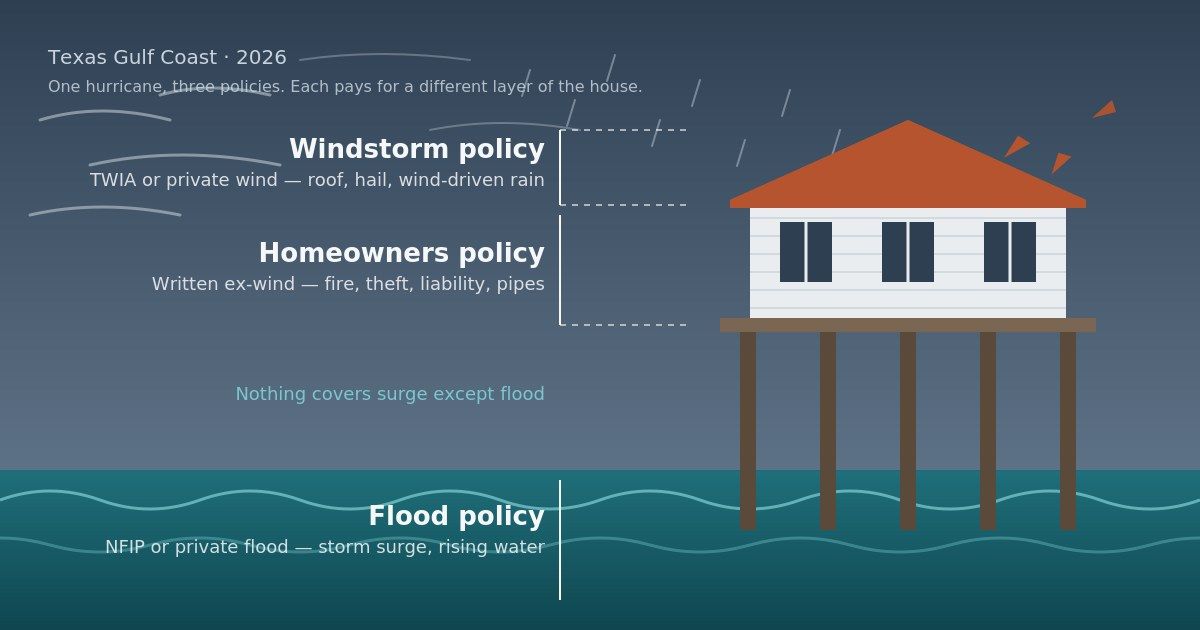
This is where the confusion runs deepest for Texas Gulf Coast homeowners. A
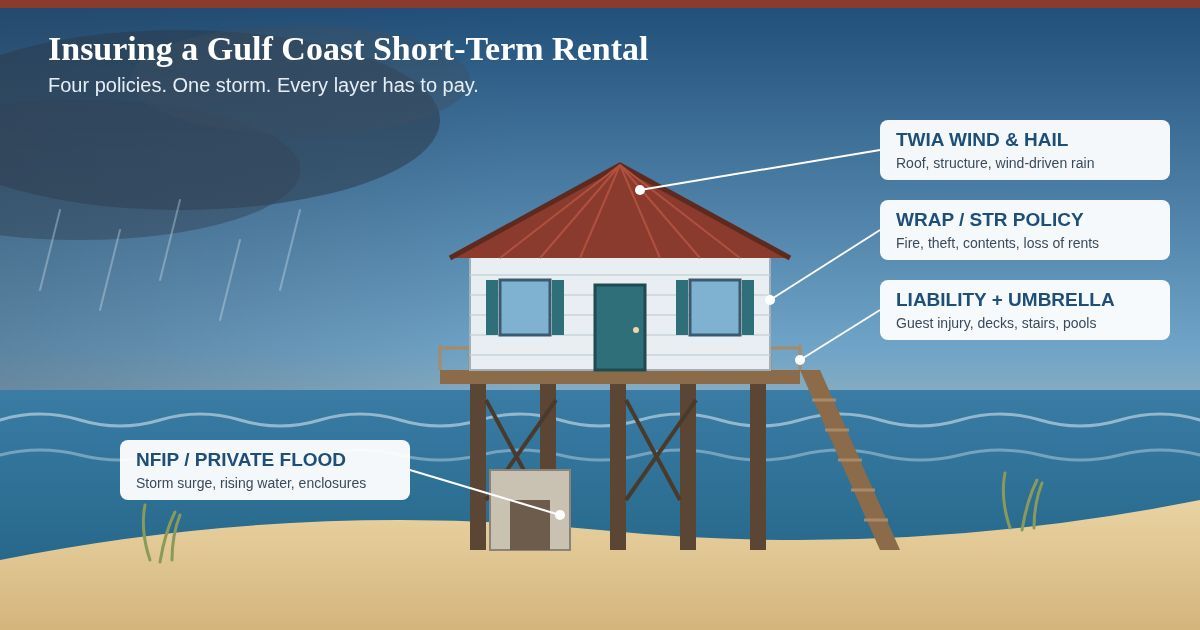
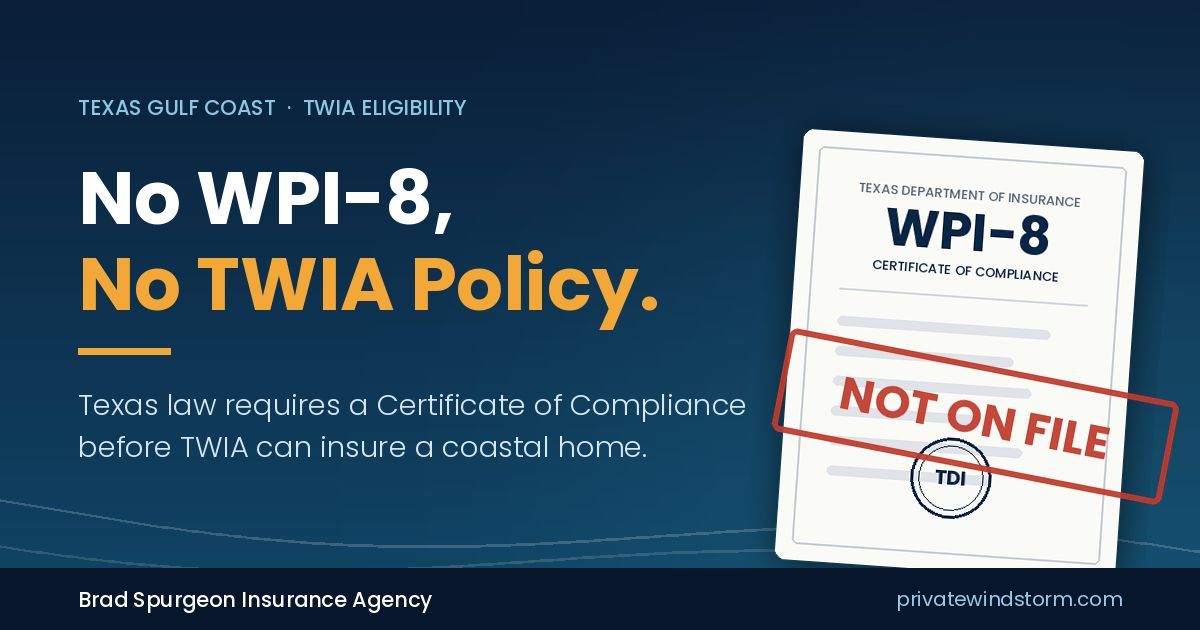
standard homeowners policy covers fire, lightning, theft, and liability no matter where you live in Texas. But in the coastal wind pool counties, windstorm and hail damage are typically excluded entirely and have to be covered through a separate source, whether that's the Texas Windstorm Insurance Association, a private wind carrier, or a homeowners policy written with windstorm already built in.
Flood insurance sits outside the homeowners policy altogether, and that's true everywhere in Texas, not just along the coast. Storm surge, heavy rainfall, and overflow flooding all require a dedicated flood policy through the National Flood Insurance Program or a private flood carrier. Homeowners who financed their home sometimes carry flood coverage on the structure itself through a lender requirement but have never added contents coverage, which means a surge event could damage everything inside the house without a policy to answer for it.
If you're not sure whether your current coverage includes windstorm or flood protection, that's a conversation worth having with your agent well before the next storm season, not in the middle of one.
Liability Coverage Protects You From the Unexpected
Even the most careful homeowner can't control everything that happens on their property. If a guest, a delivery driver, or even a family member is injured while on your property and you're found responsible, bodily injury liability coverage helps pay for medical bills and legal costs up to your policy limit. It's one of the more overlooked parts of a
homeowners policy, but it's often the one that ends up mattering most when something goes wrong unexpectedly.
Making Sure Your Coverage Actually Fits Your Home
A
homeowners policy is only as good as its fit to your specific property, and along the Texas Gulf Coast that fit depends heavily on where you live, how your home is built, and which perils your county typically faces. Reviewing your dwelling limit, checking your replacement cost settings, and confirming whether windstorm and flood coverage are already built in or need to be added separately are the kinds of details that are far easier to fix now than after a claim.
At Brad Spurgeon Insurance Agency, we've been helping
homeowners across the Texas Gulf Coast navigate these decisions since 1980, working with 50 Texas carriers to build coverage that actually holds up when it's tested. Call our Texas City office at (409) 945-4746 or request a free quote online, and let's make sure your policy is ready for whatever the season brings.
Disclaimer: The information presented in this blog is intended for informational purposes only and should not be considered as professional advice. It is crucial to consult with a qualified insurance agent or professional for personalized advice tailored to your specific circumstances. They can provide expert guidance and help you make informed decisions regarding your insurance needs.
Brad Spurgeon Insurance Agency
Texas City, TX
(409) 945-4746
brad@bradspurgeonins.com
https://www.privatewindstorm.com