Renters insurance protects your personal belongings, liability, and temporary living expenses—but it does not insure the building itself. Homeowners insurance covers the structure plus your belongings and liability, and the right choice depends on whether you own the property, how much you’d lose in a disaster, and which hazards (like wind and flood) require separate coverage.
Many people assume “insurance is insurance,” until a claim exposes the fine print. In our years of professional service, we’ve seen the biggest surprises happen when someone buys the wrong policy type—renters coverage when they needed homeowners protection, or homeowners coverage that didn’t reflect what the home is actually worth today. For families in Texas City, TX, the decision is especially important because storm-related losses can be expensive and time-sensitive, and the difference between “contents only” and “structure + contents” is everything.
Here’s the simplest rule:
- If you rent, you usually need renters insurance (your stuff + your liability).
- If you own, you usually need homeowners insurance (your structure + your stuff + your liability).
But “usually” isn’t enough. Let’s break down what you actually need, how to size it, and where people commonly end up underinsured.
What renters insurance is designed to cover (and what it can’t)
Renters insurance is built for tenants. It protects what you own, not what you live in.
Typical renters coverage includes:
Personal property (your belongings)
- Furniture, clothing, electronics, kitchen items, and more
- Coverage can apply to theft, fire, certain water losses, and other covered perils (policy-dependent)
Personal liability
- If someone is injured in your unit and you’re found responsible
- Often helps with legal defense costs as well
Medical payments to others
- Small payments for minor injuries to guests (varies by policy)
Loss of use (additional living expenses)
- Helps pay for temporary housing, meals, and related costs if your unit is uninhabitable due to a covered loss
What renters insurance typically does NOT cover:
- The building structure (walls, roof, foundation)
That’s your landlord’s responsibility through a landlord policy - Major building systems and fixtures owned by the landlord
- Flood damage (commonly excluded and typically requires separate flood coverage)
- High-value items beyond sub-limits unless scheduled (jewelry, firearms, collectibles, fine art, certain electronics)
A practical way to choose renters limits:
- Personal property limit: estimate replacement cost of what you own (not garage-sale value)
- Liability limit: many people choose higher limits than they expect to need because liability claims can escalate quickly
- Deductible: pick one you can comfortably pay if you needed to file a claim tomorrow
In real-world terms: if you can’t afford to replace your belongings out-of-pocket, renters insurance is not optional—it’s risk management.
What homeowners insurance covers that renters insurance never will
Homeowners insurance is built for property owners and mortgage requirements. It typically has multiple “buckets” of coverage that work together.
Most homeowners policies include:
Dwelling coverage (Coverage A)
- The cost to rebuild the structure of your home after a covered loss
- This is the core of homeowners insurance
Other structures (Coverage B)
- Detached garage, fences, sheds, and similar structures on the property
Personal property (Coverage C)
- Similar to renters, but typically a percentage of dwelling coverage unless customized
Loss of use (Coverage D)
- Temporary housing and related expenses if the home is uninhabitable due to a covered loss
Personal liability (Coverage E)
- Protection if someone is injured on your property or you’re liable for certain damages
Medical payments to others (Coverage F)
- Smaller injury payments, depending on terms
What homeowners insurance may NOT cover (and why it matters):
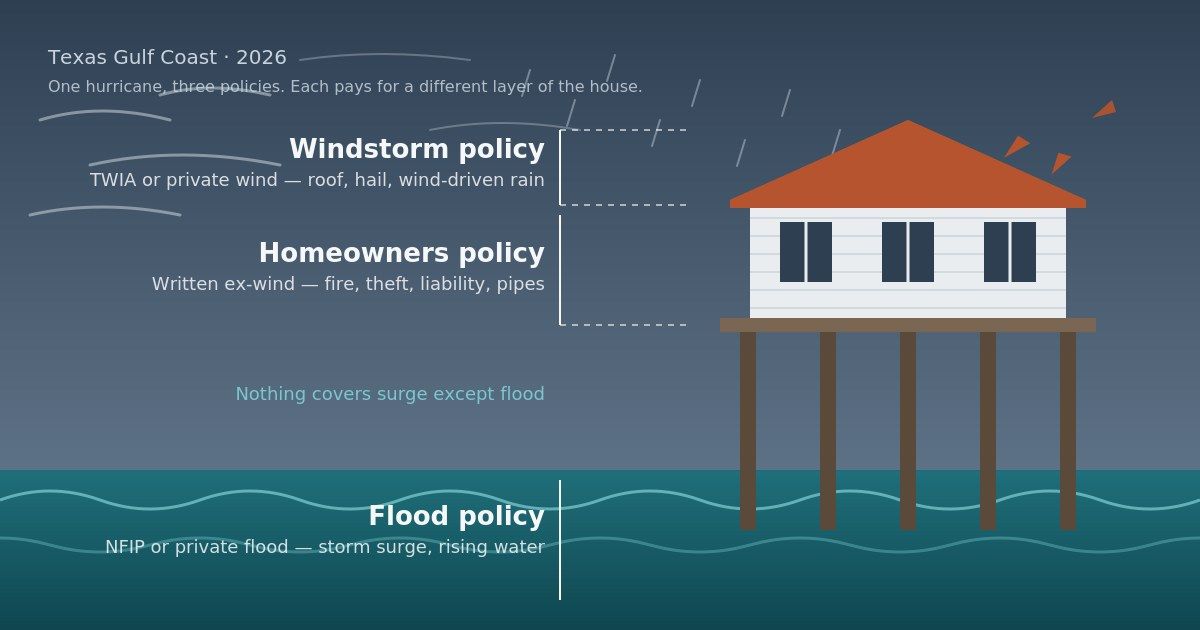
- Flood damage is commonly excluded and typically requires a separate flood policy
- Windstorm coverage may be limited, excluded, or handled with special deductibles depending on your policy structure and location
- Wear and tear, maintenance issues, and gradual water damage are commonly excluded
- Some policies limit coverage for mold, sewer backup, or certain roof types unless endorsed
In our years of professional service, we’ve found the most common homeowners mistake is underinsuring the dwelling—especially after material and labor costs rise or after renovations. If your dwelling limit is too low, you can end up “sharing the rebuild cost” with the insurance company, even when the loss is covered.
How to decide what you actually need (renters vs. homeowners)
If you’re unsure which category you’re in, ask this question:
Would you be responsible for rebuilding the structure after a major loss?
- If yes, you need homeowners coverage
- If no, you’re likely a renter and need renters coverage
Then move to the next layer: what hazards are you truly exposed to, and what does your policy exclude?
Use this checklist to get your coverage aligned with reality:
For renters:
- Do you have enough personal property coverage to replace everything you own at today’s prices?
- Are you covered at replacement cost, or actual cash value (depreciated value)?
- Are your valuables (jewelry, collections, specialty gear) properly scheduled?
- Is your liability limit high enough for a serious injury claim?
- Do you need flood coverage separately based on your risk?
For homeowners:
- Is your dwelling limit based on rebuild cost (not market value)?
- Have you updated coverage after renovations (kitchen, roof, flooring, additions)?
- Do your deductibles and wind/hail deductibles match your risk tolerance?
- Are other structures properly accounted for (fences, detached garages)?
- Do you need separate flood coverage, and have you evaluated your flood risk beyond “it’s not in a flood zone”?
Homes and rentals near Galveston Bay and areas like Moses Lake can face weather patterns where water and wind concerns become part of everyday risk planning. That’s why the right policy type—and the right add-on protections—matter as much as the premium.
The biggest “surprise” gaps we see (and how to prevent them)
Insurance gaps usually come from assumptions. Here are the most common ones we help people fix:
“My landlord’s policy covers my stuff.”
- It typically doesn’t. Landlord policies are designed for the building and the landlord’s liability—not your belongings.
“I bought homeowners insurance, so I’m fully covered.”
- Not necessarily. Flood is often excluded, and wind coverage can vary widely.
“Market value equals rebuild cost.”
- Market value includes land and demand. Rebuild cost is labor + materials + code requirements + debris removal + contractor availability.
“I renovated, but my policy automatically adjusts.”
- Policies don’t update themselves. Renovations can increase the amount needed to rebuild.
“My stuff isn’t worth much.”
- Replace a couch, bed, TV, laptop, clothes, kitchen supplies, and it adds up fast—especially at replacement cost.
A simple best practice: create a home inventory (even a phone video walkthrough), store it in the cloud, and update it once a year. This single step makes claims smoother and helps you choose limits confidently.
Conclusion
Renters insurance and homeowners insurance solve different problems: renters protects your belongings and liability, while homeowners protects the structure plus everything inside it. The best choice comes down to ownership, rebuild responsibility, and whether your coverage addresses real-world hazards and exclusions. In Texas City, TX, we encourage residents to look beyond the monthly premium and confirm the policy is built to respond the way you expect when a storm, fire, theft, or liability claim actually happens.
At Brad Spurgeon Insurance Agency Inc., we aim to provide comprehensive insurance policies that make your life easier. We want to help you get insurance that fits your needs. You can get more information about our products and services by calling our agency at (409) 945-4746. Get your free quote today by CLICKING HERE.
Disclaimer: The information presented in this blog is intended for informational purposes only and should not be considered as professional advice. It is crucial to consult with a qualified insurance agent or professional for personalized advice tailored to your specific circumstances. They can provide expert guidance and help you make informed decisions regarding your insurance needs.
Brad Spurgeon Insurance Agency
Texas City, TX
(409) 945-4746
https://www.privatewindstorm.com/