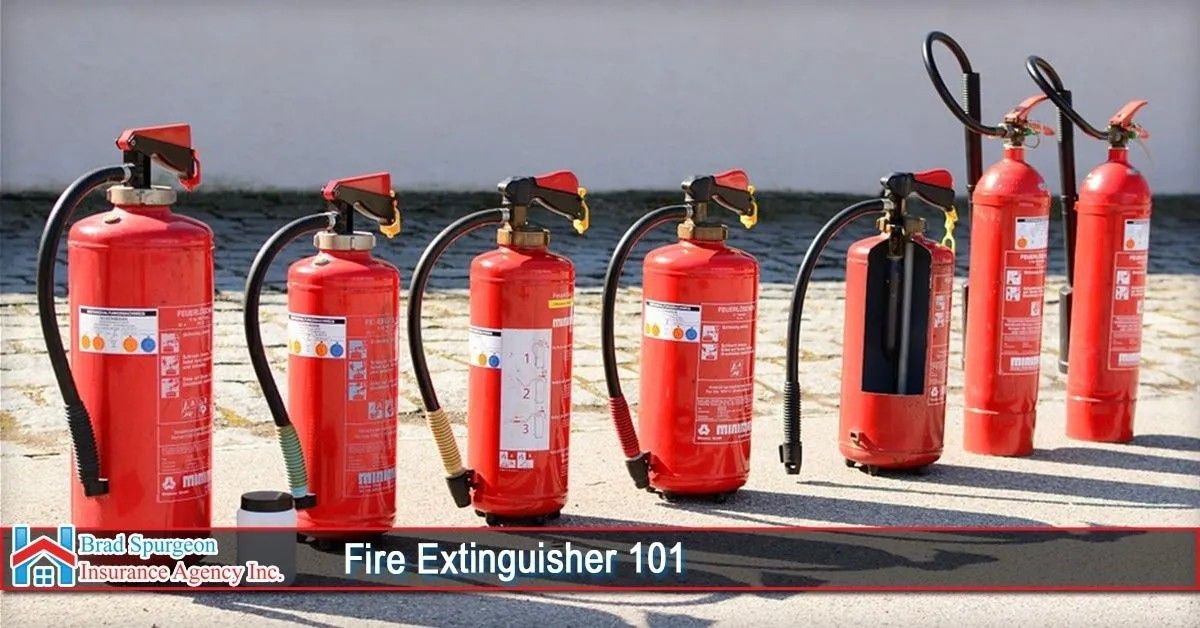

Fire Extinguisher 101
March 20, 2017
Fire extinguishers play a vital role during the beginning of a fire. With proper handling, this portable device can help put out or control a small fire until the fire fighters arrive. Intended for home use, portable fire extinguishers should be centrally located and in working order, allowing easy access when it needs to be used.
A brief yet concise knowledge about fire extinguishers, its uses and indications, is important. Here are some quick facts and tips you need to know about fire extinguishers.
Fire Extinguishers for Different Fire Types
Different classes of fires would demand varied yet appropriate types of fire extinguishers. All fire extinguishers are properly labelled with standard symbols of the types of fire they are effective against and numbers which indicates how big a fire they can put out. The larger the number, the larger the fire extinguisher can take on.
Classes of Fire
Class A: caused by paper, cloth or fabric, wood, plastic, and other easily ignited household materials (ordinary combustibles)
Class B: fires involving gases and flammable liquids like gasoline, oil, solvents, tar, grease, oil-based paint and lacquer
Class C: electrical fires including machinery, wiring, fuse boxes, circuit breakers and appliances
Class D: fires which are only a concern in industrial setting, involving fires caused by burning metals such as magnesium and sodium.
Note that there is no numeric rating for Class C fires since the fire would revert to either Class A or B when the circuit breaker is shut down. To illustrate, when an extinguisher is labelled 5-B, C it would tell you that it can put out a five square foot grease fire and an electrical fire while a 3-A, 10-B, C fie would be for a paper fire, a larger chemical fire and an electrical fire.
The Right Extinguisher in the Right Place
Now you are aware that different fires require certain types of extinguisher, you may want to own all three of them to keep you safe. Remember that some large extinguishers can be difficult to handle especially for younger children and the elderly, and others contain highly corrosive chemicals that can harm people and the environment. Therefore, a careful decision should be made when selecting one for residential use.
Since Class A types can be handled with a nearby water source, extinguishers marked Type B,C should be sufficient. Although this type do not contain corrosive chemicals, keep in mind that it is vital to clean up all the powder after releasing it because it may cause short circuits in your electrical devices.
As previously mentioned, it should be accessible. Your fire extinguisher should be located in plain view, mounted above the reach of children (around 3-5 feet above the floor), near an escape route and away from stoves, heating appliances, vents and radiators.
Fire Safety Tip: Be Prepared!
Fire extinguishers are useful under certain conditions. It is best to be ready and prepared should your house catch on fire. For starters, you should know how to operate a fire extinguisher. In an emergency situation, time is of the essence so you do not have enough time to read through the directions or get confused about what to do with it. Hence, it is very important that you have enough information on how to operate it and know exactly where to point and spray before the fire happens.
The most effective way to do that would be conducting drills where you involve family members (older children and adults) so they become familiar with fire extinguisher use. You may incorporate the drills during family gatherings or holidays when everyone is home. A hands-on use of the fire extinguisher should be done after a brief discussion as an evaluation of their learning. You get to bond and learn life-saving tips at the same time. Now that should give you a good reason to rise to the occasion.
How to Use a Fire Extinguisher?
To help you remember with ease, don’t forget the PASS word. Most if not all fire extinguishers include instructions on the label and it would likely tell you the same thing. At the birth of fire, stand 6 to 8 feet away from it and follow the 4-step procedure:
Pull the pin out.
Aim low (at the base of the fire).
Squeeze the trigger below the handle.
Sweep the spray from side to side.
It is also important that you make sure that your fire extinguishers are clean and fully charged, making them always ready to use. Unlike larger units which can be recharged by some companies, smaller one are not rechargeable and they need to be properly disposed and replaced.
Above everything, consulting a professional about safety tips and having a fire safety inspection done to your home to identify potential hazards would be truly helpful. Allow us to help you protect your home with our high-quality insurance services. Give us a call at (409) 945-4746 or visit our office today. Click here to get a free quote from us.

March 17, 2026
Inflation raises home insurance costs because it increases the price of labor, building materials, repairs, and replacement after a covered loss. When it costs more to rebuild a roof, replace flooring, restore water damage, or repair storm-related destruction, insurers usually adjust premiums and coverage calculations

March 17, 2026
Private flood insurance and NFIP flood insurance both protect against flood damage, but they are not built the same way. NFIP policies follow standardized federal rules and coverage limits, while private flood policies may offer higher limits, broader options, and more flexibility depending on the carrier.

March 12, 2026
Roof age can directly affect your home insurance premium, eligibility, and claim experience because insurers view older roofs as more likely to suffer damage or fail during severe weather. In many cases, the older the roof, the higher the risk profile, especially if maintenance is unclear or the roofing material is nea