
When Flood Insurance Is Required and What Coastal Homeowners Should Do

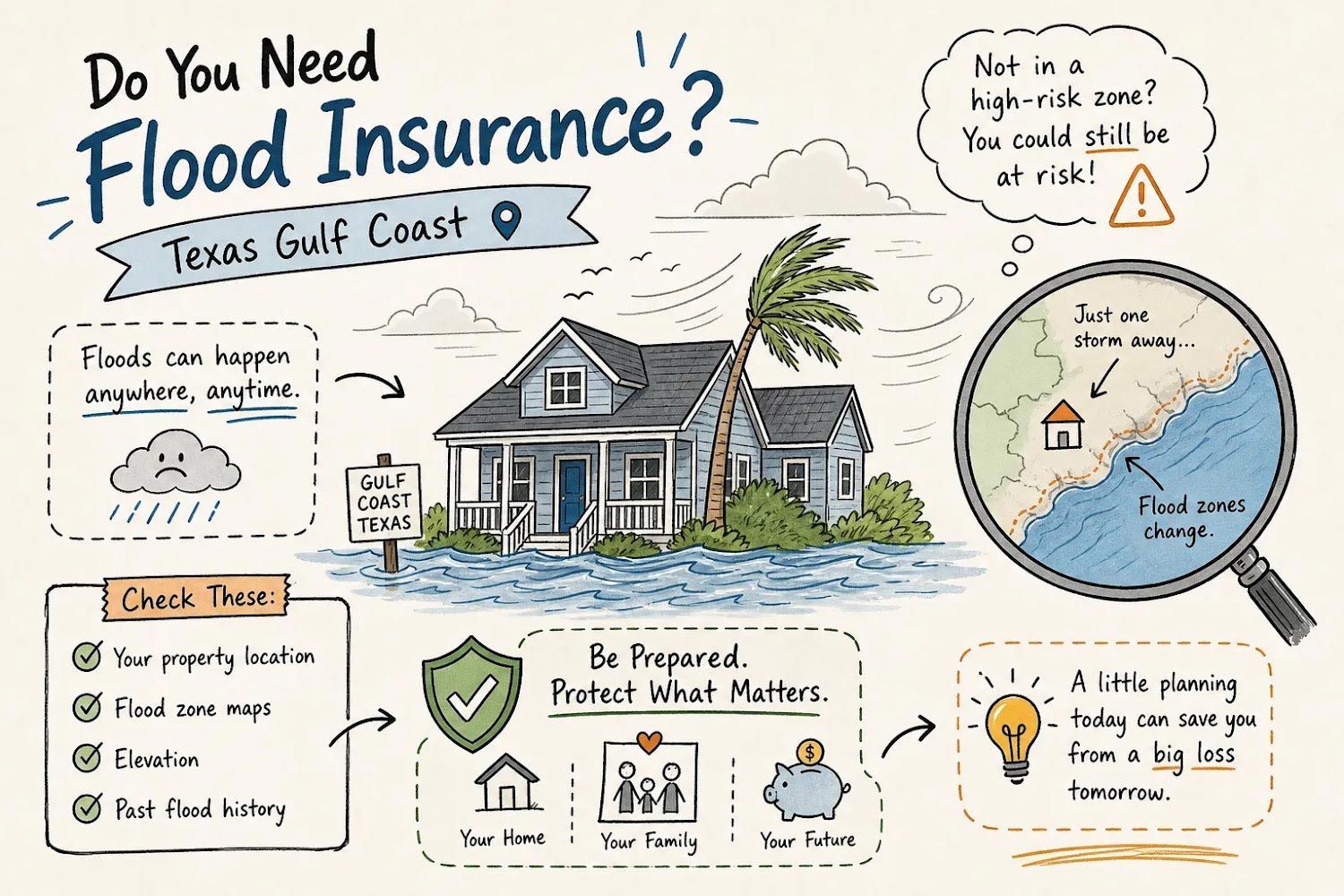
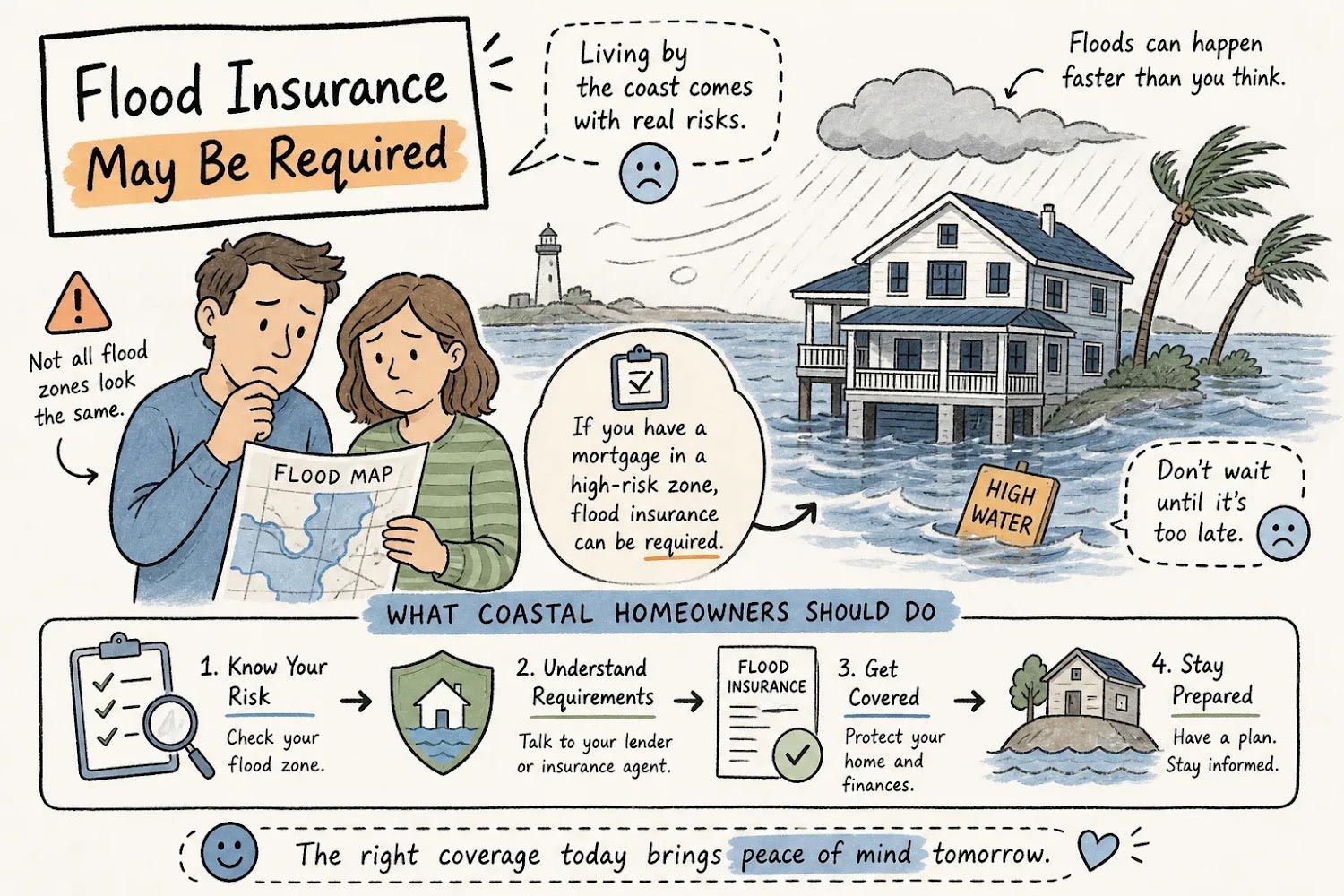
Flood insurance is required for properties located in a FEMA-designated Special Flood Hazard Area when the mortgage is federally backed or made by a federally regulated lender. Both conditions must be true at the same time. Having a federally backed loan does not trigger the requirement on its own, and being in a high-risk flood zone does not trigger it either if your financing is fully private. When both boxes are checked, coverage is mandatory for the life of the loan, and your lender enforces it.
For Texas Gulf Coast homeowners, flood risk does not arrive alone. Storm surge, windstorm exposure, and hurricane activity all layer on top of the basic flood question, and the gaps between standard insurance policies can leave a claim partially or entirely uncovered. This article walks through the key situations that trigger mandatory flood coverage, how to verify your flood zone, and how to build a complete coastal insurance strategy.
Key takeaways
- Federal mandate: Flood insurance is required for properties that carry both an SFHA designation AND a federally regulated mortgage. One condition alone is not enough.
- Loan types that count: FHA, VA, USDA, Fannie Mae, Freddie Mac, and loans from any FDIC-insured bank or federally chartered credit union all qualify.
- High-risk flood zones: Zones beginning with A or V are SFHAs and trigger the mandate when combined with a qualifying loan.
- NFIP limits: Per FEMA and NFIP program rules, coverage maxes out at $250,000 for a residential building and $100,000 for contents; private policies can exceed those caps. 30-day waiting period: Standard NFIP policies have a 30-day wait; the main exception applies at loan
- closing.
- Texas Gulf Coast gap: Standard home policies exclude windstorm, TWIA excludes flood, and storm surge can fall between both. Coordinate all three policies.
When is flood insurance required for your home?
This is the question most homeowners get wrong. A federally backed mortgage does not automatically require flood insurance. The federal mandate kicks in only when two specific conditions line up: the property securing your loan is in a FEMA Special Flood Hazard Area, and the mortgage is made, insured, guaranteed, or regulated by a federal agency or federally regulated lender. Both must be true. Miss one, and the federal requirement does not apply, though your lender may still impose coverage as a loan condition on its own.
The loan types that count as federally backed cover most of the market. FHA-insured loans, VA-guaranteed loans, USDA loans, and mortgages purchased by Fannie Mae or Freddie Mac all qualify. So do loans made by any FDIC-insured bank, federally chartered credit union, or savings association. Home equity loans, home improvement loans, and commercial loans secured by a building in an SFHA also fall under the rule when made by a federally regulated institution. The required coverage applies to the building, not the land, and must equal at least the lesser of the outstanding loan balance, the structure's insurable value, or the NFIP maximum available for that property type.
When does federal law require lender-required flood insurance?
Federal mortgages are the most common trigger, but they are not the only one. Receiving direct or indirect federal financial assistance for acquiring, constructing, or improving property in an SFHA generally requires flood insurance as a condition of that assistance. SBA disaster loans come with the same obligation for the life of the loan. If you received FEMA Individual Assistance after a declared flood disaster, you are typically required to maintain flood coverage going forward, even after the mortgage is paid off.
One trigger catches buyers completely off guard. If a previous owner of your property received federal disaster assistance after a flood, that obligation can transfer to you as the new owner. The requirement attaches to the property, not the person. When buying in a flood-prone area, ask your agent or attorney whether prior federal assistance was received; you could inherit the coverage mandate along with the
deed.
Beyond those federal triggers, a lender can require flood insurance on any property in any flood zone as a contractual condition of the loan. This practice is legal, common, and entirely independent of FEMA designations. If your lender wants coverage, you need coverage, full stop.
How do you find out if your property is in a mandatory coverage zone?
Knowing your flood zone is the starting point. FEMA publishes Flood Insurance Rate Maps for every NFIP-participating community, and they are publicly searchable through the Flood Map Service Center at msc.fema.gov. Enter your property address, review the effective Flood Insurance Rate Map for your area, and download the FIRMette, the printable extract showing your property's location relative to flood zone boundaries, and if the result is unclear or your property sits near a zone boundary, contact your local floodplain administrator for a free clarification.
Understanding FEMA flood zone requirements
Zones beginning with "A" or "V" are SFHAs. This includes AE, AH, AO, A1-A30, VE, V1-V30, and several AR combinations. Zone A means a 1% annual chance of flooding. Zone V means coastal flooding with wave action, the exposure profile common across the Texas Gulf Coast. Zones starting with B, C, or X are moderate-to-low risk and generally do not trigger the federal mandate, though flooding in those zones is still possible and damage can still be severe.
An elevation certificate documents your building's lowest-floor elevation relative to the Base Flood Elevation established by FEMA. Under FEMA's Risk Rating 2.0 methodology, flood insurance premiums are calculated from multiple factors, including distance to a water source, foundation type, replacement cost value, and prior claims history, so elevation is one important input among several. If a certificate already exists for your property, your insurer or lender should have a copy. If one has never been prepared, a licensed Texas Registered Professional Land Surveyor can complete it.
NFIP or private flood insurance: which one satisfies the lender requirement?
| Feature | NFIP policy | Private flood insurance |
|---|---|---|
| Contents valuation | Actual cash value | May offer replacement cost |
| Additional living expenses | Not covered | May be available |
| Standard waiting period | 30 days (exceptions apply) | Often shorter |
| Lender acceptance | Always accepted when property qualifies | Must meet federal standards; lender reviews each policy |
| Underwriting flexibility | Standardized nationally | Varies by insurer; more criteria to review |
Both can satisfy the federal mandatory purchase requirement, but they work very differently. An NFIP policy is straightforward for lenders to accept because it is issued under federal program rules. The standard 30-day waiting period is real: coverage you buy today does not protect you for the next month unless you are at loan closing. That exception only applies when the lender requires coverage as a condition of the loan. Do not wait until storm season to act; the narrow exceptions will not cover a reactive purchase made when a storm is already in the Gulf.
Private flood insurance can offer higher limits, replacement cost coverage, additional living expense protection, and shorter waiting periods than the NFIP. The tradeoff is that private policies come with their own underwriting criteria, exclusions, and renewal terms. Federal regulations require lenders to accept a private policy that meets specific standards: it must be issued by an appropriately licensed insurer, provide coverage at least as broad as an NFIP policy, and include standard cancellation notice provisions. Policies that clearly meet those criteria must be accepted; those that do not may be rejected at the lender's discretion.
How flood and windstorm coverage interact on the Texas Gulf Coast
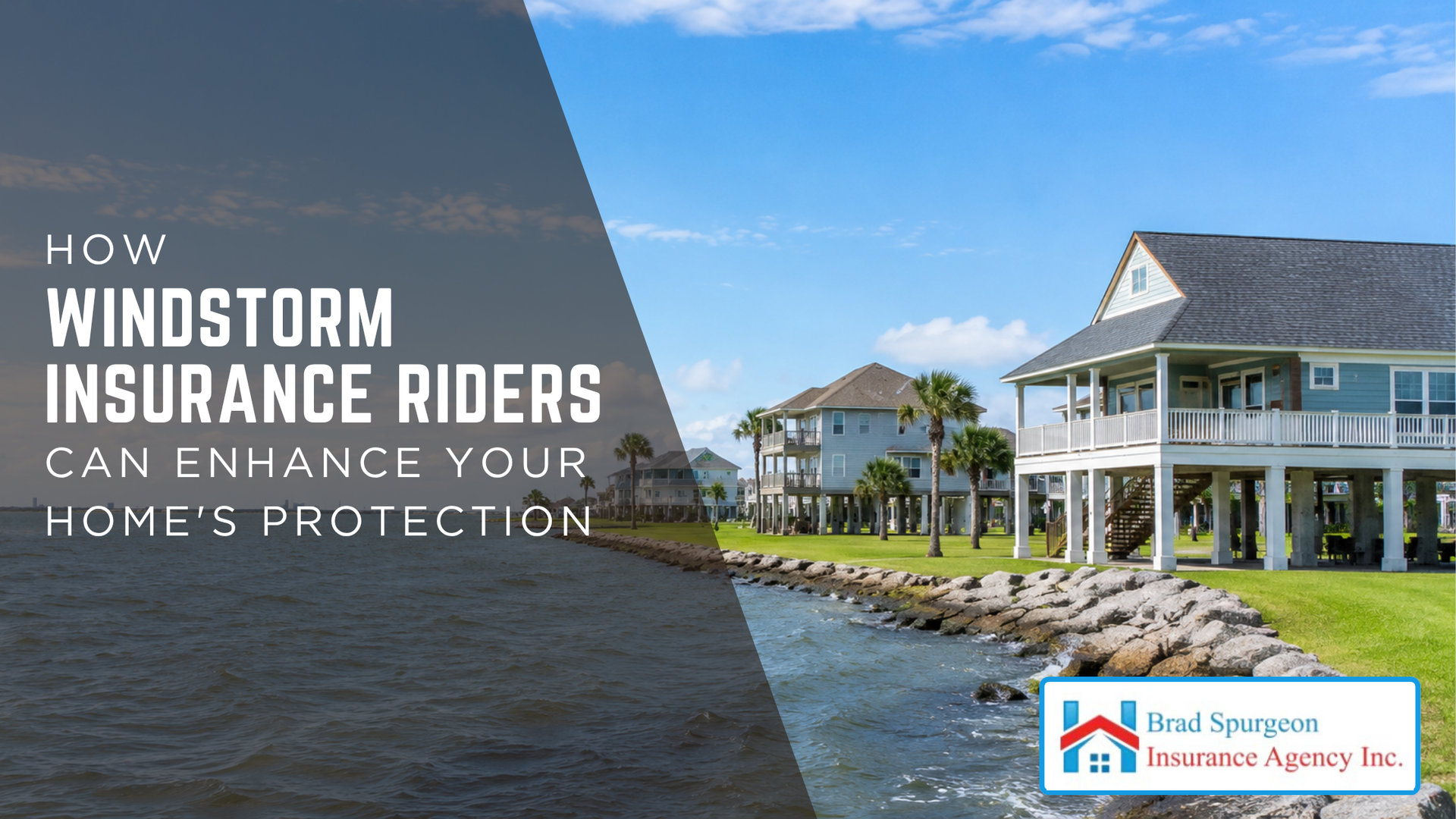
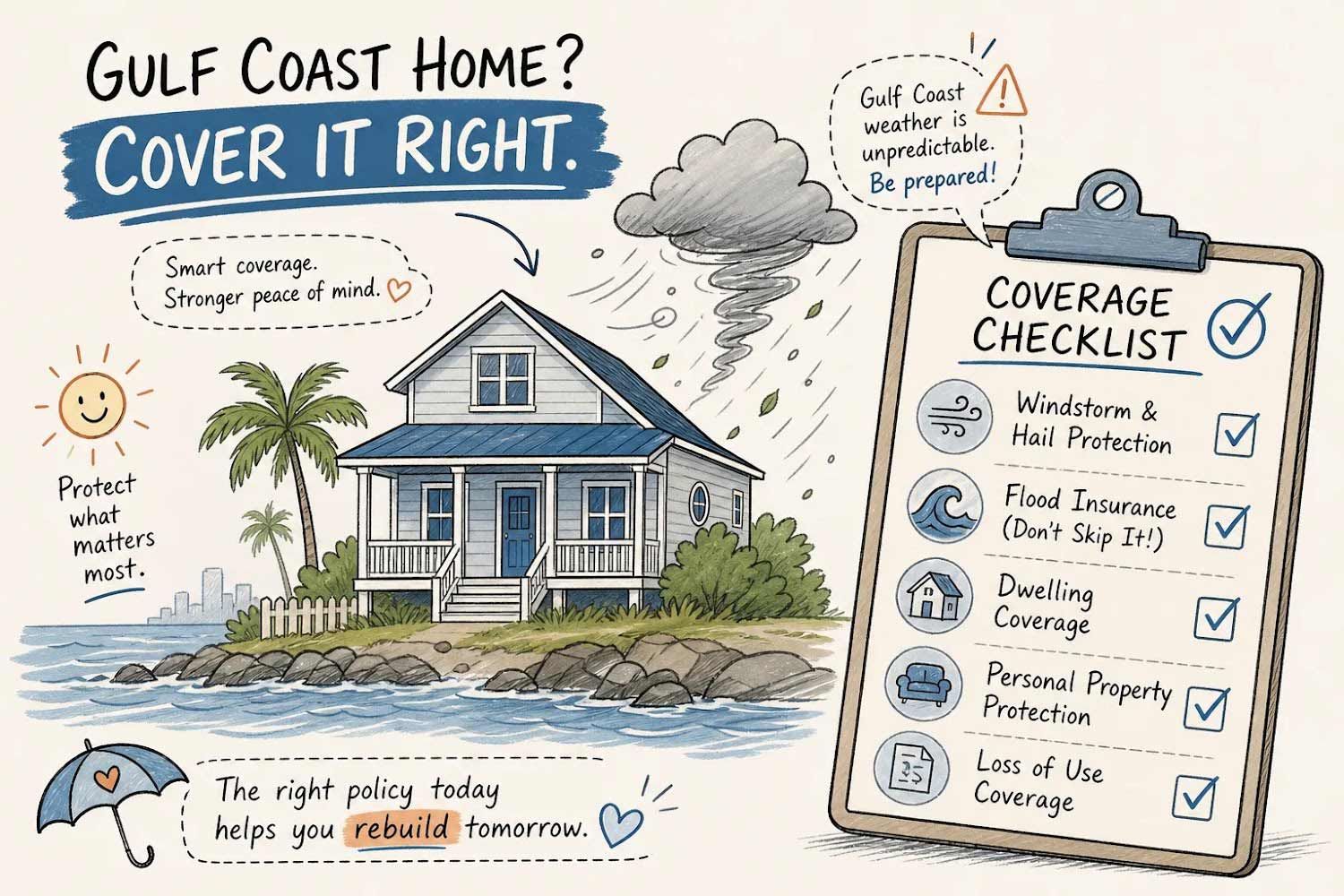
Standard home insurance policies in Texas coastal counties typically exclude windstorm and hail damage. The Texas Windstorm Insurance Association exists specifically to fill that gap. Meanwhile, flood damage is excluded from both standard home policies and windstorm policies. That means a Gulf Coast homeowner in a high-risk zone where flood insurance is required can find themselves needing three separate policies: a home policy, a windstorm policy, and a flood policy. Each covers a different peril, and storm surge sits uncomfortably at the intersection of all three.
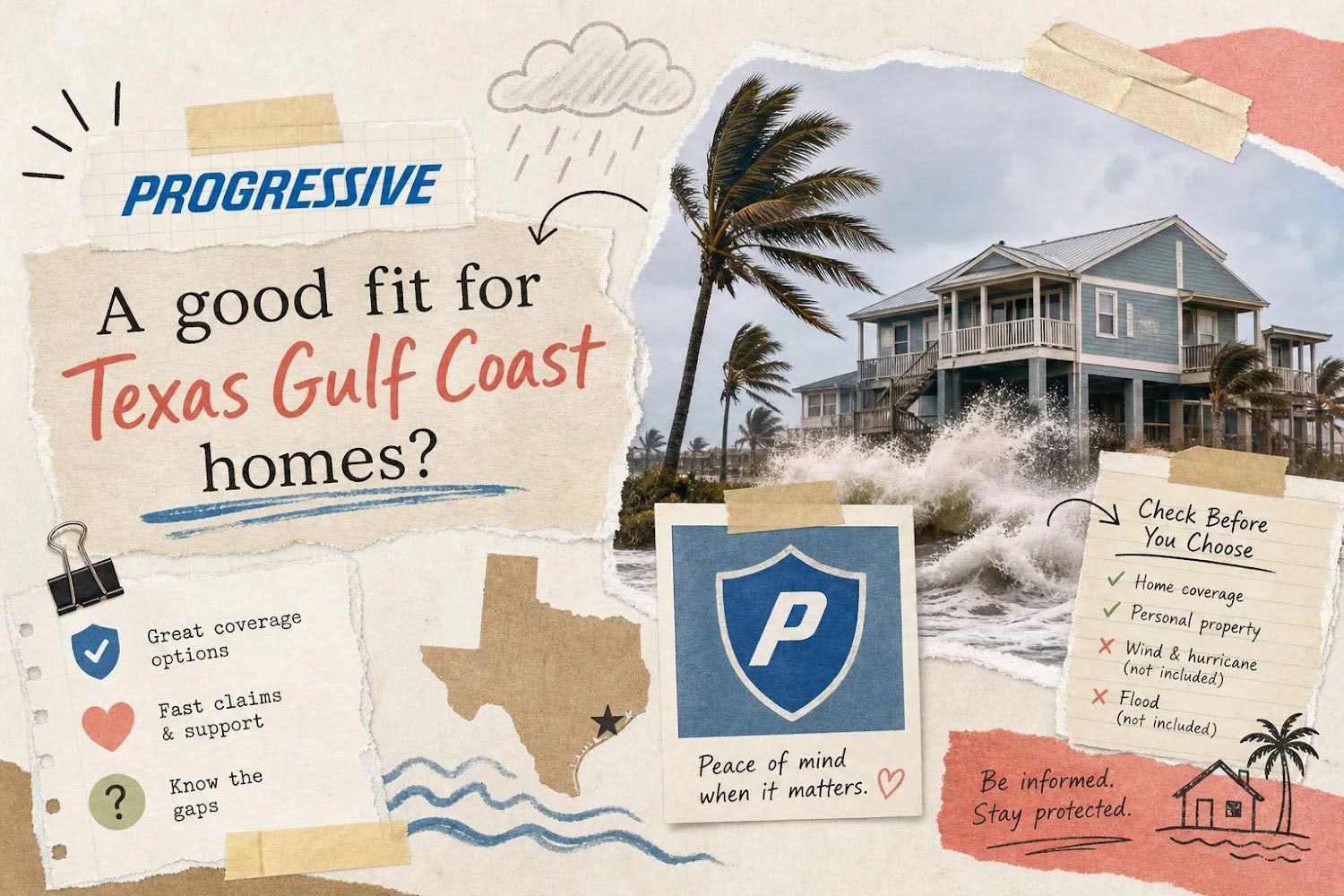
TWIA draws a clear line between wind damage and flood damage. Wind tearing off a roof, breaking a wall, or creating an opening through which wind-driven rain enters falls on the TWIA side. Water pushed ashore as storm surge, however, is treated as flood damage and is excluded by TWIA regardless of whether wind drove it. A hurricane can produce both wind damage and storm surge damage in the same event, and your payout depends entirely on which carrier covers which cause. Getting that determination wrong before a storm means finding out during a claim that one of your policies has a gap the other does not fill.
We have been helping Gulf Coast homeowners close exactly that gap since 1986. Brad Spurgeon Insurance Agency Inc. is a third-generation family-owned agency serving Texas City and the Texas Gulf Coast, and we offer a Windstorm Included Home Policy that bundles windstorm coverage directly into the home policy.
What to do next
Start with your flood zone, not a quote. Look up your property's flood zone on FEMA's Flood Map Service Center before calling anyone. If your zone is unclear or you are near a boundary, request an elevation certificate from a licensed surveyor. That document matters for your premium calculation: under FEMA's Risk Rating 2.0, elevation relative to the Base Flood Elevation is one of several factors that affect what you pay, so the cost of obtaining a certificate is often worth it.
Time your purchase carefully. The 30-day NFIP waiting period applies to most new policies. If you are not in a loan closing situation, coverage you buy today does not take effect for the next 30 days. Waiting until a named storm enters the Gulf is not a strategy; it is a gap in coverage dressed up as procrastination.
Flood zone interpretations, elevation certificates, windstorm policy structures, and lender acceptance rules are not simple to navigate from a national platform with no local knowledge. Reach out to our team directly and get the full picture before the next storm season, not after.
Frequently asked questions about flood insurance requirements
When is flood insurance required for a mortgage?
Flood insurance is required for a mortgage when two conditions are met simultaneously: the property is located in a FEMA-designated Special Flood Hazard Area, and the loan is made or backed by a federally regulated lender or agency. Both must apply at the same time.
What FEMA flood zone requirements trigger mandatory coverage?
Properties in zones beginning with "A" or "V", including AE, AH, AO, VE, and related designations, are in Special Flood Hazard Areas and trigger the federal mandatory purchase requirement when paired with a qualifying loan.
Can a private flood insurance policy satisfy a lender's requirement?
Yes. Federal regulations require lenders to accept a private flood policy that is issued by a licensed insurer, provides coverage at least as broad as an NFIP policy, and includes standard cancellation notice provisions. Policies that meet those standards must be accepted.
Does the 30-day waiting period always apply?
The standard NFIP waiting period is 30 days. The main exception is at loan closing, when a lender requires flood coverage as a condition of the loan. Private flood policies may offer shorter waiting periods, but check the specific terms before assuming immediate coverage.