

How to buy gap coverage on the Texas Gulf Coast with Brad Spurgeon Insurance Agency

Brad Spurgeon • November 16, 2026
Cover art reading “Close the Gap: Drive with Confidence” with a car, road trip scene, and sunset collage background

Gap coverage insurance pays the difference between what you still owe on your car loan or lease and what your insurer actually pays out after a total loss. Guaranteed asset protection, the full name behind the acronym, is the product that closes that hole. If you financed or leased a vehicle in the last few years, this article is worth reading before you assume you're fully covered.

Key takeaways

  • Gap covers the shortfall: After a total loss, your auto insurer pays actual cash value. Gap coverage insurance pays the remaining loan or lease balance above that amount.
  • Total loss events only: Gap coverage applies to theft with no recovery and accident write-offs. It never pays for repairs or partial damage.
  • Insurer pricing wins: Adding gap to an existing auto policy typically costs $20–$100 per year, according to CarInsurance.com and Insure.com, far less than the $400–$700 dealers commonly charge.
  • Deductible stays with you: Gap does not cover your collision or comprehensive deductible. That cost comes out of your pocket first.
  • Cancel when it's no longer needed: Once your loan balance falls below your car's current market value, the coverage no longer provides meaningful protection.
  • Check your lease first: Some lease contracts already include a gap waiver. Buying a separate policy on top of that is redundant.

What gap coverage insurance actually pays for

Guaranteed asset protection is a targeted financial product, not a catch-all safety net. Here is exactly how the claim sequence works: after a covered total loss, your collision or comprehensive coverage pays the vehicle's actual cash value minus your deductible. If that settlement falls short of your remaining loan balance, gap coverage steps in to pay the eligible difference. According to State Farm, this applies to vehicles declared a total loss after a covered accident or to vehicles that are stolen and not recovered.


The numbers make it concrete. Without gap coverage insurance, that bill lands on you. With it, the gap policy covers the eligible shortfall, though the deductible itself generally stays with you regardless of which policy you hold.

Loan gap coverage for financed vehicles

For a financed vehicle, loan gap coverage pays the remaining loan payoff above the ACV settlement. This is straightforward: whatever the insurer doesn't cover, up to the eligible deficiency, the gap policy absorbs.

Lease gap insurance for leased vehicles

For a leased vehicle, the calculation often includes the lease termination balance, which can fold in early-termination penalties and remaining payments. Before buying a separate lease gap insurance policy, read the lease agreement first. Many lease contracts already bundle a gap waiver into the monthly payment. Paying for coverage you already have is a straightforward waste of money.

When does gap protection actually make financial sense?

New vehicles lose roughly 20% of their value in the first year, according to industry estimates. If your down payment is less than typical first-year depreciation, you may begin the loan with negative equity. That's the clearest case for gap protection.


Long loan terms make the problem worse. At 60 to 84 months, your monthly payment keeps the balance high while depreciation continues at its own pace. Add negative equity rolled over from a previous vehicle into the new loan, and the gap can be substantial in years one and two. Lessees face a version of this automatically. They never build equity in the traditional sense, so a gap almost always exists for the full duration of the term.


On the other side, gap coverage is probably overkill for used vehicles purchased with a large down payment and a short loan term. The gap closes quickly in those situations, and standard comprehensive and collision covers the exposure. A practical rule: check your payoff amount against your vehicle's current market value using Kelley Blue Book or a similar valuation tool. Once your loan balance dips below the car's market value, cancel the gap coverage and stop paying for it.

What gap coverage won't pay for

The exclusions on gap policies surprise drivers who assume the product erases everything after a total loss. It doesn't. Your collision or comprehensive deductible is not covered by gap. You absorb that out of pocket before any other calculation happens. Missed or overdue loan payments, late fees, and finance charges are excluded from virtually every policy. Negative equity rolled over from a prior vehicle is usually capped or excluded entirely.


Mechanical breakdowns, partial damage, and ordinary repairs are never covered. Gap responds only to total-loss events. If the vehicle is repairable, there is no gap claim, full stop.


The bigger misconception is what "full coverage" actually means. Full coverage refers to the combination of liability plus comprehensive and collision. After a total loss, it settles at actual cash value minus your deductible, nothing more. The term does not legally mean the insurer pays off your loan balance. Drivers who assume full coverage handles the loan shortfall routinely face a surprise bill after a write-off. Gap coverage insurance is a separate, explicitly purchased add-on. It is not included in any standard auto policy.

How much gap coverage insurance costs, and where to buy it

The price difference between buying gap through an auto insurer versus a dealership is significant. Adding gap to an existing auto policy typically runs $20–$100 per year, according to CarInsurance.com and Insure.com. CarInsurance.com found annual costs of approximately $49 for Travelers, $53 for Progressive, and $69 for Nationwide.


*Cost ranges sourced from CarInsurance.com and Insure.com.


One important distinction to check before buying: some insurer gap products cap the payout at a percentage of ACV. Progressive's loan/lease payoff coverage, for example, generally pays up to 25% of the vehicle's actual cash value according to autoinsurance.com. That is weaker than true gap coverage, which pays the full eligible deficiency. Compare the actual contract language, not just the premium, before you decide. Texas law also requires that lenders disclose gap coverage is optional before presenting the terms, so no dealer can legitimately tell you it's mandatory.

How Brad Spurgeon Insurance Agency helps Gulf Coast drivers get this right

We are an independent insurance agency, which means we represent multiple carriers rather than a single company. When a Gulf Coast driver comes to us about gap coverage insurance, we can review the loan or lease contract to determine whether a gap already exists, how large it is, and which carrier's add-on fits the actual exposure.


We offer consultations, including in-person appointments by request at our Texas City office, for clients who want to walk through their finance documents and coverage options face to face. Online quote requests and policy management are also available through our agency website for clients who want a faster answer.

Five things to confirm before you sign anything

Before committing to any gap product, run through these steps.


First, pull your current loan payoff quote directly from your lender and compare it to the vehicle's current market value using Kelley Blue Book or a similar valuation tool. If you owe more than the car is worth, gap coverage insurance is worth pricing. If not, skip it.


Second, check your lease contract for a built-in gap waiver before buying a separate policy. Many lessees pay for coverage they already have.


Third, confirm whether the gap policy covers the full deficiency or caps out at a percentage of ACV. A product that caps at 25% of the vehicle's value may leave you short in a worst-case scenario.


Fourth, ask specifically how your deductible is treated. Most gap policies do not absorb any part of it, but some do up to a stated limit. Know what you're buying.


Fifth, compare the insurer's annual premium against the dealer's upfront price, and read the cancellation and prorated refund terms before signing anything through a dealership. In Texas, dealer-sold gap agreements generally require a full refund within the first 30 days and a prorated refund after that, but the contract language controls the outcome. The Texas Department of Insurance handles complaints for insurance-based products; the Office of Consumer Credit Commissioner handles debt-cancellation agreements.

The bottom line on gap coverage for Texas Gulf Coast drivers

Gap coverage is a targeted product. It closes one specific financial hole, and it closes it well. It is not for every driver. For financed and leased vehicles in the first two to three years of ownership, particularly those with long loan terms or small down payments, the math often makes the small annual premium easy to justify.


The buying logic is straightforward: an auto insurer is almost always cheaper than a dealer, and you keep control of when to cancel. Once your loan balance falls below the car's actual cash value, the coverage has done its job and you can drop it.


If you're on the Texas Gulf Coast and want someone to look at your actual finance documents before recommending anything, that's exactly what we do at Brad Spurgeon Insurance Agency. Reach out for a gap coverage insurance quote online or stop by our Texas City office before you drive off the lot.

Frequently Asked Questions

  • Will gap coverage pay my collision or comprehensive deductible if my car is totaled?

    No, gap coverage does not pay your collision or comprehensive deductible. You must pay the deductible out of pocket first, and gap only covers the remaining loan or lease balance above the insurer's actual cash value payment.

  • When should we cancel gap coverage on our vehicle?

    Cancel gap coverage once your loan balance falls below the vehicle's current market value. At that point the coverage no longer provides meaningful protection and you can stop paying for it.

  • Do we have to buy gap coverage from the dealer when we lease or finance the car?

    No, gap coverage is optional and Texas law requires lenders to disclose that it is optional before presenting terms. Dealers sometimes bundle gap waivers into lease contracts, so check the lease first to avoid buying redundant coverage.

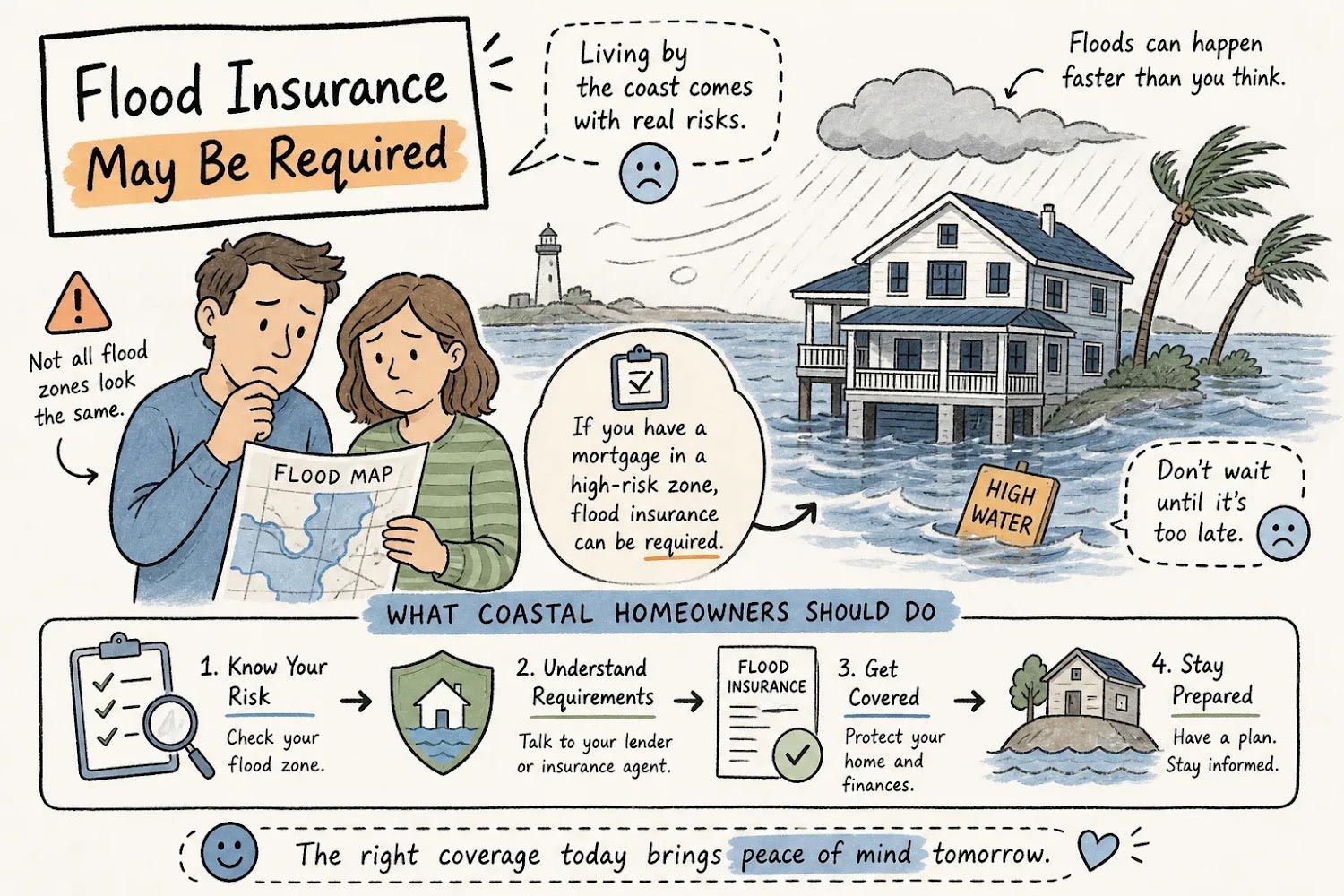
Flood insurance explainer infographic with a house, worried couple, and tips about flood risk and coverage
By Brad Spurgeon • November 16, 2026
Flood insurance is required for properties located in a FEMA-designated Special Flood Hazard Area when the mortgage is federally backed or made by a federally regulated lender. Both conditions must be true at the same time. Having a federally backed loan does not trigger the requirement on its own, and being in a high-risk flood zone does not trigger it either if your financing is fully private. When both boxes are checked, coverage is mandatory for the life of the loan, and your lender enforces it. For Texas Gulf Coast homeowners, flood risk does not arrive alone. Storm surge, windstorm exposure, and hurricane activity all layer on top of the basic flood question, and the gaps between standard insurance policies can leave a claim partially or entirely uncovered. This article walks through the key situations that trigger mandatory flood coverage, how to verify your flood zone, and how to build a complete coastal insurance strategy.
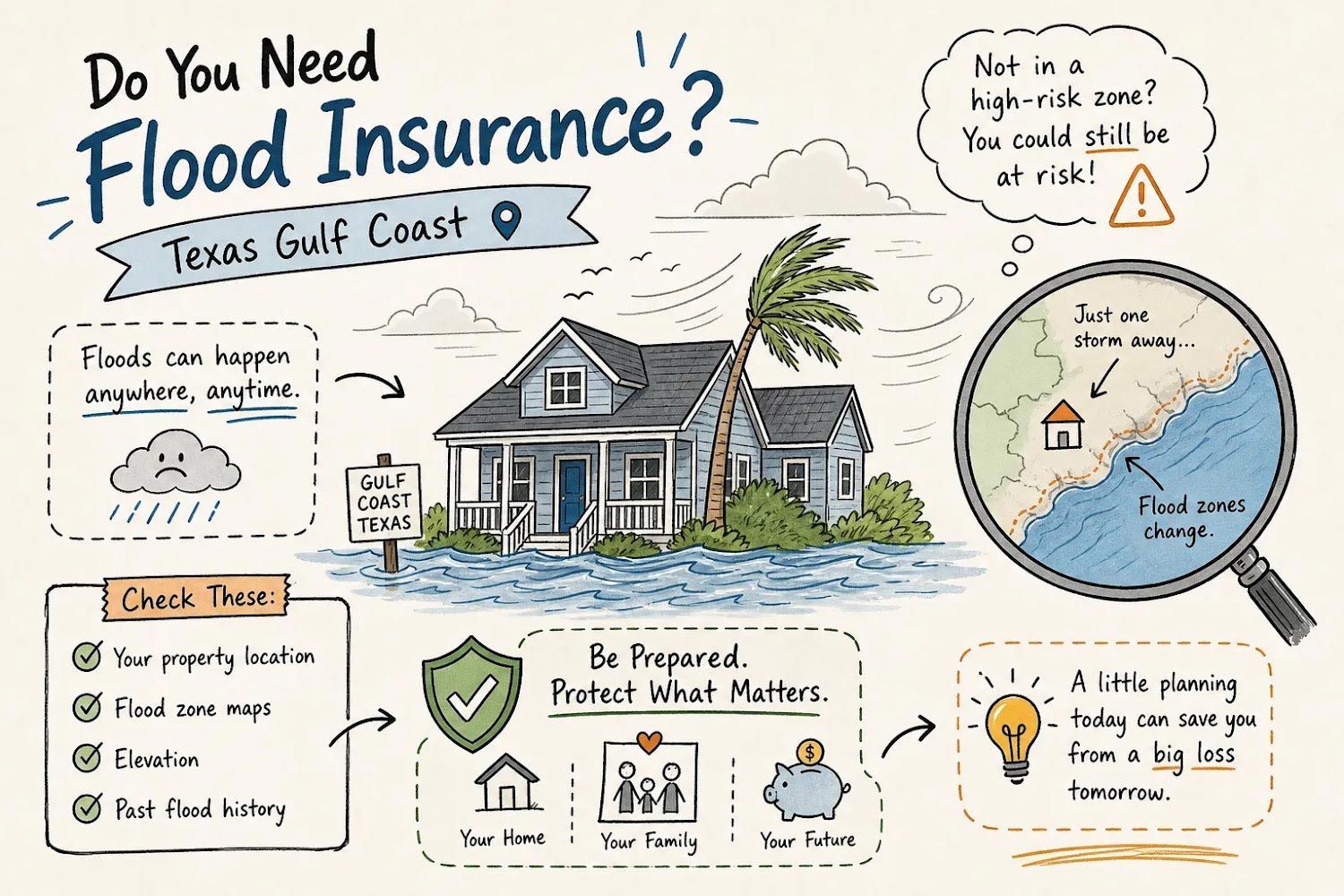
Flood insurance infographic for Texas Gulf Coast homes, with storm surge map and preparedness tips.
By Brad Spurgeon • November 16, 2026
Does my property require flood insurance? If you have a federally backed mortgage and your home sits in a FEMA-designated AE or VE flood zone, flood insurance is required by federal law. That is the short answer. If you are not sure which zone your property falls into, or you have heard conflicting things from your lender, your real estate agent, and your neighbor, conflicting guidance is common along the Texas Gulf Coast due to frequent remapping and local ordinance variability. The Gulf Coast carries unique flood exposure. Roughly 23,000 to 25,000 residential properties in Galveston County alone are mapped inside FEMA Special Flood Hazard Areas, according to a residence-level FEMA-zone analysis. The question homeowners here face is rarely as simple as "do I need it?" More often, it is "does the law require it, and is what I have actually enough?" This guide walks through the exact steps to check your flood zone, understand your lender's requirements, weigh NFIP against private coverage, and figure out your next move.
November 11, 2026
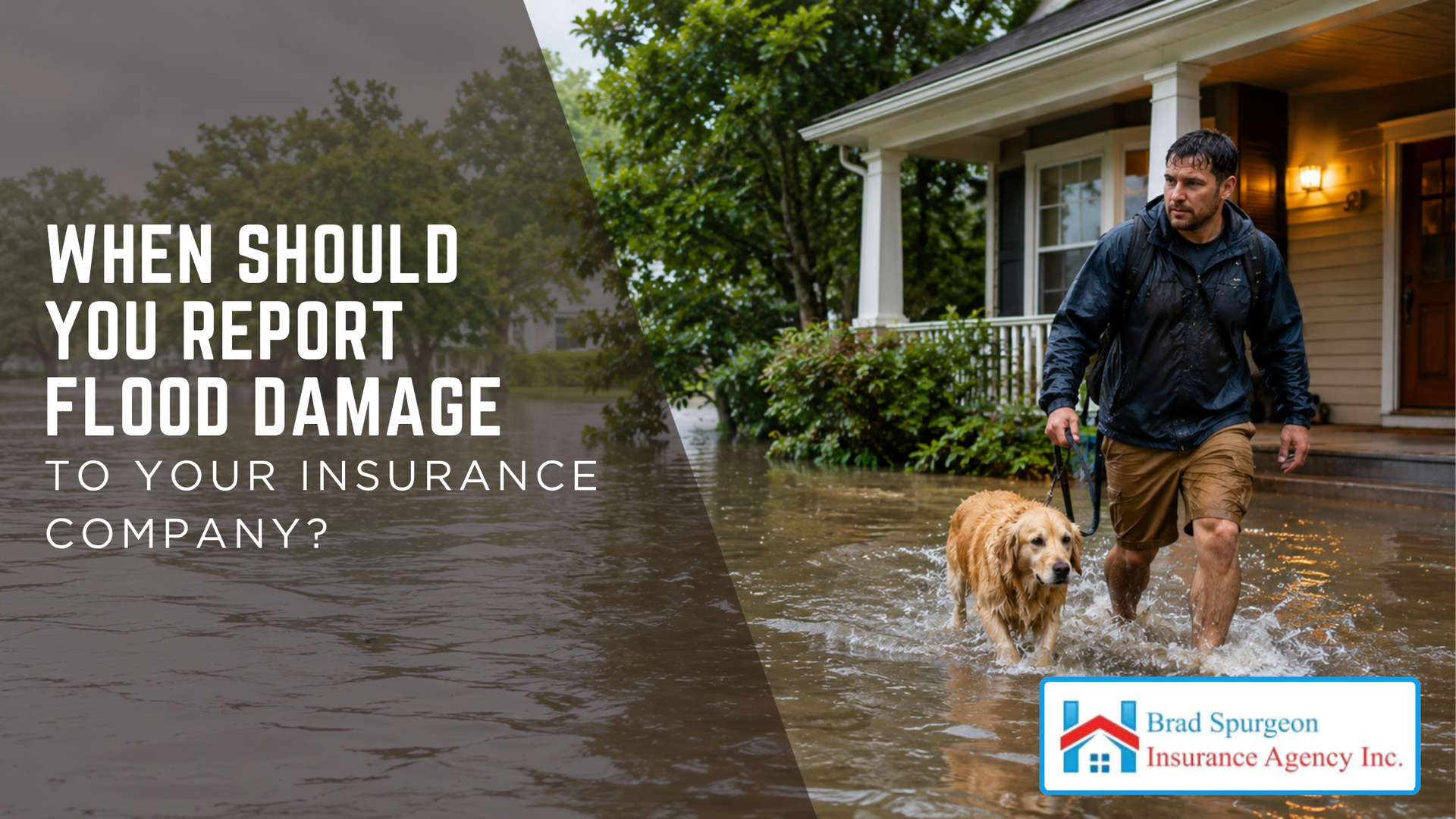
Flooding can cause extensive property damage, leaving homeowners with important decisions about repairs, documentation, and insurance claims. For residents of Texas City, TX, understanding when to report flood damage is especially valuable because coastal storms and heavy rainfall can create unexpected flooding risks.
November 11, 2026
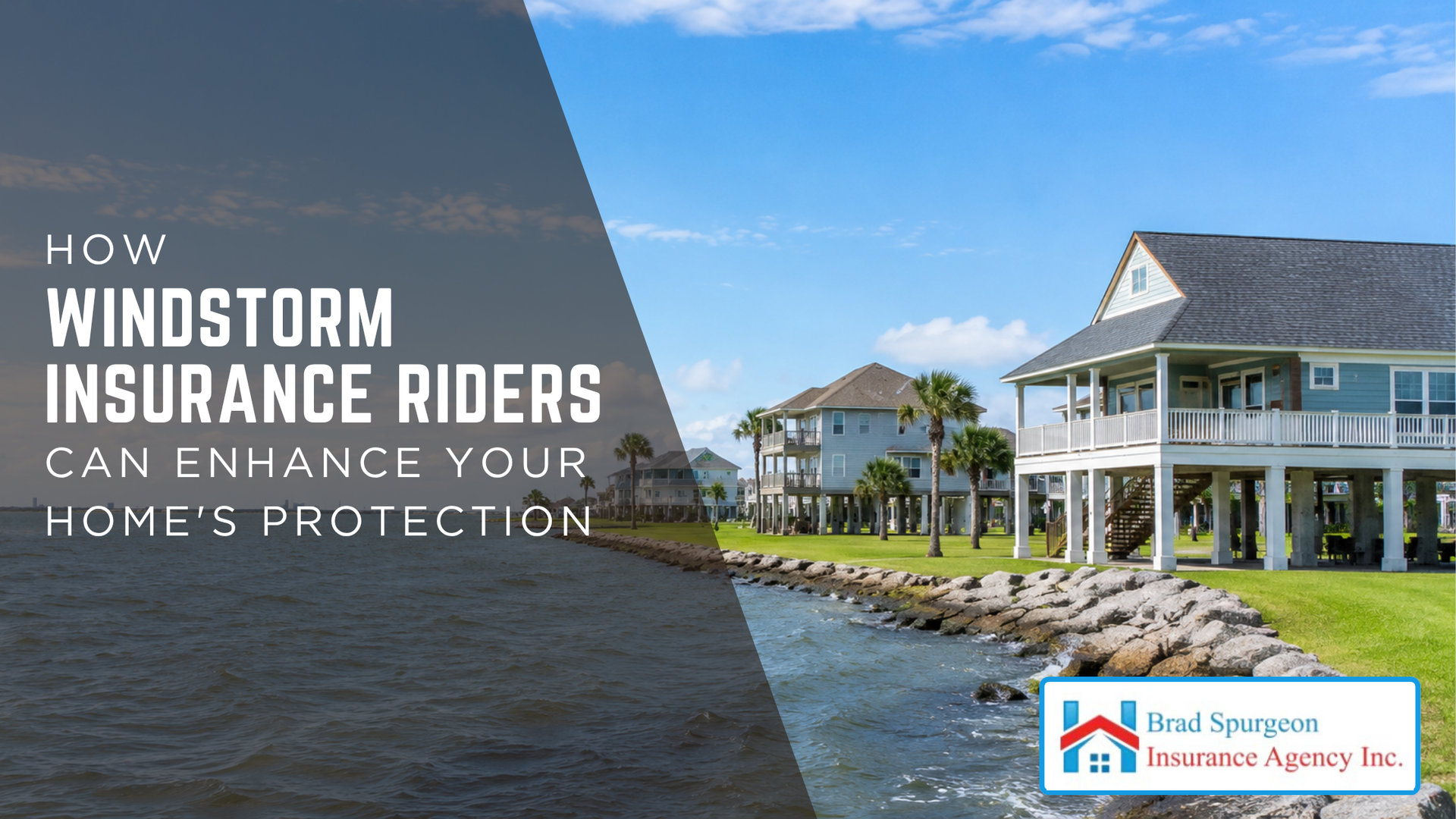
Living along the Texas Gulf Coast means preparing for powerful winds, hurricanes, and unpredictable weather conditions. For homeowners in Texas City, TX, having windstorm insurance is an important step, but understanding additional coverage options can make a meaningful difference. Windstorm insurance riders may provid
November 10, 2026
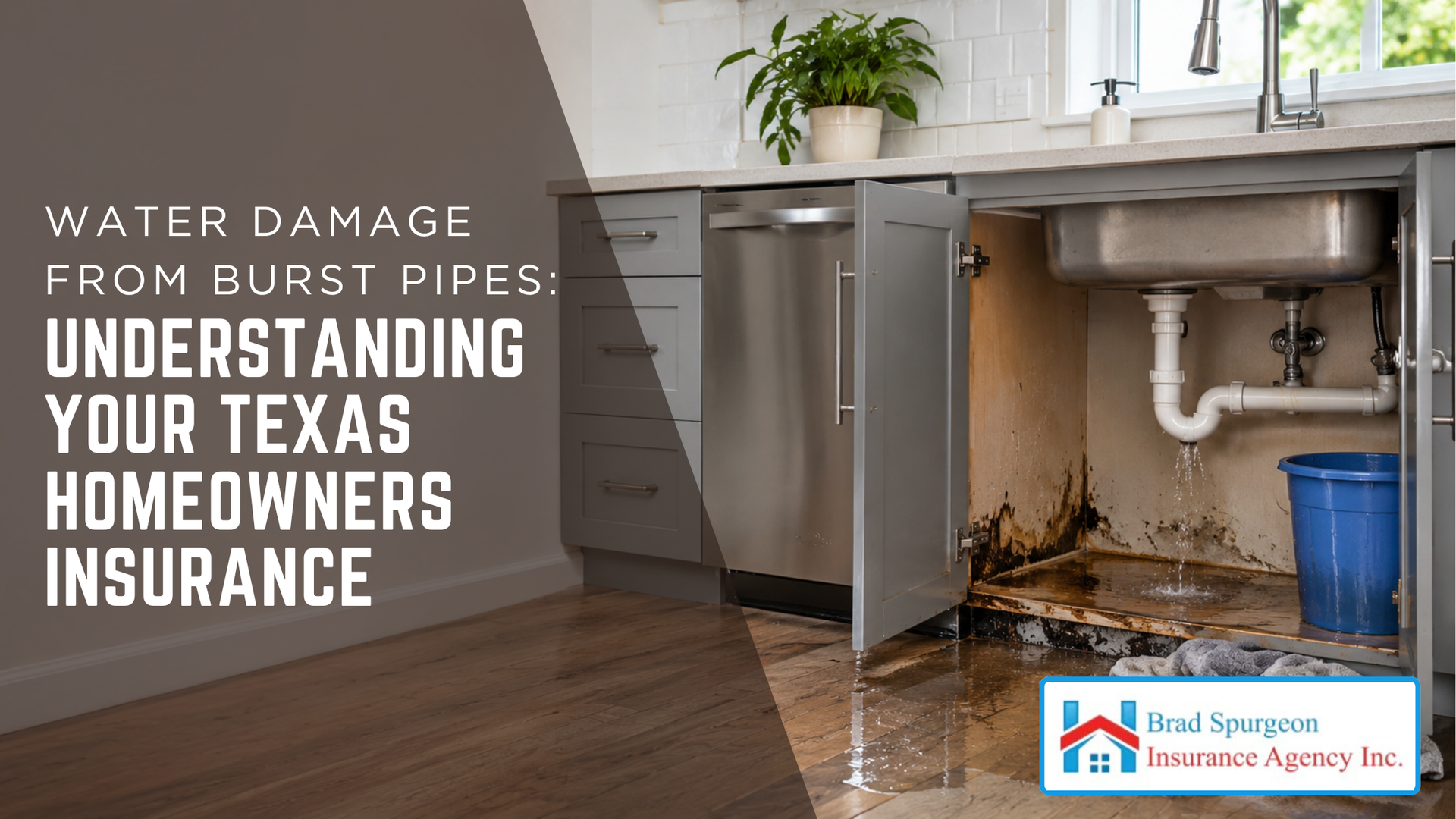
A burst pipe can release significant amounts of water into a home, damaging floors, walls, furniture, and personal belongings within minutes. For homeowners in Texas City, TX, understanding how insurance responds to unexpected plumbing problems is an important part of protecting their property. Knowing which types of w
November 10, 2026
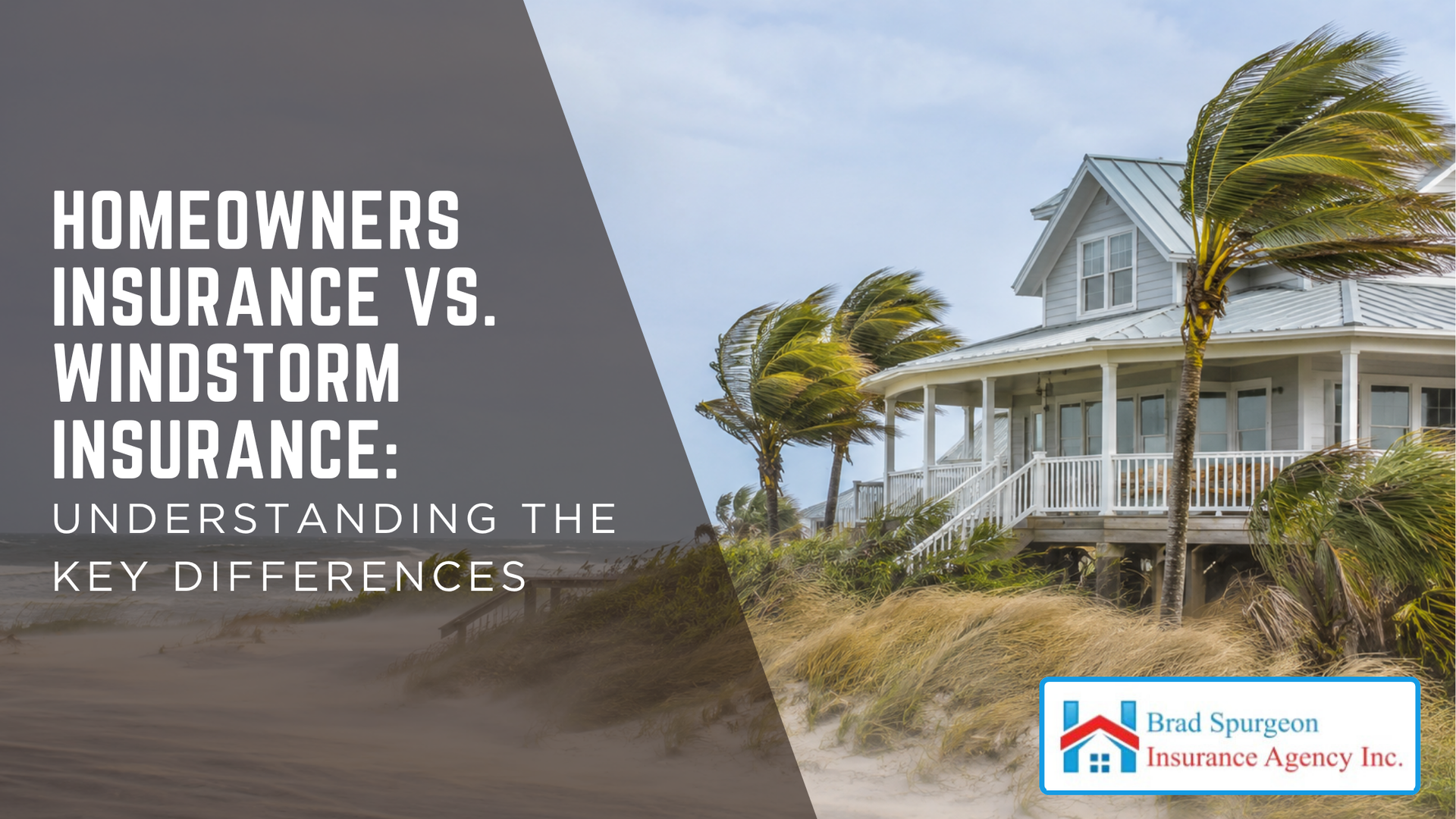
Protecting a home along the Texas Gulf Coast requires understanding how different insurance policies respond to property damage. For homeowners in Texas City, TX, comparing homeowners insurance and windstorm insurance is especially important because coastal properties may have unique coverage requirements. Knowing how
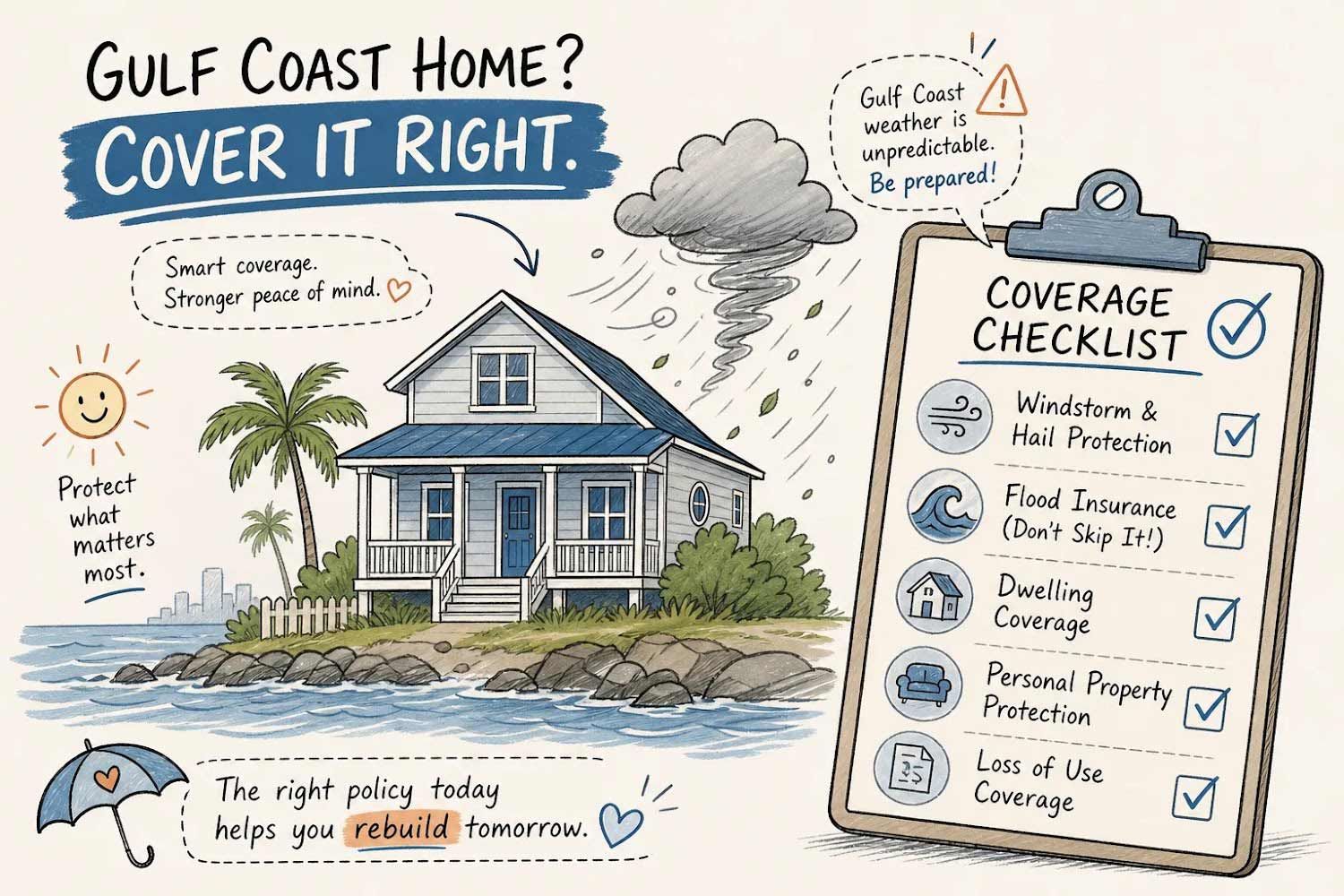
Illustrated coastal home under storm clouds with roof and drainage checklist for hurricane preparedness
By Brad Spurgeon • November 2, 2026
When buying on the Gulf Coast, understanding home owners insurance in Texas is essential, because a standard HO-3 policy covers fire, theft, and many everyday perils, but excludes windstorm, hail, and flood in most coastal counties. That means a single hurricane can trigger three separate claims under three separate policies, and if you only carry one policy, two of those losses come out of your own pocket. This checklist walks through what each layer covers, what it costs in 2026, and which option closes all three gaps most efficiently. Whether you're closing on a home next week or reviewing a policy you've had for years, the sequence below gives you a clear path forward.
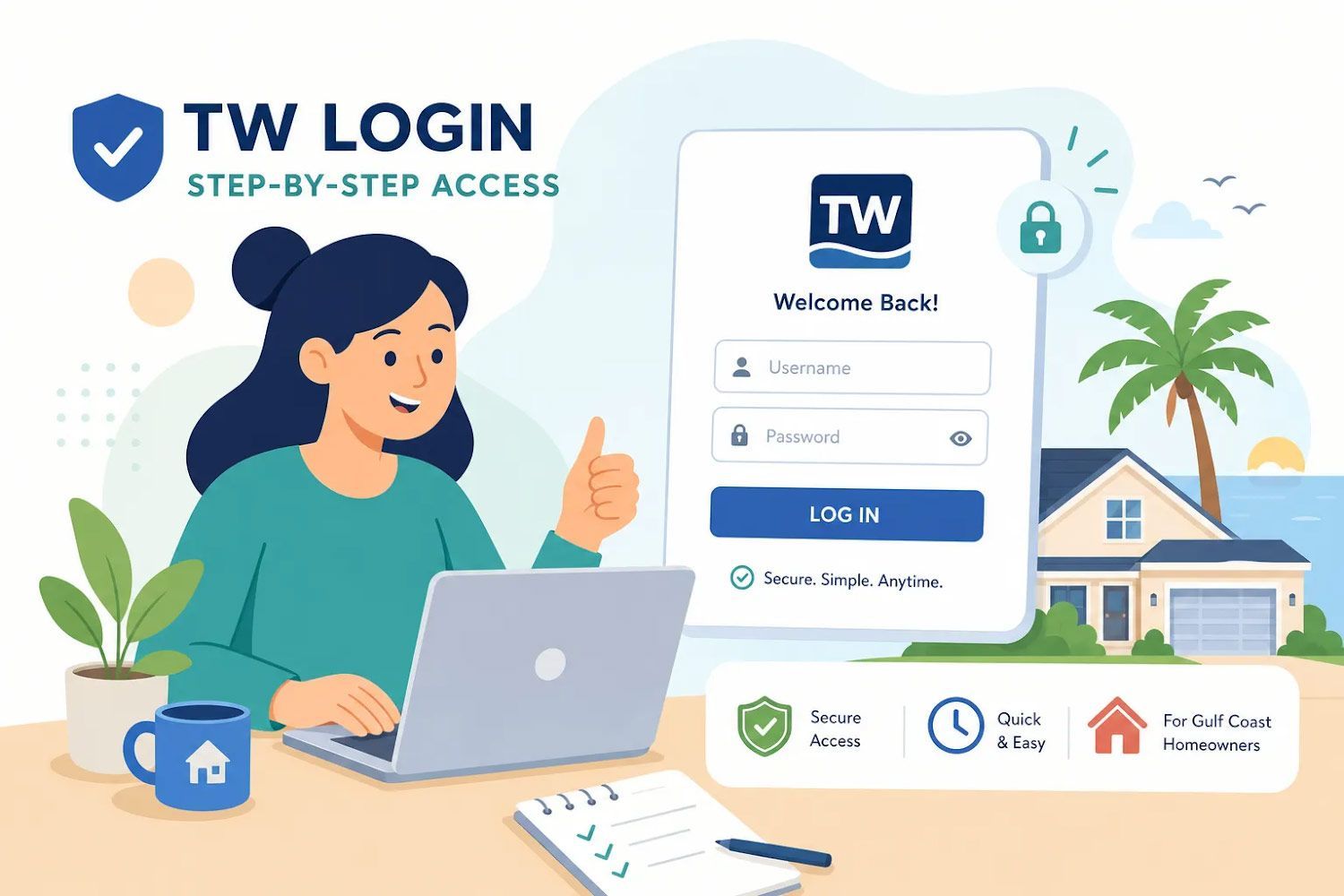
TW login screen with woman at laptop, smiling and pointing at a sign-in panel with security icons and house illustration
By Brad Spurgeon • November 2, 2026
If you're searching for a TW login and you live on the Texas Gulf Coast, you're likely trying to reach one of two portals: the Texas Windstorm Insurance Association (TWIA) policyholder site or your insurance agency's online client account. TWIA uses "TW" prominently in its name and branding, and it's the essential portal for managing windstorm and coastal home coverage. Knowing which portal you need, and what to expect at the sign-in screen, makes the whole process much simpler. This guide covers the most common TW portals Gulf Coast homeowners land on, how to log into each one, how to fix errors that block access, how to recover a forgotten password, and how to verify you're on a legitimate page before you type a single credential. And if you still can't get through, Brad Spurgeon Insurance Agency Inc., a third-generation family-owned agency serving the Texas Gulf Coast since 1986, can walk you through it directly.
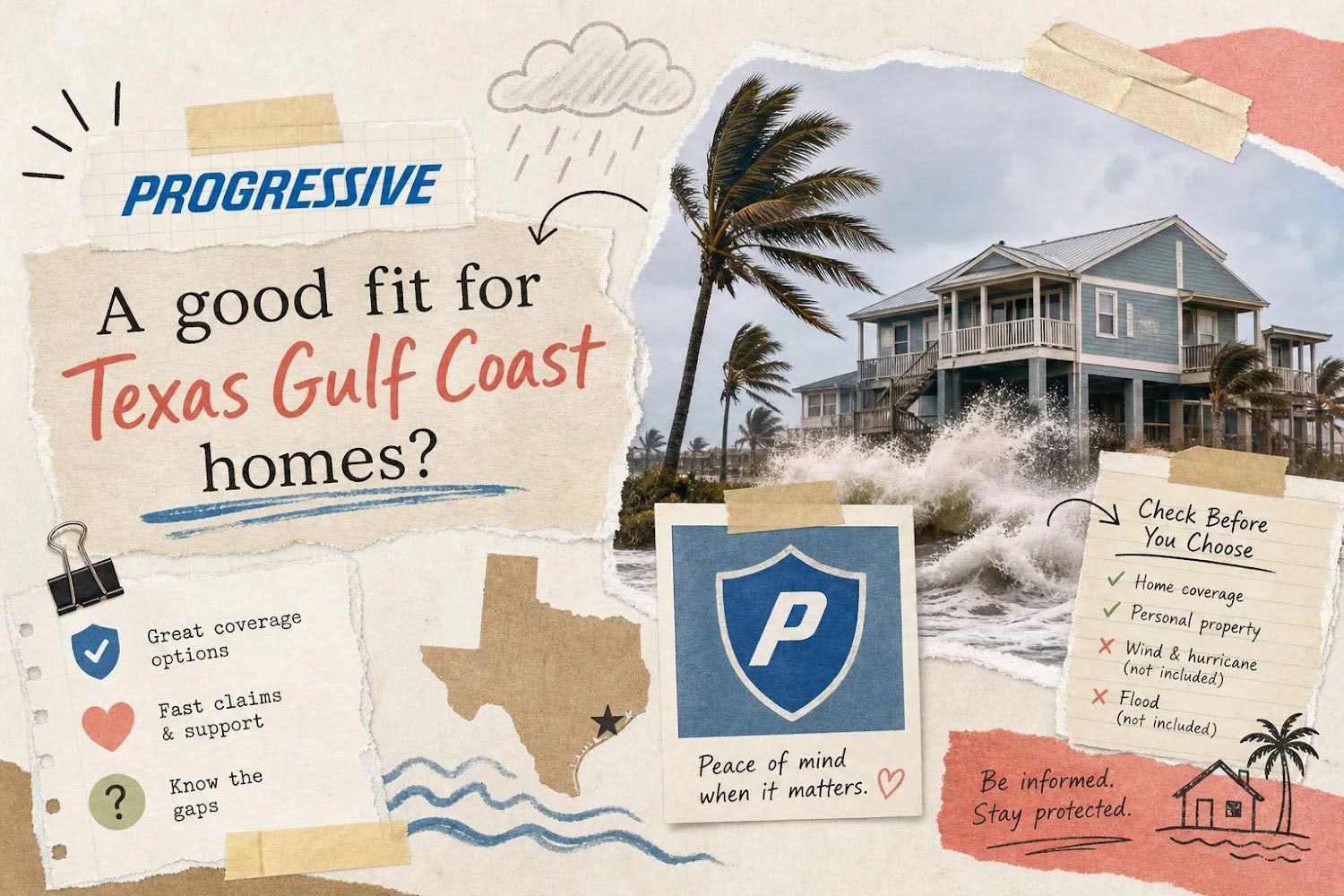
Progressive ad: “A good fit for Texas Gulf Coast homes?” with beach house, storm surf, and map graphic
By Brad Spurgeon • October 29, 2026
Progressive home insurance offers standard HO-3 coverage that works well for most American homeowners, but for Texas Gulf Coast properties, that base policy typically excludes the two biggest threats in the region: windstorm damage and flooding. Those aren't minor omissions for a home in Galveston County or along the Brazoria coastline. They're exactly what a hurricane or tropical storm delivers. Texas already carries some of the highest home insurance premiums in the country, and coastal ZIP codes push that figure even further above the national average. Spending that much on a policy that leaves windstorm and flood damage uncovered is a critical mistake. This article breaks down what progressive home insurance actually includes, where it falls short for coastal properties, and what a complete coverage picture looks like.
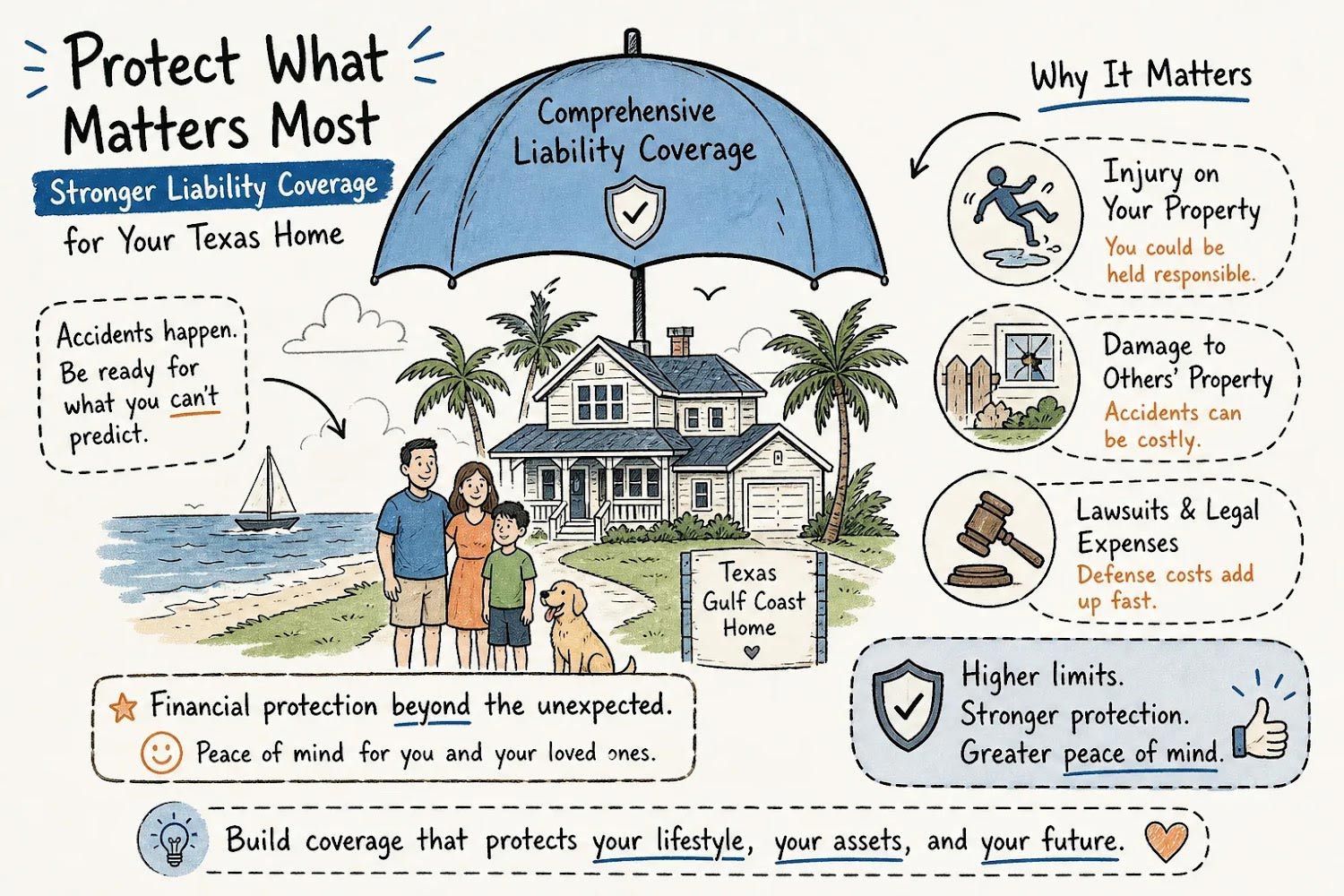
Infographic on flood insurance, showing a house, umbrella, and hurricane tips for protecting belongings and finances.
By Brad Spurgeon • October 29, 2026
Comprehensive personal liability coverage, known as Coverage E in your homeowners or renters policy, pays when someone else is injured on your property or you accidentally damage their property and you're legally responsible. It also covers your legal defense costs, attorney fees, and court judgments up to your policy limit. This guide breaks down exactly what you're covered for, what slips through the gaps, and how to build a comprehensive liability protection stack that actually holds up when a claim lands. Whether you're a first-time buyer in Texas City or a long-time Gulf Coast homeowner juggling a boat, a dog, and a rental unit, getting these limits right matters more here than almost anywhere else in the country.
Show More