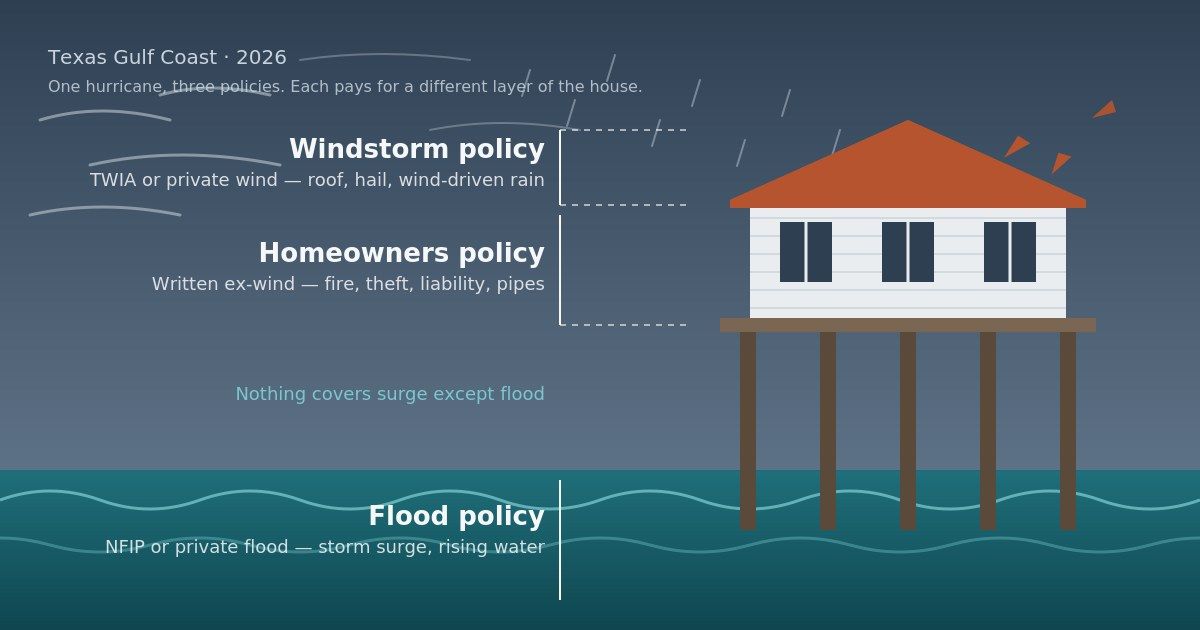
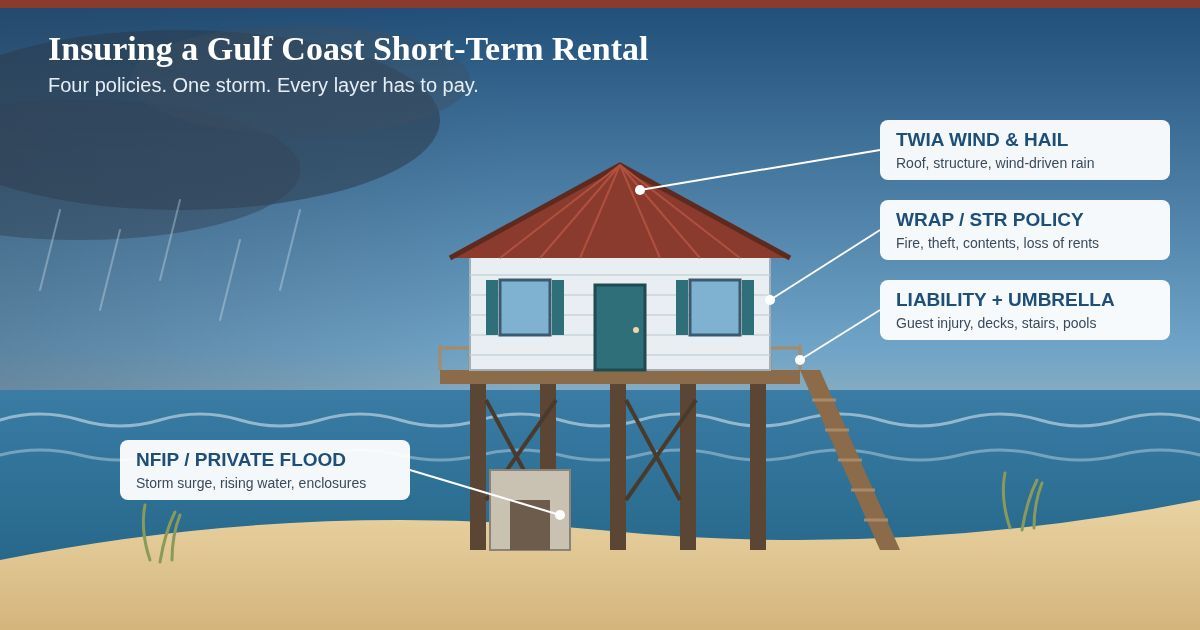
Private flood insurance and NFIP flood insurance both protect against flood damage, but they are not built the same way. NFIP policies follow standardized federal rules and coverage limits, while private flood policies may offer higher limits, broader options, and more flexibility depending on the carrier. For many property owners in Texas City, TX, the right choice depends on the property’s value, the amount of coverage needed, and which policy structure better fits the actual flood risk.
What NFIP Flood Insurance Is
The National Flood Insurance Program, or NFIP, is FEMA’s federally managed
flood insurance program. It offers flood coverage to property owners, renters, and businesses in participating communities, and it exists because standard homeowners insurance does not cover flood damage. FEMA and FloodSmart materials state that NFIP residential building coverage is available up to $250,000 and residential contents coverage up to $100,000.
That standardized structure is one of NFIP’s biggest strengths. The policy form is more uniform, the core coverage framework is well established, and many property owners know exactly what market they are entering when they choose it. In our work with clients, a common issue we see is that people assume “flood insurance” is one thing with one set of limits. It is not. NFIP is one option, and private flood is another.
What Private Flood Insurance Is
Private flood insurance is
flood coverage offered directly by private insurers rather than through the NFIP. NAIC explains that flood coverage may be purchased through the NFIP or, in some cases, through a private insurer. NAIC also notes that private flood policies may offer higher coverage limits and optional coverages, and some private insurers may not require an elevation certificate in situations where the NFIP process might.
This is where private flood becomes attractive for many higher-value properties or homeowners who want more customization. A private policy may be built to address exposures that go beyond the NFIP’s standard residential limits, but the tradeoff is that private policies are not automatically identical from one carrier to another. The details matter much more, and the policy has to be reviewed carefully.
What NFIP Usually Covers
NFIP policies typically separate building coverage and contents coverage. For residential property, official FloodSmart materials show building coverage up to $250,000 and contents coverage up to $100,000. FloodSmart also notes that contents are generally covered at actual cash value rather than full replacement cost.
NFIP building coverage generally focuses on the structure and certain permanently installed components. Contents coverage is separate and applies to eligible personal property. One important point many policyholders miss is that contents coverage is not automatically included just because the building is insured. The two parts must be understood separately.
A common issue we see is that property owners think the NFIP policy is broad enough to protect the full replacement value of a home and everything in it. For some homes, it may be adequate. For others, especially where the structure’s value is well above NFIP limits, it may leave a significant gap.
What NFIP Usually Does Not Cover Well Or At All
NFIP coverage has important limits. FEMA and related flood insurance guidance make clear that flood insurance does not cover every flood-related expense in the way many policyholders expect. For example, official guidance and long-standing NFIP materials note that there are important limitations for property in basements and below the lowest elevated floor, and indirect expenses are generally not part of the core NFIP benefit the way some private products may offer.
This matters because a homeowner may say, “I have
flood insurance,” while still facing a gap involving:
- Higher home replacement value than the NFIP limit
- Contents value above the residential contents cap
- Certain basement items or improvements
- Additional living expense expectations not built into the standard form
- More limited settlement treatment on contents
For homeowners near Galveston Bay or around Bay Street Park, these differences are not academic. Flood exposure is real, and the details of what the policy does not cover can matter just as much as what it does.
Where Private Flood Insurance Can Be Stronger
Private flood insurance often becomes most attractive when the property value or desired coverage goes beyond NFIP’s standardized framework. NAIC states that private flood policies can offer higher coverage limits and optional coverages, and it notes that the private market has been developing more customized coverage with technology-driven claims processes.
Depending on the carrier, private flood policies may offer advantages such as:
- Higher building limits than NFIP
- Higher contents limits
- More flexible underwriting
- Optional additional living expense coverage
- Broader choices for higher-value homes
- Coverage designs that better fit certain property types
That does not mean every private flood policy is automatically broader than NFIP in every category. It means private flood can be more customizable, and that flexibility is often the biggest advantage.
Where Private Flood Insurance Can Vary More Than People Expect
The same flexibility that makes private flood attractive also means the policy wording must be reviewed carefully. NFIP forms are standardized. Private flood forms are not all the same. Coverage triggers, exclusions, waiting periods, valuation methods, and optional add-ons can vary by insurer.
In our work with clients, one of the most common misunderstandings is assuming that because a private
policy advertises higher limits, it must be better in every practical way. Sometimes it is a better fit. Sometimes it is simply a different fit. The real comparison has to go line by line.
A practical review should ask:
- What are the building and contents limits?
- Is replacement cost available, and under what conditions?
- Is additional living expense included?
- How are basement or lower-level items handled?
- Are waiting periods different?
- Are there exclusions or conditions that matter for this property?
Which Policy Type Often Fits Best
NFIP may fit best when a property owner wants a standardized federal form and the needed coverage falls within NFIP limits. Private flood may fit better when the home’s value is above NFIP limits or when the owner wants
coverage features not commonly found in the standard NFIP structure. FEMA and NAIC materials together support that comparison: FEMA provides the standardized NFIP framework, while NAIC notes private flood’s potential for higher limits and added options.
For many property owners in Texas City, TX, the right answer is not simply “private is better” or “NFIP is safer.” The better answer depends on whether the property would be underinsured under NFIP limits, whether broader options are needed, and whether the private policy has been reviewed carefully enough to understand what it truly does and does not cover.
Conclusion
Private
flood insurance and NFIP flood insurance both serve important roles, but they solve the problem differently. NFIP offers a standardized federal policy with established residential limits, while private flood may offer higher limits and more flexible options depending on the insurer. The most important thing is not choosing based on label alone. It is choosing the policy that matches the property’s real flood exposure, value, and coverage needs. For homeowners evaluating protection in Texas City, TX, that comparison can make the difference between having flood insurance and having the right flood insurance.
At Brad Spurgeon Insurance Agency Inc., we aim to provide comprehensive insurance policies that make your life easier. We want to help you get insurance that fits your needs. You can get more information about our products and services by calling our agency at (409) 945-4746. Get your free quote today by CLICKING HERE.
Disclaimer: The information presented in this blog is intended for informational purposes only and should not be considered as professional advice. It is crucial to consult with a qualified insurance agent or professional for personalized advice tailored to your specific circumstances. They can provide expert guidance and help you make informed decisions regarding your insurance needs.
Brad Spurgeon Insurance Agency
Texas City, TX
(409) 945-4746
https://www.privatewindstorm.com/