Don’t Get Caught Off Guard: How To Avoid Common Windstorm Insurance Errors
December 10, 2025

Windstorms can cause sudden and costly damage—especially in coastal and storm-prone areas. Yet many homeowners don’t realize they’ve made critical mistakes with their windstorm insurance until after a major storm hits. By then, fixing coverage gaps becomes impossible, and the financial consequences can be devastating.


Understanding how windstorm insurance works and avoiding common errors can protect your home, your budget, and your peace of mind. Whether you live on the Gulf Coast, inland, or in a high-risk coastal town like Texas City, TX, taking proactive steps ensures you’re never caught off guard when severe weather strikes.


What Is Windstorm Insurance and Why Does It Matter?

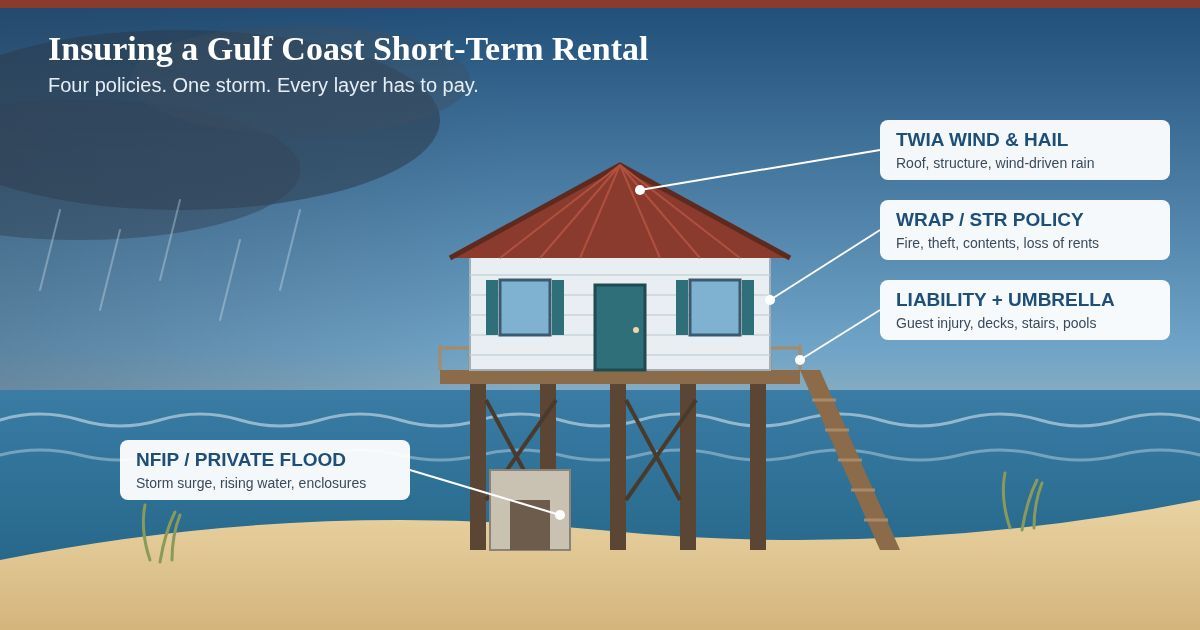
Windstorm insurance provides coverage for damage caused by high winds, hurricanes, hailstorms, and tropical storms. Many standard homeowners insurance policies exclude windstorm damage—especially in coastal states like Texas—making a separate policy essential.

Windstorm insurance can cover:

  • Roof and structural damage
  • Exterior repairs, such as windows and siding
  • Damage caused by debris
  • Interior damage resulting from wind-created openings
  • Detached structures, depending on the policy


Because storms can be unpredictable, understanding your coverage before hurricane season is crucial.


Common Windstorm Insurance Errors—and How to Avoid Them

1. Assuming Wind Damage Is Automatically Covered

One of the biggest misconceptions is thinking homeowners insurance includes all types of storm damage. Many policies in high-risk areas exclude or limit wind coverage.

Avoid the mistake:

  • Review your policy’s exclusions carefully
  • Ask your agent if you need a separate windstorm policy
  • Confirm hurricane deductible requirements


2. Not Understanding Your Windstorm Deductible

Windstorm or hurricane deductibles often work differently from standard deductibles. Instead of a set dollar amount, they’re usually a percentage of your home’s insured value.

Example:

If your home is insured for $350,000 and your windstorm deductible is 2%, you’ll pay $7,000 out of pocket before coverage begins.

Avoid the mistake:

  • Know your deductible percentage
  • Evaluate whether you can comfortably afford it during a storm
  • Adjust your policy if it’s too high


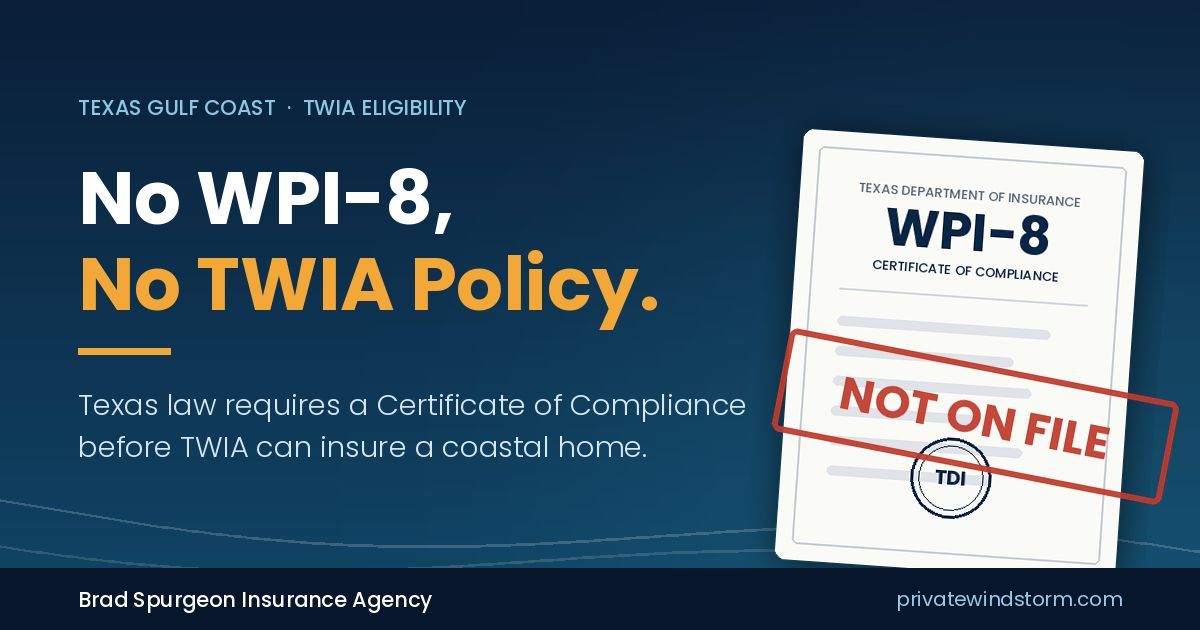
3. Failing to Meet Inspection or Certification Requirements

Some states—such as Texas—may require windstorm inspections or certifications for eligibility, especially near the coast.

Skipping these steps can result in denied claims, even if you believe your home is properly protected.

Avoid the mistake:

  • Schedule regular inspections
  • Ensure your roof and structural components meet state wind-resistant standards
  • Keep documentation handy for future claims


4. Underinsuring Your Home

A major error is insuring your home for less than its full replacement cost. If a storm causes total or severe damage, this can leave homeowners paying thousands out of pocket.

Avoid the mistake:

  • Verify your home is insured for replacement cost (not market value)
  • Update your policy after renovations or upgrades
  • Account for rising material and labor costs


5. Forgetting to Review Coverage for Detached Structures

Sheds, fences, garages, and other detached structures may have limited coverage or require specific endorsements.

Avoid the mistake:

  • Check which structures are included
  • Add endorsements if needed
  • Photograph any external structures for documentation


6. Not Preparing Documentation Before a Storm

When a storm hits, filing a claim becomes much easier if you already have proof of your home’s condition.

Avoid the mistake:

  • Take photos or videos of your property annually
  • Keep receipts for roofing, windows, and upgrades
  • Store documents digitally in case paper copies are lost


7. Waiting Too Late to Update Your Policy

Most insurers won’t allow you to update or purchase coverage when a storm is already approaching. This is especially true in storm-sensitive regions like Texas City, TX, where insurers may freeze policy changes days before a hurricane.

Avoid the mistake:

  • Review your coverage each spring
  • Update your policy before hurricane season begins
  • Don’t wait until a storm forms in the Gulf


In coastal communities such as Texas City, TX, where strong winds and tropical weather events are common, it’s essential for homeowners to review their windstorm policies regularly and ensure they meet state certification requirements. Proactive preparation can make a significant difference during peak storm seasons.


Additional Tips for Stronger Windstorm Protection

  • Add Impact-Resistant Roofing
    Many insurers offer discounts for reinforced or code-compliant roofing materials.

  • Secure Windows and Doors
    Shutters, impact glass, and storm panels reduce structural damage.

  • Trim Trees and Clear Debris
    Loose branches and outdoor items become dangerous projectiles during storms.

  • Keep Emergency Supplies Ready
    Maintain water, flashlights, chargers, and a portable generator if possible.


Conclusion

Windstorm insurance protects your home from some of the most devastating weather events. But having a policy isn’t enough—you must understand it fully to avoid costly mistakes when you need coverage the most. By reviewing your policy regularly, verifying deductible amounts, ensuring proper inspections, and maintaining updated documentation, you can weather any storm with greater confidence.

Preparation today ensures you don’t get caught off guard tomorrow.


At Brad Spurgeon Insurance Agency Inc., we aim to provide comprehensive insurance policies that make your life easier. We want to help you get insurance that fits your needs. You can get more information about our products and services by calling our agency at (409) 945-4746. Get your free quote today by 
CLICKING HERE


Disclaimer: The information presented in this blog is intended for informational purposes only and should not be considered as professional advice. It is crucial to consult with a qualified insurance agent or professional for personalized advice tailored to your specific circumstances. They can provide expert guidance and help you make informed decisions regarding your insurance needs.

By Brad Spurgeon March 18, 2026
The global insurance industry is currently operating at a trillion-dollar scale, with the 2025 market valued at $8.33 trillion and projected to climb past $11.6 trillion by 2030. In the U.S. alone, the market stood at $2.27 trillion with forecasts pointing toward nearly $4.95 trillion by 2035. Whether you're looking at life or nonlife sectors, the trend lines for 2026 are pointing toward stability. We aren't seeing the aggressive, vertical spikes of the last few years; instead, the industry is entering a more sustainable, steady-state phase. Here, Brad Spurgeon Insurance Agency breaks down the factors driving stability and what to watch in the year ahead. Starting From a Position of Stability The current optimism among industry specialists rests on a "three-pillar" foundation of stability: 1. The Property and Casualty (P&C) Surplus The year 2026 begins with record capital surpluses for P&C insurers, who have some of their most robust balance sheets in a decade. While 2025 was a standout year, 2026 is expected to see a slight normalization. Due to a very quiet hurricane season and massive rate hikes, the industry hit a combined ratio of about 94% last year, which was the best in 15 years. However, estimates show 2026 will not keep the trend going as strongly. Instead, it will more likely go back to 2024 levels, which indicates a softer market. While 2026 likely won't be as profitable as 2025, it is still expected to underwrite profitability. For an industry that often struggles to break even on claims, lining up with a solid year like 2024 is a win. 2. A Steady Global Reinsurance Market Reinsurance acts as the industry’s ultimate safety net, and when this segment of the market is in panic mode, all other segments suffer. This year, data from Moody’s shows the global reinsurance market has stabilized, and emergency prices have reached a plateau (still not significantly dropping, though). This allows primary insurers to secure the coverage they need without being forced to pass massive price spikes on to their policyholders. 3. Life Insurance Optimism The 2010-2021 period was not friendly for the life insurance industry. For over a decade, interest rates were near zero. With interest rates now stabilizing at more "normal" levels, these companies finally have access to better-paying bonds (4% to 4.2%). This shift is fueling a wave of optimism for the life and annuity sector that we haven't seen in over a decade. Insurance Industry Goes All In on AI As we navigate 2026, the insurance industry is moving beyond the "pilot program" phase of artificial intelligence and into full-scale integration. The real impact is now being felt in the day-to-day precision of underwriting and risk assessment. In the P&C sector, AI is now a functional tool helping carriers manage increasingly complex climate risks. This is especially true for "agentic AI," a 2026 breakthrough that allows systems to react to live geospatial data and make autonomous decisions. By leveraging satellite imagery and IoT sensors, carriers can now model catastrophe triage with unprecedented speed, predicting losses before claims teams even reach the ground. More importantly, AI-driven fraud analytics are on track to provide a massive financial lift. Estimates from Deloitte suggest that by 2032, these advanced systems could save the P&C industry as much as $160 billion by identifying fraudulent patterns in real time before claims are even paid. The End of the Hard Market According to Deloitte’s 2026 Global Insurance Outlook , the industry is entering a period of moderating growth. Following several years of aggressive rate hikes—what specialists call a "hard market"—we are now seeing the signs of a "soft market." Global growth in the life sector is expected to settle around 2.4%, down from its 2024 peak. This shift marks a move from "easy" to "expert" mode for insurance leaders. In a soft market, profitability isn't handed to you by rising rates; it has to be earned through operational efficiency and modern workflows. While investment income remains a solid cushion, carriers that fail to adopt AI-driven tools will find themselves struggling to compete as the pricing momentum slows. The Soft-Market Transition and Word of Caution We may be in a period of relative market stability and steady growth, but compared to 2025, momentum has clearly slowed. Luckily, investment income remains strong. That cushion allows insurers to stay profitable even when underwriting results are flat, which helps explain why most projections for 2026 remain positive. That said, stability doesn’t eliminate risk. To stay competitive and prepared for the next market shift, insurers need to modernize their workflows, and in today’s market, this means AI adoption. AI-driven tools position carriers to respond faster, make sharper decisions, and adapt quickly when conditions change.
March 17, 2026
Inflation raises home insurance costs because it increases the price of labor, building materials, repairs, and replacement after a covered loss. When it costs more to rebuild a roof, replace flooring, restore water damage, or repair storm-related destruction, insurers usually adjust premiums and coverage calculations
March 17, 2026
Private flood insurance and NFIP flood insurance both protect against flood damage, but they are not built the same way. NFIP policies follow standardized federal rules and coverage limits, while private flood policies may offer higher limits, broader options, and more flexibility depending on the carrier.
March 17, 2026
“Direct physical loss” in windstorm insurance generally means there must be real, physical damage to covered property caused by a covered wind event, not just a fear that damage might exist or a purely cosmetic issue with no actual physical alteration.
March 12, 2026
Roof age can directly affect your home insurance premium, eligibility, and claim experience because insurers view older roofs as more likely to suffer damage or fail during severe weather. In many cases, the older the roof, the higher the risk profile, especially if maintenance is unclear or the roofing material is nea
February 16, 2026
Windstorms are typically categorized by the type of event—thunderstorms and straight-line winds, tropical storms, hurricanes, tornadoes, and severe coastal wind events—and each category causes damage in predictable ways. Understanding how wind loads, wind-driven rain, debris impact, and pressure changes damage building
February 16, 2026
Flood insurance is one of the most important tools for business continuity because a single flood event can shut down operations, destroy inventory, and disrupt cash flow—even when the building structure survives. The right flood strategy combines proper flood coverage with a continuity plan that addresses downtime, ve
February 10, 2026
Renovations can quietly create windstorm insurance gaps because they change what your property would cost to rebuild and can introduce new materials, roof shapes, and structural features that affect how a claim is settled. The safest approach is to update your windstorm coverage immediately after major upgrades—especia
February 10, 2026
Renters insurance protects your personal belongings, liability, and temporary living expenses—but it does not insure the building itself. Homeowners insurance covers the structure plus your belongings and liability, and the right choice depends on whether you own the property, how much you’d lose in a disaster, and whi
January 14, 2026
Home insurance coverage can differ significantly between new construction and older homes due to building materials, code compliance, and risk exposure. Newer homes often benefit from modern safety standards, while older homes may require specialized coverage considerations. In our years of professional service, we’ve found that understanding these differences helps homeowners in Texas City, TX secure coverage that truly reflects their property’s risks. Why Home Age Matters in Insurance Coverage Insurance carriers evaluate risk based on how a home is built, maintained, and updated. The age of a home provides clues about everything from wiring and plumbing to wind resistance and code compliance. While both new and older homes can be well-protected, the path to proper coverage is often very different. Insurance Considerations for New Construction Homes New construction homes are typically built to meet current building codes and safety standards, which can positively influence insurance options. Advantages of Insuring New Construction Newer homes often benefit from: Modern electrical, plumbing, and HVAC systems Updated wind-mitigation standards Stronger roof attachment and materials Lower likelihood of immediate maintenance-related claims In our professional experience, insurers generally view new construction as lower risk, which can result in broader carrier availability and more favorable pricing. Coverage Still Requires Careful Review Even with newer homes, coverage should not be assumed to be “automatic.” Important considerations include: Adequate dwelling limits based on rebuild cost, not purchase price Proper coverage for upgrades or custom features Windstorm and deductible structures aligned with exposure Homes near coastal features such as the Texas City Dike may still require specialized wind or storm-related endorsements regardless of age. Insurance Challenges With Older Homes Older homes can present unique risks that insurers evaluate closely. Common Risk Factors in Older Homes Insurance carriers often look for: Outdated electrical systems Aging plumbing or galvanized pipes Older roofing materials Non-compliant construction features In Texas City, TX, older homes may have been built under standards that differ significantly from today’s requirements, which can impact both eligibility and pricing. How Older Homes Can Still Be Well-Insured Age alone does not make a home uninsurable. In our years of professional service, we’ve helped homeowners secure strong coverage by focusing on: Documented updates and renovations Roof replacements or reinforcements Plumbing and electrical system upgrades Clear maintenance records These improvements often help offset age-related concerns and expand carrier options. Replacement Cost Differences Between New and Older Homes Replacement cost is one of the most important distinctions between new and older homes. Rebuilding New Construction For newer homes, replacement cost is often easier to calculate because: Materials and designs are standardized Construction methods are current Code compliance is already built in This can reduce uncertainty when setting dwelling limits. Rebuilding Older Homes Older homes can be more complex and expensive to rebuild due to: Custom or discontinued materials Higher labor costs for specialized work Required code upgrades during rebuilding In our professional experience, underestimating replacement cost is one of the most common coverage gaps for older homes. Policy Endorsements Often Differ by Home Age Insurance policies are rarely identical across different home types. Common Endorsements for Older Homes Older properties may require or benefit from: Ordinance or law coverage for code upgrades Limited water damage endorsements Roof-specific coverage provisions Common Endorsements for New Homes Newer homes may qualify for: Wind mitigation credits Lower deductibles due to construction features Broader coverage options with fewer exclusions Homes near community areas like Bay Street Park may face similar environmental exposure regardless of age, but construction quality still plays a major role in coverage structure. Claims Experience: New vs. Older Homes Claims trends also differ between new and older properties. Typical Claims for New Construction These may include: Storm-related roof damage Isolated water losses Manufacturer or installation defects Typical Claims for Older Homes Older homes are more likely to experience: Plumbing-related water damage Electrical issues Wear-related failures misclassified as sudden losses Understanding these trends helps homeowners anticipate coverage needs and avoid surprises during claims. Choosing the Right Coverage for Your Home’s Age Whether your home is newly built or decades old, the goal is the same: align coverage with real risk. Key Questions Homeowners Should Ask Is my dwelling limit based on rebuild cost? Are my systems and roof accurately reflected in the policy? Do I have endorsements that match my home’s age and condition? Are deductibles realistic for my financial situation? In Texas City, TX, we’ve seen homeowners benefit greatly from policy reviews that account for how construction age affects both coverage and claims outcomes. Making Confident Insurance Decisions New construction and older homes each come with distinct insurance considerations. The key is not which type is “better,” but whether the policy is properly tailored to the home you own. At Brad Spurgeon Insurance Agency Inc., we aim to provide comprehensive insurance policies that make your life easier. We want to help you get insurance that fits your needs. You can get more information about our products and services by calling our agency at (409) 945-4746. Get your free quote today by CLICKING HERE. Brad Spurgeon Insurance Agency Inc. Address: Texas City, TX Phone: (409) 945-4746 Website: https://www.privatewindstorm.com/
Show More