
Understanding Your Declarations Page

What's Actually on Your Declarations Page? A Homeowner's Guide
If you've ever opened your home insurance policy packet, you know it's thick. Dozens of pages of definitions, exclusions, and fine print. But there's one page that matters more than all the rest combined:
the declarations page — often just called the "dec page."
If you only read one page of your policy this year, make it this one. Here's what's on it, why it matters, and what to double-check right now, especially if you live along the Texas Gulf Coast.
What Is a Declarations Page?
Think of the dec page as the summary sheet of your entire policy. It's usually the first page or two you get when your policy is issued or renewed, and it lists the specific details of *your* coverage — not the generic policy language, but the numbers and facts that apply to your home.
It answers questions like:
- Who is insured?
- What address is covered?
- How much coverage do I actually have?
- What's my deductible?
- When does my policy start and end?
The Key Sections to Check
1. Named Insured and Property Address
This sounds basic, but errors here are more common than you'd think. Make sure your name (and your spouse's, if applicable) is spelled correctly and that the property address matches exactly. If you've recently married, divorced, refinanced, or added a trust to your title, this section needs to reflect that.
2. Coverage Amounts (Coverage A, B, C, D)
Your dec page breaks coverage into categories:
- Coverage A – Dwelling: The cost to rebuild your home's structure.
- Coverage B – Other Structures: Detached garages, fences, sheds.
- Coverage C – Personal Property: Your belongings.
- Coverage D – Loss of Use: Living expenses if you're displaced after a covered loss.
The number that trips up the most homeowners is Coverage A. It should reflect the actual
cost to rebuild your home, not its market value or what you paid for it. Along the Gulf Coast, construction and labor costs have climbed significantly in recent years, so a dec page that hasn't been reviewed in a while may show a rebuild figure that's now too low.
3. Deductibles — Including Your Hurricane/Windstorm Deductible
This is where Texas coastal homeowners need to pay extra attention. Most standard policies show a straightforward dollar deductible. But if you're in a coastal county, there's a good chance your policy also carries a separate percentage-based hurricane or named storm deductible — often 1%, 2%, or higher of your dwelling coverage, rather than a flat dollar amount.
That difference matters enormously in a claim. A 2% deductible on a $300,000 dwelling limit is $6,000, not $500 or $1,000. Know which type applies to you before a storm is on the radar, not after.
4. Policy Period
The effective and expiration dates. Simple, but worth confirming — a lapse in coverage, even briefly, can affect your ability to renew or qualify for certain programs down the line.
5. Mortgagee / Lienholder Information
If you have a mortgage, your lender is usually listed here. This ensures claim checks are issued correctly and that your lender receives proof of coverage.
6. Forms and Endorsements List
Near the bottom, you'll typically see a list of form numbers and endorsements attached to your policy. These are the add-ons and modifications to the standard policy — things like water backup coverage, ordinance or law coverage, or scheduled personal property. It's a dense list, but it's worth asking your agent to walk through it in plain English.
What the Dec Page Doesn't Cover
Here's the part that catches a lot of Gulf Coast homeowners off guard:
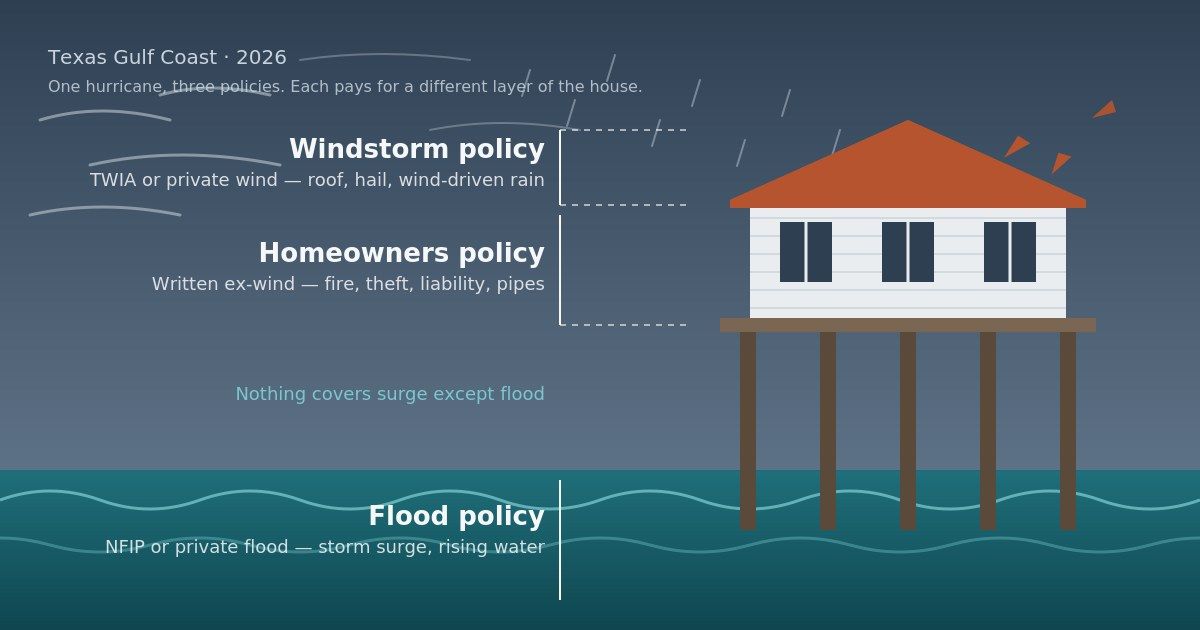
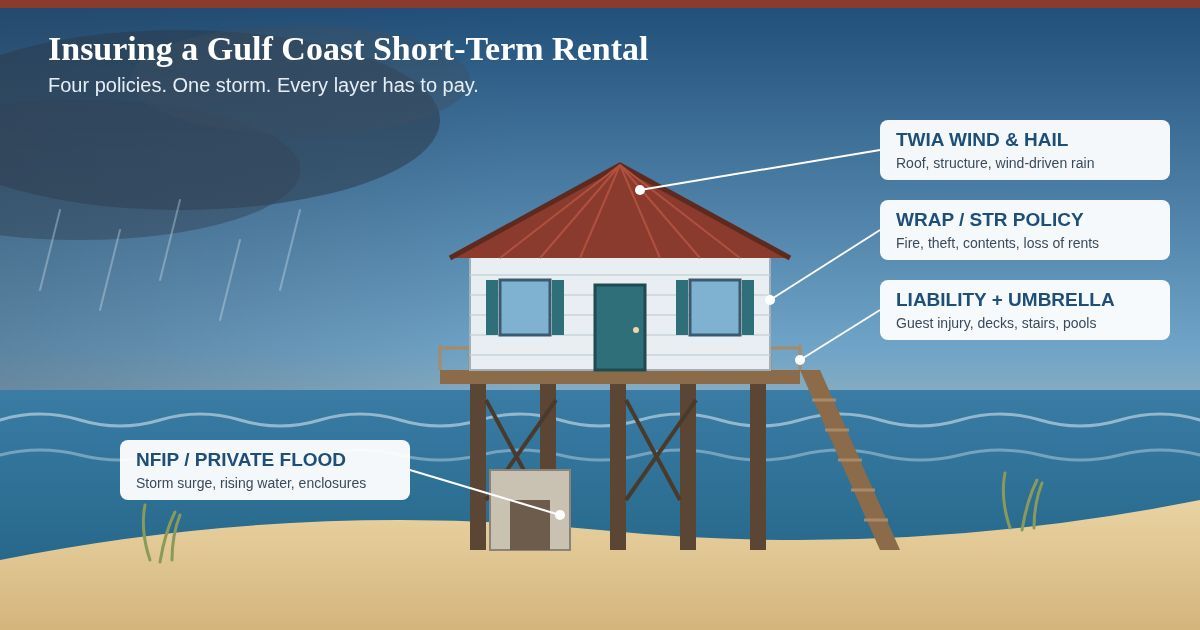
your standard homeowners declarations page does not include flood coverage. Flood damage — whether from storm surge, heavy rainfall, or overflowing waterways — is excluded from virtually all standard homeowners policies.
If you're in a coastal or flood-prone area, flood insurance is a separate policy entirely, typically through the
National Flood Insurance Program (NFIP) administered by FEMA, or through a private flood carrier. That policy will have its own, separate declarations page with its own coverage limits and deductibles.
Similarly, if your home insurance is written through
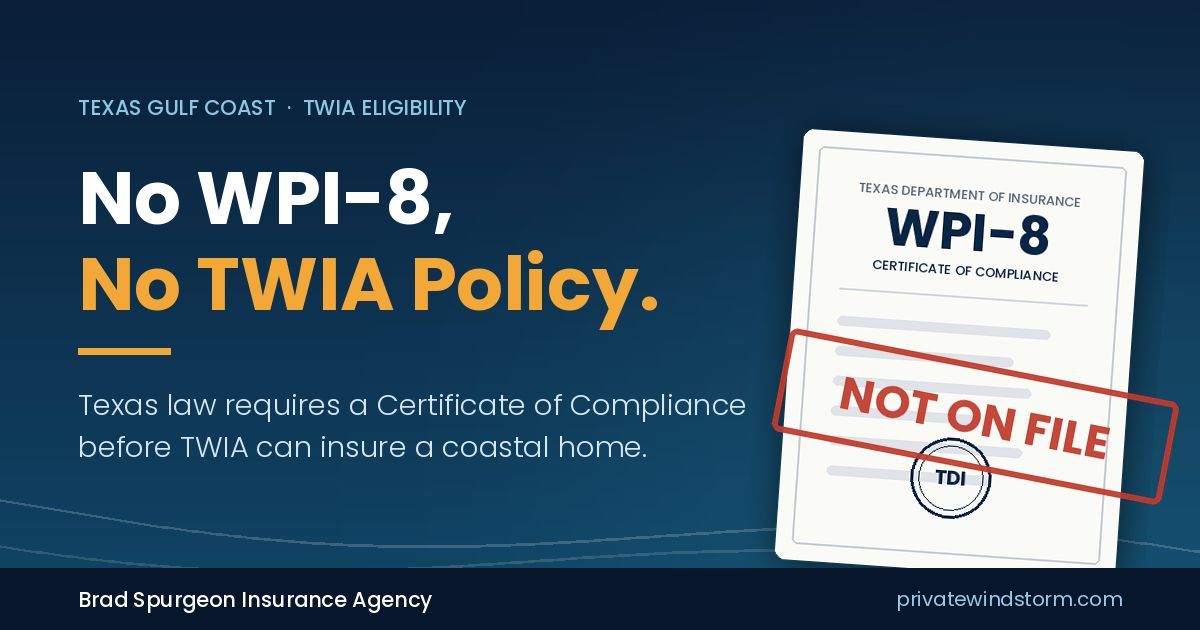
TWIA (the Texas Windstorm Insurance Association) because private windstorm coverage isn't available where you live, that will also be a separate policy with its own dec page, layered alongside your regular homeowners policy for everything other than wind and hail.
The bottom line: if you're on the Texas coast, you may actually have three separate declarations pages to keep track of — homeowners, wind/hail (TWIA or private), and flood. Each one has its own limits, deductibles, and renewal date.
Why You Should Review Yours Today
A declarations page isn't something to file away and forget. Review it any time you:
- Renew your policy
- Complete a renovation or addition
- Buy expensive personal property (jewelry, art, equipment)
- Refinance your mortgage
- Notice rising construction costs in your area
An outdated dec page is often the root cause of a homeowner discovering — mid-claim, after a storm — that their coverage limits or deductibles weren't what they expected.
Questions About Your Coverage?
If it's been a while since you've looked closely at your declarations page, or if you're not sure whether your windstorm and flood coverage line up with your homeowners policy, it's worth a quick review. A short conversation now can save a lot of confusion after a storm.
Reach out anytime — I'm happy to walk through your dec page with you and make sure your coverage actually matches your home.