
When Is The Best Time To Put Air In Your Tires?

August 4, 2026
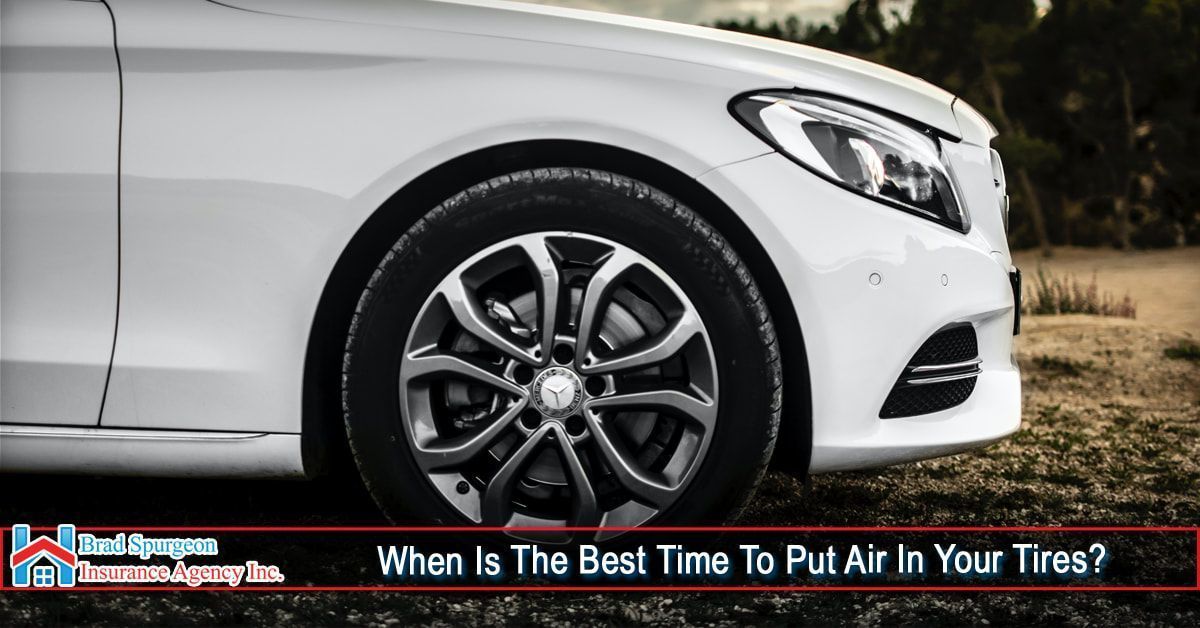
Close-up of a white car tire parked on gravel

​

As a car owner, maintaining your tires may help them last longer, reducing the frequency of buying new tires and saving you money on fuel. It is essential to know when and not to inflate your tires. But how exactly can you examine and inspect your vehicle's tires? 


Several Factors To Consider To Keep Your Tires Inflated

On average, tires lose around one pound per square inch (psi) of pressure a month and lose an additional 1 psi for every 10-degree drop in outside temperature. 


  • Specific pressure
  • Monitor tire pressure in your automobile technology
  • Driving habits
  • Tire size and load on the tires

Is It Harmful To Continue Putting Air In Tires?

Overinflating your tires is risky and can significantly increase the likelihood of overheating and blowouts. Excess air pressure often leads to uneven, accelerated tread wear in the center of the tire and higher operating temperatures, both of which compromise your safety. Common indicators of overinflated tires include reduced traction, excessive center tread wear, and a noticeably uncomfortable, harsh ride.


Care And Maintenance Tips

People frequently fail to detect when their tires are damaged. To prevent more serious issues with the rest of your automobile, you should inspect your tires frequently and look for any wear or damage.


  • Check the tires frequently
  • Consider your tire's load capacity
  • Regular car maintenance
  • Rotate the vehicle's tires
  • Check tire treads
  • Read your owner's manual for advice on safety and roadside emergencies
  • Check the air pressure
  • Use pressure gauge
  • Check in the morning before you use your car because driving causes the tires to heat up
  • Remove the valve, and you may use a home compressor. Replace the valve cap once you've made sure your tire is properly inflated
  • Do not leave your car in a single stationary position to avoid flat-spotting
  • Avoid leaving your fully-loaded vehicles parked for weeks on end on a chilly surface.
  • If your cargo is really heavy, you might think about jacking up your car's chassis to relieve some of the strain on your tires.
  • Find out each tire's recommended maximum pressure.

Conclusion

Maintaining the manufacturer's recommended tire pressure on your rims is vital to keeping you as safe as possible and getting the most out of your tires. 


At Brad Spurgeon Insurance Agency Inc., we put our clients first by offering them policies that they can afford. Having insurance is a necessity nowadays and we're here to help you out. Learn more about our products and services by calling our agency at (409) 945-4746. You can also request a free quote by CLICKING HERE. Topics and coverage discussed in this article are not guaranteed, consult with your agents to determine what your policy does and does not cover. We are more than happy to help!

September 15, 2026
If you own a home in Texas City, you already know windstorm insurance isn't optional, and you've probably felt the sting of the premium on your renewal notice. Years of active hurricane seasons along the Gulf have pushed rates higher across the board, but that doesn't mean you're stuck accepting whatever number your ca
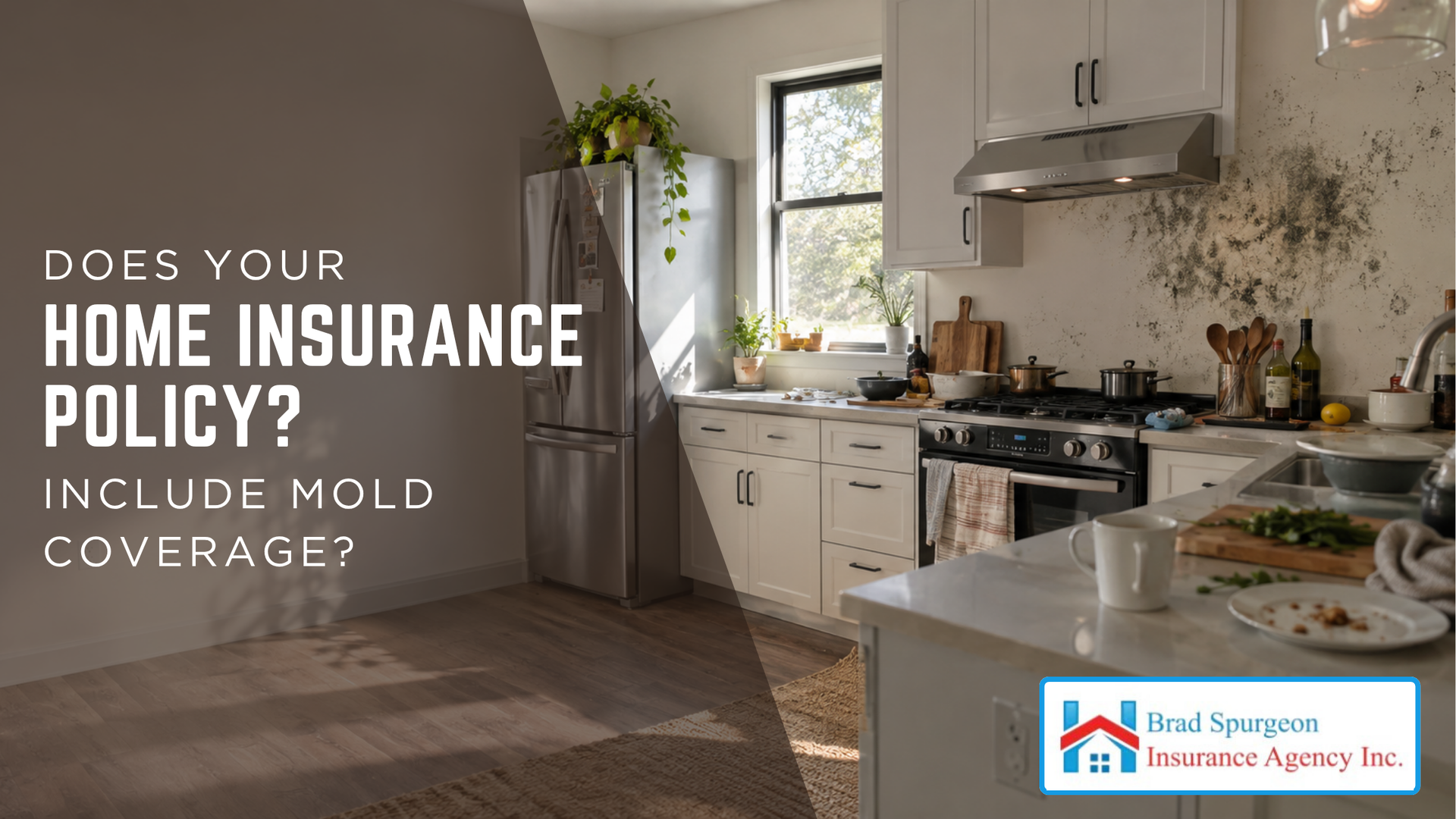
A damaged, peeling wall with dark mold growth
September 9, 2026
Mold has a way of showing up in Texas City homes when you least expect it, and Gulf Coast humidity doesn't make it any easier to avoid. Between hurricane-season moisture, everyday humidity, and the occasional leaky pipe or roof, it's one of the more common issues local homeowners run into, and also one of the more misu

September 9, 2026
Owning a home along the Texas Gulf Coast means living with a level of risk most inland homeowners never think twice about. Between hurricane season, hail storms rolling in off the Gulf, and the ever-present threat of flooding after a heavy rain, a homeowners policy here has to work harder than it does almost anywhere e
September 9, 2026
Most Texas City homeowners assume that if their house takes on water, their homeowners policy has them covered. It doesn't, and finding that out mid-claim is one of the most expensive surprises a Gulf Coast homeowner can face. Flood damage is excluded from every standard homeowners and commercial property policy in the
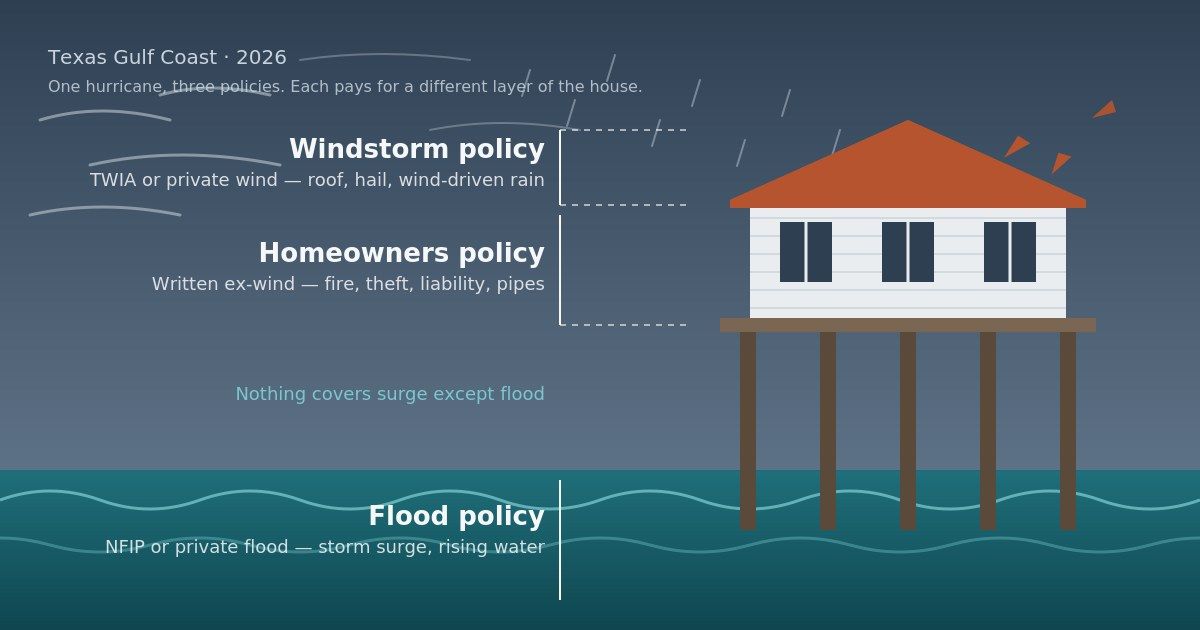
Home, homeowners, and flood policy comparison over a flooded house illustration
September 7, 2026
How Texas coastal homeowners actually get hurricane coverage: TWIA 2026 limits, the declination rule, WPI-8 certificates, named-storm deductibles, and the flood policy that pays for surge. Written by a Gulf Coast agent.
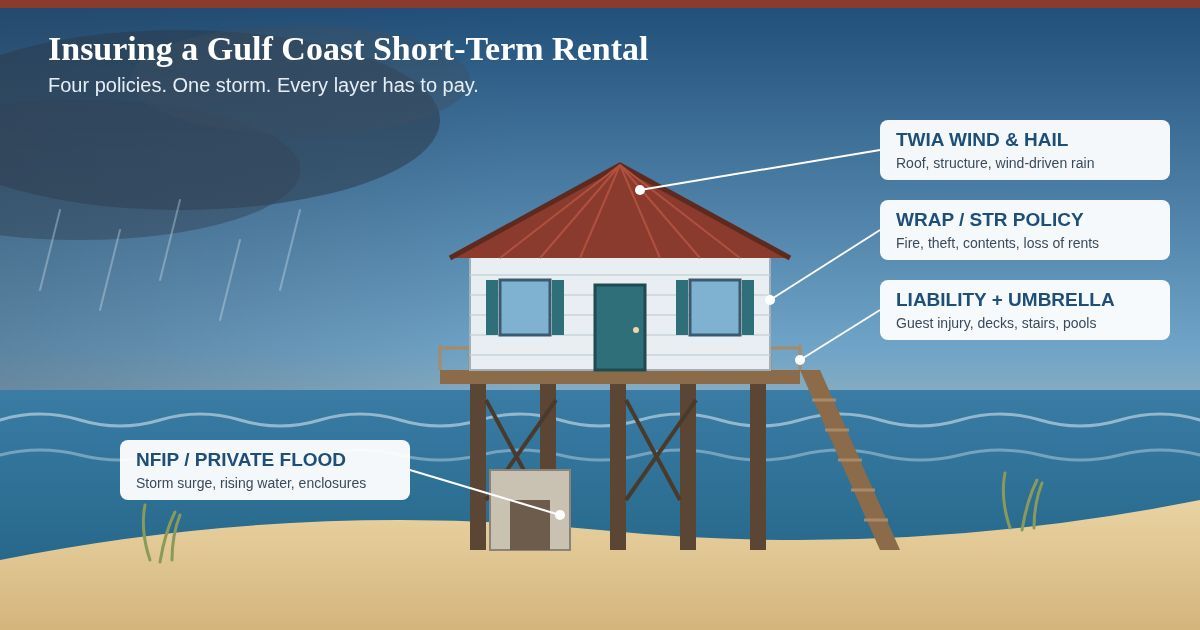
Flooded beach house on stilts with roof damage and insurance claim callouts about a Gulf Coast short-term rental
September 7, 2026
How to insure a Galveston, Crystal Beach, Surfside, or Port Aransas short-term rental: TWIA wind, NFIP flood, Fire & Liability policy, from an experienced local Gulf Coast Insurance agent.
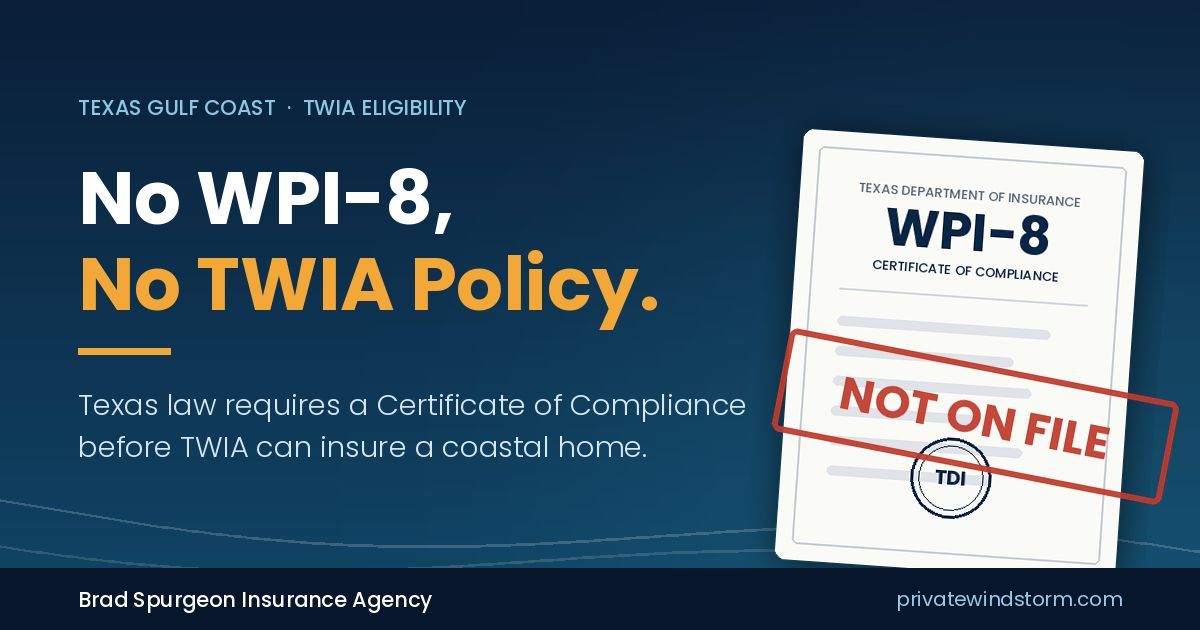
August 25, 2026
Learn why TWIA requires WPI-8 certification, which Texas coastal homes need it, key exceptions, and what to do if your certificate is missing.

A smiling parent sits on a couch and lifts a happy young child
August 19, 2026
Kids explore everything, and that curiosity is part of what makes childhood fun — but it also means everyday spaces in your home can hide risks you might not think twice about as an adult. A few thoughtful changes around the house can prevent the kinds of accidents that send families to the emergency room every year.
A view of two suburban houses
August 17, 2026
It's a question we hear often in Texas City, especially once a tropical system starts showing up in the forecast: can I still get flood insurance now, or is it too late? The honest answer is that it depends on your policy type and timing, and understanding how flood insurance waiting periods work can save you from a co
An American Red Cross emergency kit with supplies like water, a flashlight, goggles, and a poncho for flood survival.
August 10, 2026
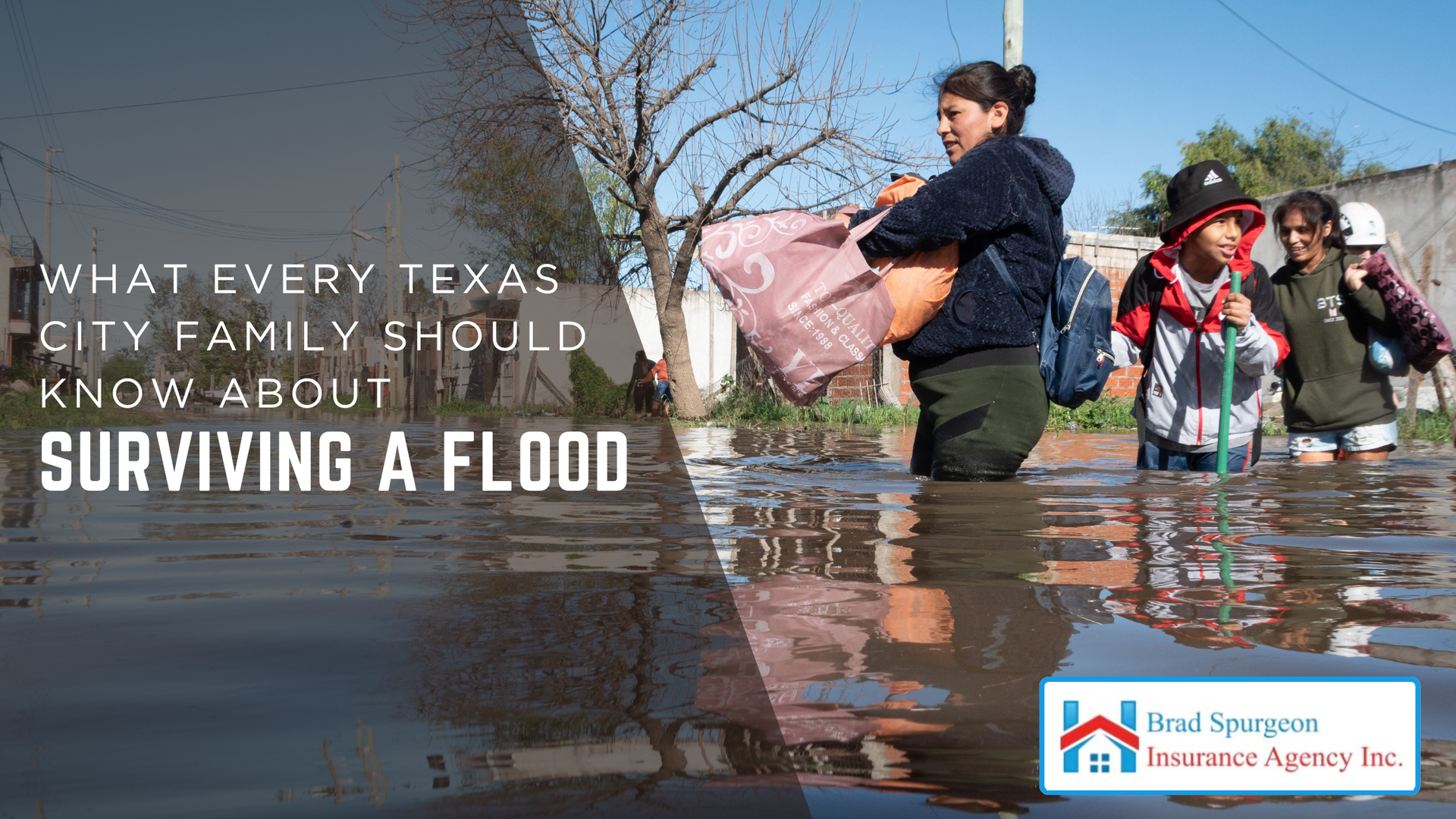
Living near the Texas Gulf Coast means flooding isn't a rare or distant threat — it's a real possibility every hurricane season, and sometimes even after a heavy afternoon thunderstorm. Whether you're right along the water or a few miles inland, knowing how to prepare, evacuate, and recover safely can make all the diff
Show More