
6 Ways To Prepare For Disastrous Storms

January 18, 2018
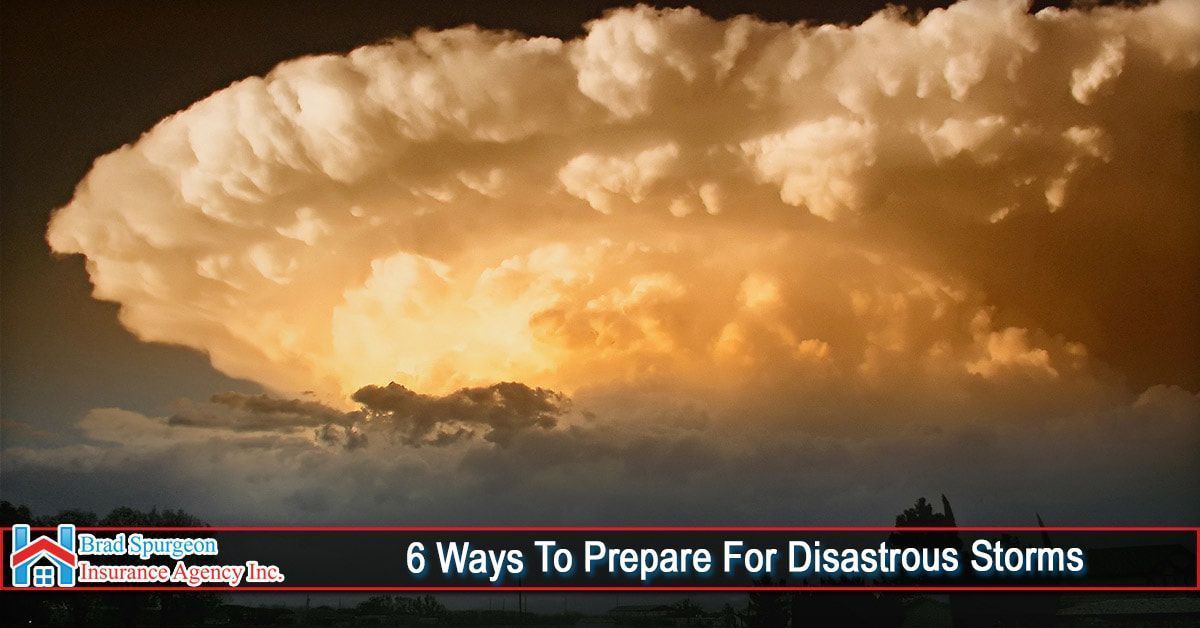
A golden, dramatic thunderstorm cloud looms over a dark horizon

Storms will visit your town many times in your lifetime. Are you prepared for them? Do you think your home can withstand damaging hail and wind?

Sometimes, even if you think you are ready for a storm, accidents and damages can still happen. But, don't lose hope. There are helpful steps to follow that can protect your family and belongings. These also lessen the level of destruction caused by a storm.


Do not wait for tornadoes, hail and wind storms to hit your area before you take action. The first thing to do is plan in advance.


Things to Know About Storms

In a year, the U.S. experience approximately 3,000 hailstorms. During violent storms, these create hail the size of a softball.


About 1,000 tornadoes occur every year. These bring about 80 deaths, $1.1 billion worth of property damage, and 1,500 injuries. 


How to Plan Ahead

Before a storm hits your place, plan and prepare by following these steps:


  1. Tune in to your local TV and radio news channels. Usually, they broadcast thunderstorm warnings if tornadoes and storms are approaching. By being aware of these warnings, you have time to make everyone safe and secure together.
  2. Know the escape route, just in case. During a storm, you cannot predict what will happen. It helps to know the safest way to exit your house and your neighborhood. It is advisable to bring a rope ladder when you need to brave the storm outside.
  3. Add shredded bark to your yard. These are good replacement to your gravel or rock landscape in your yard. In case the barks get blown around by the intense wind, they will not damage anything they hit.
  4. Keep everyone inside the house away from doors and windows. severe winds can penetrate these points of entry during a storm. Make sure they are all closed to prevent damage to your interior and injury to people.
  5. Check the height of the shrubbery and trees in your garden. It is better to remove or cut down the trees that could potentially fall on your house, causing fatality and structural damage. 
  6. Create an emergency kit. This kit may be a big one as you need to include some essential items here. Put enough supply of food and water for the entire family for at least three days. Also, add toiletries, flashlight, medicines, portable radio, battery, power bank, mobile phone, any signaling device, and cash.

Among those that you need to prepare are your important documents including your insurance. These will help you to get back on track after the storm. At Brad Spurgeon Insurance Agency Inc., we do our best in making sure that our clients are well-protected with affordable and comprehensive policies. To learn more about how we can help you, please contact our agency at (409) 945-4746​ or Click Here to request a free quote

September 15, 2026
If you own a home in Texas City, you already know windstorm insurance isn't optional, and you've probably felt the sting of the premium on your renewal notice. Years of active hurricane seasons along the Gulf have pushed rates higher across the board, but that doesn't mean you're stuck accepting whatever number your ca

A damaged, peeling wall with dark mold growth
September 9, 2026
Mold has a way of showing up in Texas City homes when you least expect it, and Gulf Coast humidity doesn't make it any easier to avoid. Between hurricane-season moisture, everyday humidity, and the occasional leaky pipe or roof, it's one of the more common issues local homeowners run into, and also one of the more misu

September 9, 2026
Owning a home along the Texas Gulf Coast means living with a level of risk most inland homeowners never think twice about. Between hurricane season, hail storms rolling in off the Gulf, and the ever-present threat of flooding after a heavy rain, a homeowners policy here has to work harder than it does almost anywhere e
September 9, 2026
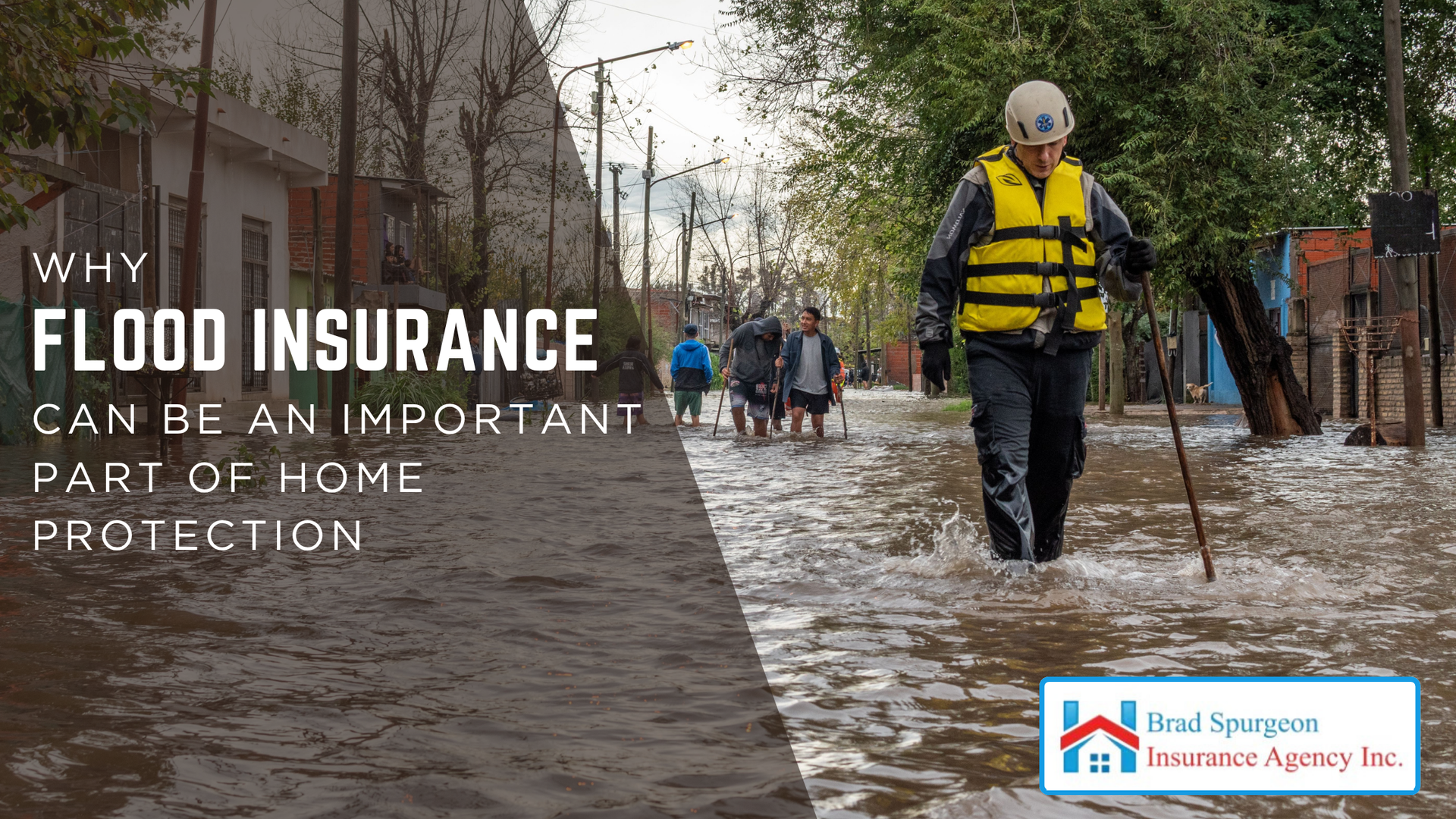
Most Texas City homeowners assume that if their house takes on water, their homeowners policy has them covered. It doesn't, and finding that out mid-claim is one of the most expensive surprises a Gulf Coast homeowner can face. Flood damage is excluded from every standard homeowners and commercial property policy in the
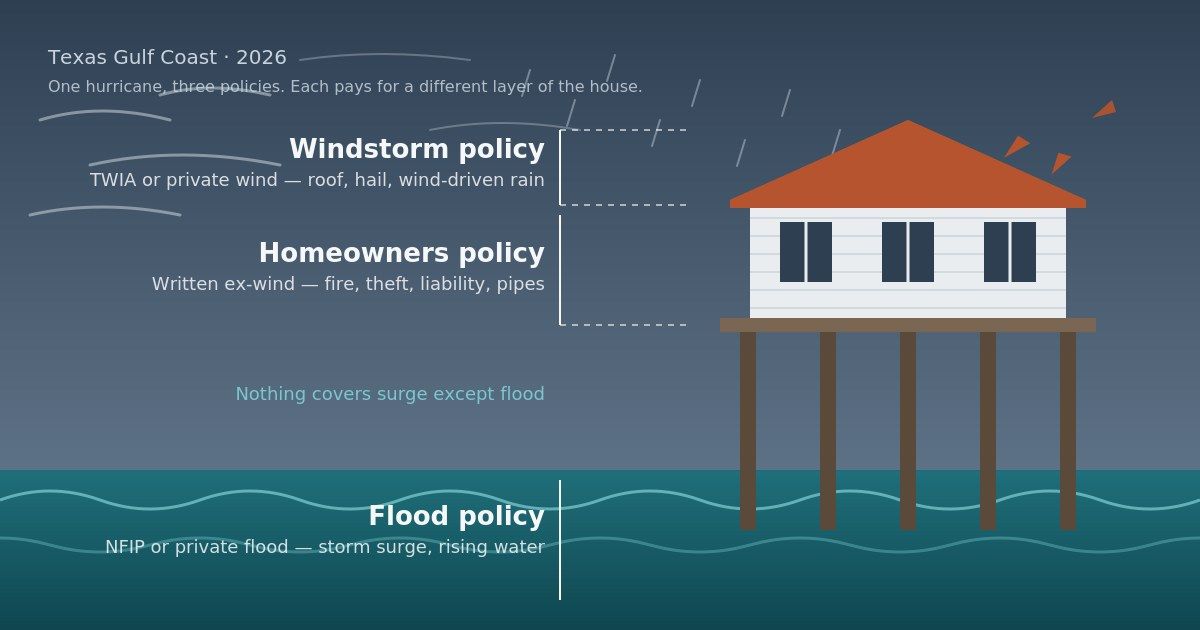
Home, homeowners, and flood policy comparison over a flooded house illustration
September 7, 2026
How Texas coastal homeowners actually get hurricane coverage: TWIA 2026 limits, the declination rule, WPI-8 certificates, named-storm deductibles, and the flood policy that pays for surge. Written by a Gulf Coast agent.
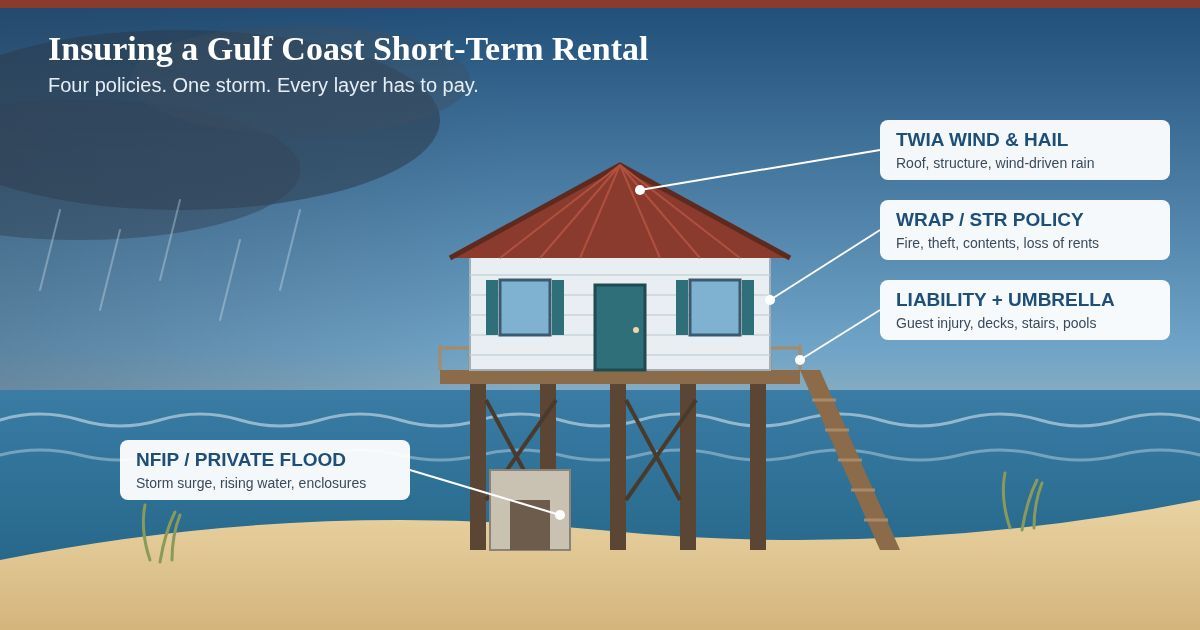
Flooded beach house on stilts with roof damage and insurance claim callouts about a Gulf Coast short-term rental
September 7, 2026
How to insure a Galveston, Crystal Beach, Surfside, or Port Aransas short-term rental: TWIA wind, NFIP flood, Fire & Liability policy, from an experienced local Gulf Coast Insurance agent.
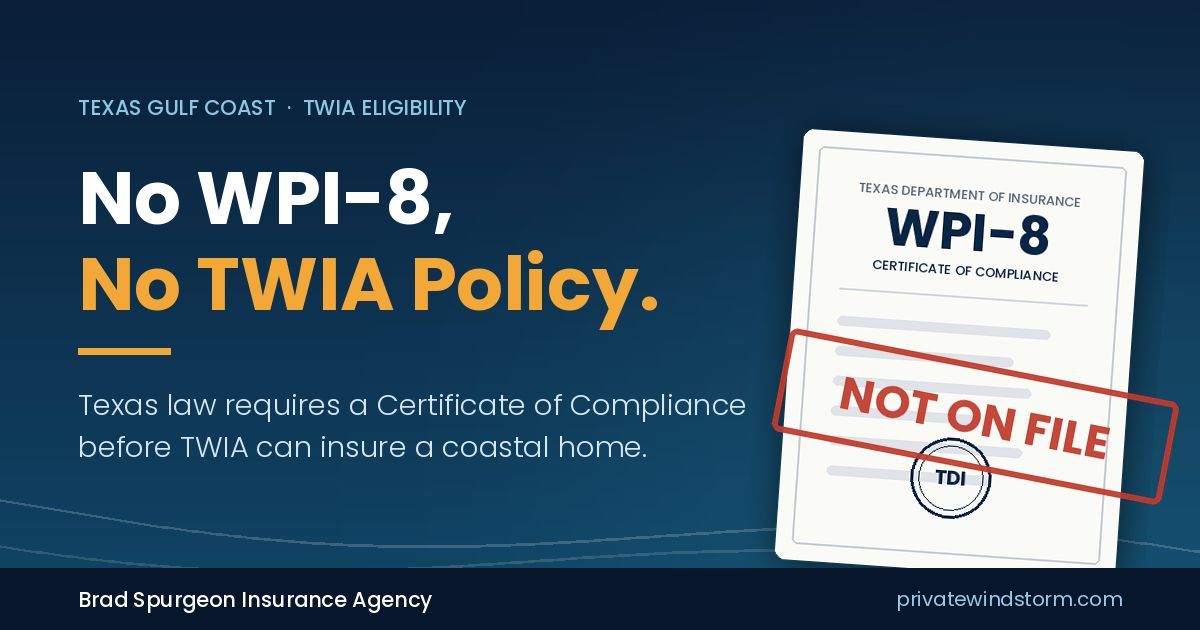
August 25, 2026
Learn why TWIA requires WPI-8 certification, which Texas coastal homes need it, key exceptions, and what to do if your certificate is missing.

A smiling parent sits on a couch and lifts a happy young child
August 19, 2026
Kids explore everything, and that curiosity is part of what makes childhood fun — but it also means everyday spaces in your home can hide risks you might not think twice about as an adult. A few thoughtful changes around the house can prevent the kinds of accidents that send families to the emergency room every year.
A view of two suburban houses
August 17, 2026
It's a question we hear often in Texas City, especially once a tropical system starts showing up in the forecast: can I still get flood insurance now, or is it too late? The honest answer is that it depends on your policy type and timing, and understanding how flood insurance waiting periods work can save you from a co
An American Red Cross emergency kit with supplies like water, a flashlight, goggles, and a poncho for flood survival.
August 10, 2026
Living near the Texas Gulf Coast means flooding isn't a rare or distant threat — it's a real possibility every hurricane season, and sometimes even after a heavy afternoon thunderstorm. Whether you're right along the water or a few miles inland, knowing how to prepare, evacuate, and recover safely can make all the diff
Show More